

Audio By Carbonatix
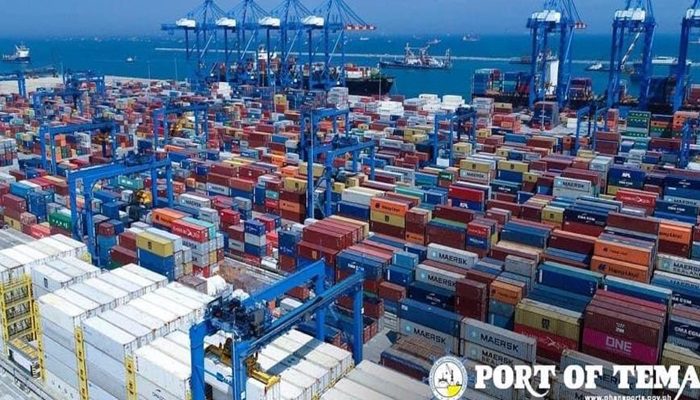
Opioid drugs worth approximately GH₵20 million have been intercepted at Tema Port.
The shipment was en route to Niger, its final destination.
This was made possible through the efforts of the Customs Division of the Ghana Revenue Authority (GRA), in collaboration with other stakeholders.
Following this, Minister of Health Kwabena Mintah Akandoh reaffirmed the government's commitment to preventing Ghana from being used as a transit point for opioid trafficking.
“Inasmuch as we are interested in facilitating trade in this country, we will not allow Ghana to be a safe haven for opioids. And let me tell you that the president is personally interested in this matter. On my way here, he called me twice, and it tells you how important and critical this particular issue is,” he told journalists at the port.
The seized shipment included Rahol Tapentadol 250 mg – 26 cartons; Tafradol Tapentadol 120 mg – 160 cartons; Timaking Tapentadol 120 mg – 40 cartons; Loperamide 2 mg – 190 cartons; Chlorpheniramine Maleate – 320 cartons.
On March 1, a Fellow in Public Health at the Centre for Democratic Development (CDD), Dr. Kwame Sarpong Asiedu, called on the Customs Division of the GRA to provide answers on how illegal opioids entered the country.
Speaking on Newsfile on JoyNews on Saturday, 1st March, Dr. Asiedu described the situation as alarming, following the BBC exposé on the influx of dangerous opioids.
He pointed out that the seizure of the drugs by the Food and Drugs Authority (FDA) confirms that they entered the country through Ghana’s ports. However, he noted that it was the Narcotics Control Commission (NACOC) that acted on intelligence to intercept them.
“The products being seized by the FDA means they got through our ports. It was NACOC that had intel which led to the seizure. So that is complete confirmation that these drugs are entering through our ports, and that is scary,” he stated.
Dr. Asiedu emphasised that Customs, as the custodians of the country’s entry points, including Tema, Takoradi, and Kotoka International Airport, must be held accountable. He explained that medicines are regulated products, meaning both the FDA and NACOC should be informed before clearance.
“If these containers got out of our ports without the knowledge of NACOC and the FDA, it means there is some level of complicity from Customs because the drugs did not go through the right channel,” he said.
He further raised concerns about weak collaboration between agencies responsible for securing the country’s drug supply chain.
Latest Stories
-
Christina Koch becomes first woman to travel around the moon on Artemis II
9 minutes -
Epstein survivors’ calls to meet King Charles and Queen harder to ignore as US visit approaches
15 minutes -
UN Secretary-General names Ghana’s Anita Kiki Gbeho as South Sudan envoy
16 minutes -
Mali withdraws recognition of Sahrawi Republic, backs Morocco’s autonomy plan
21 minutes -
Gov’t distributes over 8,500 laptops to One Million Coders project
22 minutes -
Julius Debrah, ‘man to beat’ as NDC’s James Agbey dismisses Musah Dankwah’s polls
28 minutes -
GPRTU in Savannah Region to protest alleged eviction in Damongo
57 minutes -
Re: Reinsurance does not replace process — A response to the SIGA–SIC defence
1 hour -
Gender Ministry supports Harriet Amuzu in ongoing abuse case
1 hour -
AG joins plaintiff to scrap OSP ?: We should be mindful of the mischief in this – Bobby Banson
2 hours -
Samson Lardy Anyenini questions willingness of Attorneys-General to prosecute political colleagues
2 hours -
It is only fair the OSP is heard in Supreme Court case – Bobby Banson
2 hours -
Asiedu Nketia resumes Ashanti tour, second leg kicks off on Sunday
2 hours -
NLA denies salary cut claims, threatens legal action over reports
2 hours -
BoG Governor honoured for stabilising cedi, improve inflation
2 hours