

Audio By Carbonatix
The discourse of migration in Africa is complex and characterised by a wide range of circumstances. These include political unrest, environmental, and economic possibilities. Statistically, Africa holds the third largest number of migrants across the world. In 2024, a record 304 million people lived in a country other than their country of birth, representing about 3.7 per cent of the world’s 8.2 billion people, according to UN Population Division estimates. This is up from 275 million international migrants in 2020, who comprised 3.5 per cent of the global population.
In Africa, migrant and asylum policies are mainly guided by the African Union’s revised policy framework for Africa 2018-2030. These policies emphasise safe, orderly, and dignified migration across nine thematic areas: labour migration. Border governance and human rights. While the AU promotes free movement of persons, actual implementation is fragmented.
Over the years, Europe has also implemented different policies to manage migration flow. This is because, though Europe has always opened its doors to migrants, they believe one way to curb illegalities within migration is to ensure compliance with the policies. The migration and asylum policy of the European Union falls within the area of freedom, security and justice. EU member states have adopted increasingly restrictive and punitive asylum rules and are focusing on stopping people from moving, with devastating consequences.
Since 2025, the Trump administration has implemented a restrictive immigration policy focused on mass deportation and terminating humanitarian parole programs. Civil societies over the years have engaged different unions to protect the rights of migrants, but there seems to be a never-ending road to proper immigration policies that seek the welfare of migrants.
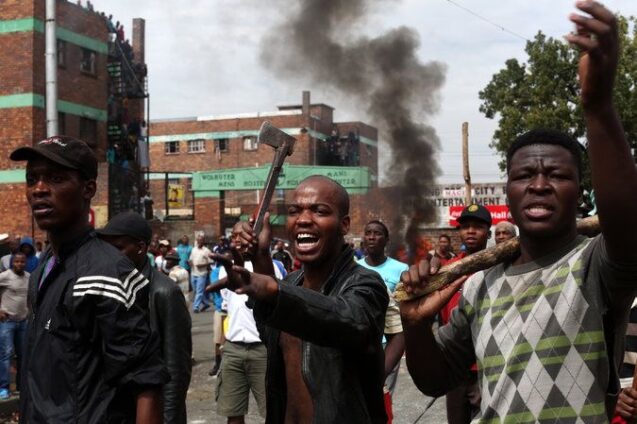
In every part of the world, citizens occasionally protest the influx of people into their countries. This could stem from a perception of inadequate jobs that serve both citizens and migrants. Others protest due to insecurities, while many also have various reasons for protesting. The story from South Africa is one that breaks hearts and sends shivers down one’s spine. Almost every year, some citizens protest against migrants through mostly inhuman ways.
The irony is that 80% of migrants in SA are from different African countries seeking greener pastures. Economically, South Africa is among the top ten countries in Africa with a strong economy, and it’s not rocket science that other Africans look to South Africa as a haven for financial freedom. But what happens when dreams of betterment turn to tragedy? Who do you seek help from when your own continent rejects you?
What right channels can be used to seek redress in cases like this? Is it through Xenophobia? The recurring violence against Africans in South Africa looks more serious than what the media even shares. In 2015, South Africans violently killed many African migrants because they perceived their victims had taken their jobs, something that has never been proven.
After 11 years, the spirit of xenophobia has reemerged from the sea of violence. Many videos circulating online show South Africans assaulting Ghanaian migrants, while another person is seen at a government hospital evicting all foreigners seeking medical attention at the facility.
The question now is, “Where must Africans go when Africa is rejecting them?” Many years ago, South Africans sought asylum in different countries during the era of Apartheid. Other Africans stood firm to support them in their fight against the system that victimised them. And yet, here we are, Africans attacking their own. What changed? Are we no longer one people?
Are there no migration policies that protect Africans on the African continent? What is the essence of free movement and bilateral agreements in Africa if it does not offer basic protection? What is the meaning of the African Union when Africans are not united anyway? What would the fathers of the continent say if they were here? They must be turning in their graves as the united Africa they so fought for is being torn apart like this.
Latest Stories
-
Explained: Ghana’s water plant deal that produced a $235m judgment debt instead of water for 500,000 people
15 minutes -
Lawyer denies Salomey Baffoe received money from ‘Ghana Jollof’ account operator
47 minutes -
Beyond politics: Why Kwame Nkrumah’s ideals still matter for today’s leaders
54 minutes -
Top South African policeman charged with sexual offences
1 hour -
More than 170,000 respiratory cases recorded in haze-choked Indonesia
1 hour -
Narrowed space, intolerance – Sammy Crabbe says NPP is driving talented members away
1 hour -
We’re not analytical enough – Sammy Crabbe calls for data-driven decision-making
2 hours -
Tonto Dikeh celebrates Bobrisky as birthday tribute sparks online reactions
2 hours -
Peter Okoye tells court he received over $800,000 in P-Square royalties
2 hours -
I’ve never had problems with artistes – Rema addresses alleged fight with Davido
2 hours -
I was mocked for getting pregnant out of wedlock as pastor’s daughter – Davido’s baby mama
2 hours -
Young John rejects collaboration request from Blaqbonez over old tweet
3 hours -
Trump administration to admit primarily Afrikaners under new refugee proposal
3 hours -
They should have Ghana first – Ntim Fordjour warns MPs against politicising drug crisis
3 hours -
We got more than 15% – Ntim Fordjour confirms support for Parliament recall over cocaine scandal
3 hours