

Audio By Carbonatix
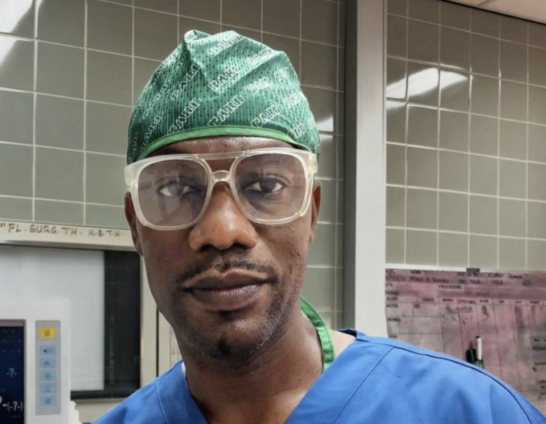
For neurosurgeon Dr Hadi Mohammed Abdallah, the impact of the Ghana Medical Trust Fund (GMTF) is being felt far beyond the operating theatre.
One year into the Fund’s existence, Dr Abdallah says its support for patients with complex neurological conditions has not only saved lives and restored quality of life but has also given doctors something many had quietly been losing: hope.
As a neurosurgeon at the Korle Bu Teaching Hospital, Dr Abdallah has been involved in treating more than 10 patients supported by the Fund.
Among the most significant cases, he said, were six patients who underwent brain aneurysm surgery with GMTF support.
According to him, this marked the first time six such cases had been sponsored and carried out in a public hospital.
Dr Abdallah explained that a brain aneurysm can be like a ticking time bomb. Although treatment is available in Ghana, the cost of coiling ranges from US$15,000 to US$20,000, putting the procedure out of reach for many patients.
For those unable to raise the money, the diagnosis comes with a heavy psychological burden.
“They were living with the mental torture that they were a walking time bomb,” Dr Abdallah said, describing the fear that another blood vessel could rupture in the brain at any time.
GMTF, he said, has changed that reality for several patients.
In one emergency case, the Fund stepped in and settled the patient’s treatment costs, allowing care to proceed without lengthy delays.
For Dr Abdallah, the intervention was more than financial assistance.
“We saved this patient.”
The Fund has also supported patients with brain tumours, including pituitary tumours that can progressively destroy a patient’s vision and, if untreated, become fatal.
Dr Abdallah said that without financial support, some patients could wait months or even years while trying to raise money for surgery.
By then, some could lose their sight, while others could face the risk of dying as their tumours continued to grow.
GMTF’s intervention, he said, therefore goes beyond paying hospital bills.
It can mean giving patients back their sight, their lives and, in some cases, a second chance.
But Dr Abdallah believes the Fund is also addressing another less-discussed problem: the psychological burden on healthcare professionals.
Doctors, he explained, are often confronted with the painful reality of diagnosing a patient early and knowing that timely treatment could make a difference, only to see that patient return much later in a worse condition because the family could not afford the required surgery.
“That can be depressing,” he said.
When families exhaust their resources, doctors and other hospital staff sometimes step in, contributing from their own pockets or organising collections among colleagues to keep patients alive.
The emotional toll, Dr Abdallah said, does not end at the hospital.
Doctors may go home reflecting on patients who could have had better outcomes if they had received treatment earlier.
When such situations occur repeatedly, the psychological burden can begin to affect healthcare professionals themselves.
That is why the emergence of GMTF represents a different kind of relief for doctors.
“The fact that I don’t have to dip my hands into my pocket to do round collection to save a patient, I think it is great,” he said.
For Dr Abdallah, the Fund is restoring confidence among healthcare workers that patients can receive the treatment they need without doctors having to personally carry the financial burden.
“It gives us a lot of hope,” he said.
He expressed optimism that as the Fund grows, more complex surgeries can be performed and treatment outcomes can increasingly match those seen in developed healthcare systems.
For the patients supported by GMTF, the interventions may represent a new beginning.
For the doctors caring for them, Dr Abdallah says, the impact is equally profound: relief from an invisible burden and renewed confidence that they do not have to fight alone to save a life.
And in his words:
“Our mental health is restored, courtesy of the Ghana Medical Trust Fund.”
Latest Stories
-
Refugees in South Africa face mounting tensions as September 30 deadline looms
4 minutes -
At least 12 dead, dozens missing after vessel capsizes in DR Congo
8 minutes -
Two dead, 14 rescued after accident on Kpetoe-Sarakope road
36 minutes -
AFCON 2027Q: Moroccan referee Mustapha Kechchaf to officiate Ghana-Gambia match
45 minutes -
Our mental health is restored – How Medical Trust Fund is giving doctors hope again
48 minutes -
2027 budget to provide for grain silos – Agric Minister
48 minutes -
Damongo Communique: Democracy Not For Sale
50 minutes -
Yusif Sulemana pushes community benefits, national systems in Global Forest Finance Debate
1 hour -
Todays Front pages: Monday, September 28, 2026
1 hour -
WAFU B U-17 Girls Cup: Black Maidens finish tournament with 4-0 win over Cote d’Ivoire
1 hour -
2026 Women’s Super Cup: FC Savannah to face Epiphany Warriors in final on September 29
2 hours -
Ghana’s second chance: How President Mahama’s return offers historic opportunity for transformation
2 hours -
AFCON 2027Q: Alexander Djiku ruled out of clash against Gambia
2 hours -
RCI Immanuel Temple donates supplies to Motherly Love Orphanage
2 hours -
Ghana calls for predictable, people-centred financing to protect tropical forests
3 hours