

Audio By Carbonatix
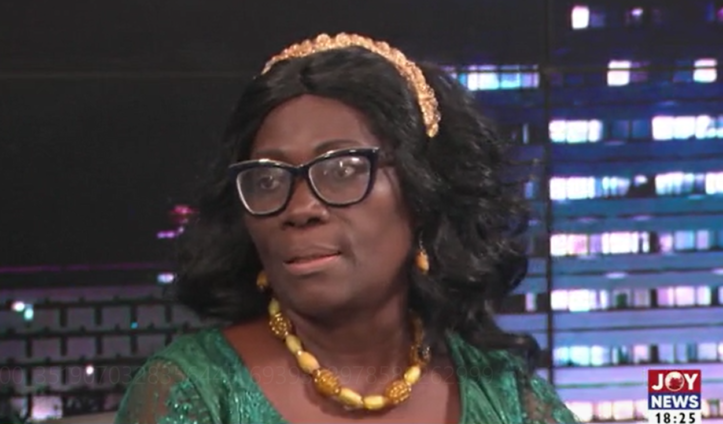
A Medical Sociologist and Public Health Expert, Rev. Prof. Yaa Adobea Owusu, has advised against the government’s plan to replace textbooks in Senior High Schools with tablets.
Speaking on Upfront on JoyNews, she stated that despite the advancement of technology globally, there are many challenges that hinder this plan including electricity and internet issues that many communities face.
Hence, it will be tough for many students in rural areas especially to use the tablets to their full capacity which could greatly affect their studies, Prof Owusu told the host Raymond Acquah, on Wednesday.
“I will not personally think that our priority should be on tablets instead of textbooks. We are even talking about the ability of a child to carefully handle this especially if you are walking over a distance to school,” she said.
Prof Owusu added that “technology is advancing everywhere in the world and it is good for Ghana to catch up, that will be very good. But with tablets, we are probably also talking about electricity and connectivity and I don’t think that all these are available now. With the textbook, it is not dependent on some of these issues that we have mentioned.”
In May 2023, the Vice President, Dr. Mahamudu Bawumia, announced that the government through the Ministry of Education is preparing to replace textbooks with laptops in Senior High Schools nationwide.
He said textbooks and other teaching and learning materials would be installed on the tablets to be used during lessons.
Speaking at the 60th Anniversary celebration of the Hohoe Evangelical Presbyterian Senior High School, Dr. Bawumia said the initiative would be implemented before the end of 2023.
He noted that it is aimed at preparing the students to fit into the global village.
However, the Institute of Statistical, Social and Economic Research’s Dr Michael Kodom, believes that it will serve students better to build more ICT labs and equip them with modern and adequate computers.
He explained that the children will learn better about technology when these labs are made available rather than tablets.
Dr Kodom said “there are some rural areas where electricity is a problem, even people are still struggling with basic chairs to sit on. The child can easily take his textbook, go home and read.”
Latest Stories
-
NCA announces major voice and data disruption across Northern Ghana due to fibre cuts
9 minutes -
Photos: Housing solutions take centre stage at Day 2 of the 3rd Republic Bank-JoyNews Habitat Fair
41 minutes -
Video: Immunity should be exercised without creating classism – Inusah Fuseini on cocaine bust
1 hour -
Ghana Air Force passes out 293 recruits after six months of intensive training
1 hour -
EOCO vrs Baffour Awuah: EOCO should have secured warrant before arrest attempt at court – Inusah Fuseini
1 hour -
Triple fibre cuts disrupt telecom services across Northern, Oti regions – Sam George
1 hour -
Politicisation could undermine parliamentary probe into cocaine seizures – Dr Osae-Kwapong
2 hours -
EOCO chases MP: Can Section 41 cure lacuna in EOCO Act? – Inusah Fuseini asks
2 hours -
GNFS, GWL inspect fire hydrants in Ministries enclave; 23 found faulty
2 hours -
Gov’t directs release of 50,000 bags of grain to ECOWAS
2 hours -
Ghana, Germany deepen cooperation on railways, labour mobility
2 hours -
Huge crowds greet Pope in Paris for open-air Mass
2 hours -
Ghana’s Charles Amofah Elected Vice President of African Bowling Federation
2 hours -
‘I never said I’ll declare a state of emergency’ – President Mahama on galamsey
3 hours -
Bobby Banson condemns EOCO’s attempted arrest of Nana Agyei Baffour Awuah
3 hours