

Audio By Carbonatix
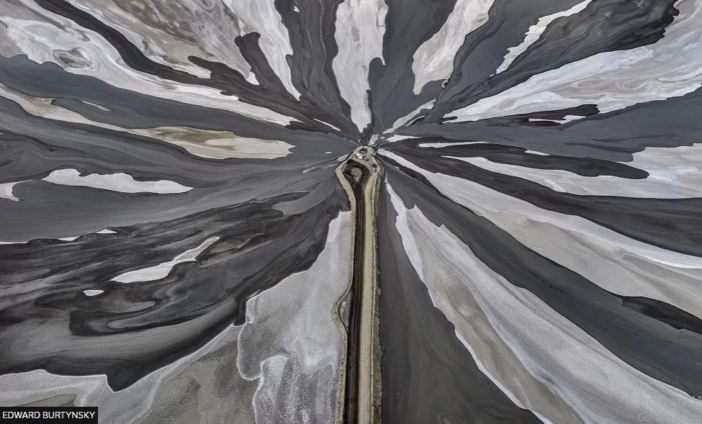
For the past 40 years, Edward Burtynsky has photographed the impact of human industry on the planet and for his latest collection, African Studies, he travelled across the continent taking photos from above. He spoke to the BBC's Mary Harper.
In many ways it was China that got me interested in turning my attention to the African continent.
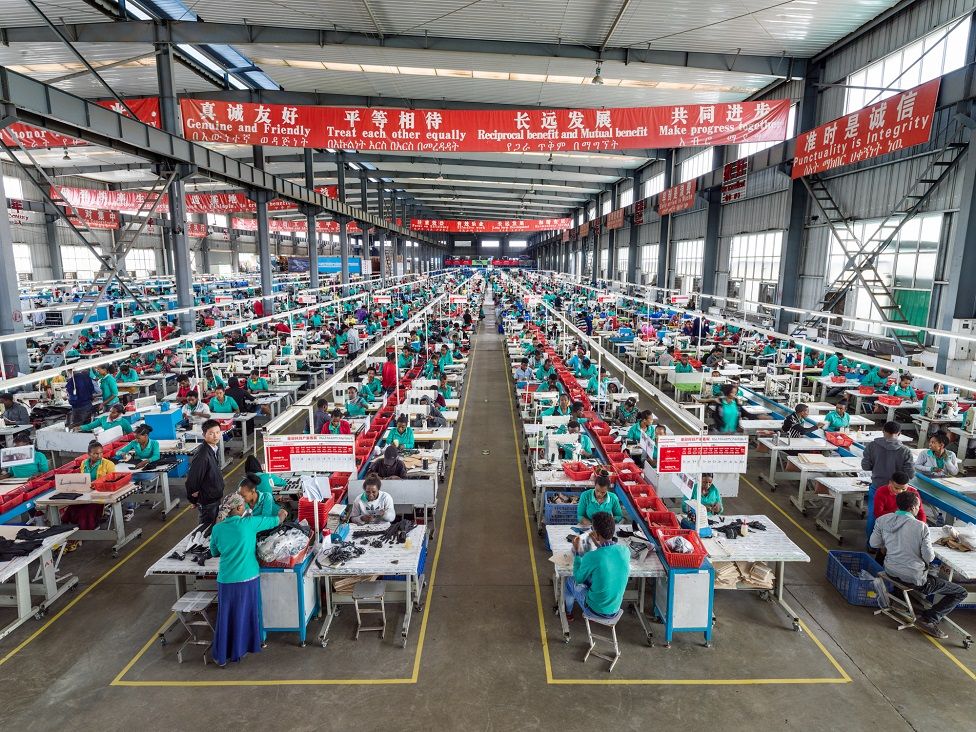
About 20 years ago, I photographed the extraordinary explosion of manufacturing in China, factories and all.
Carbon copies of these factories are now popping up across the continent and the resemblance to what I saw decades ago is uncanny.
As China moves towards becoming a service economy, it is relocating its mega-factory floors to countries like South Africa, embarking on huge infrastructure projects and extracting the continent's resources to fuel its growth.
Most of these photos were taken from the sky, from planes, helicopters and drones.
They reveal the design, structure and scale of the marks humans inscribe on the earth, the extraordinary vistas not visible from ground level.
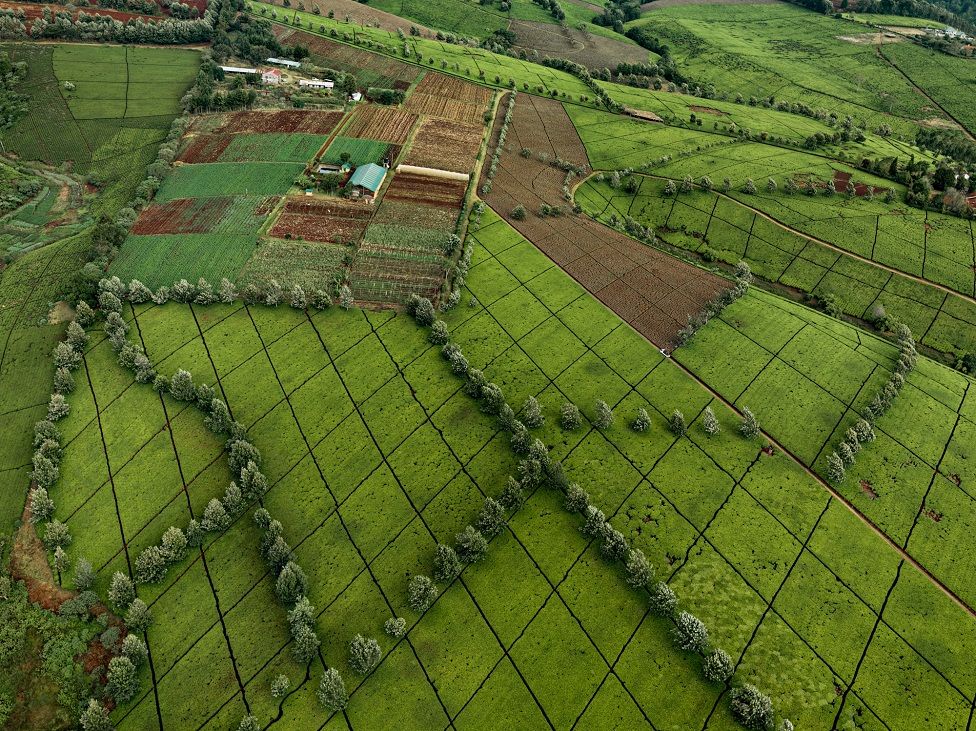
Like the extractive industries, agriculture also throws up abstract images when seen from above.
I wonder if tea pickers and rose growers are aware of the extraordinary geometry and symmetry of the fields they work in.
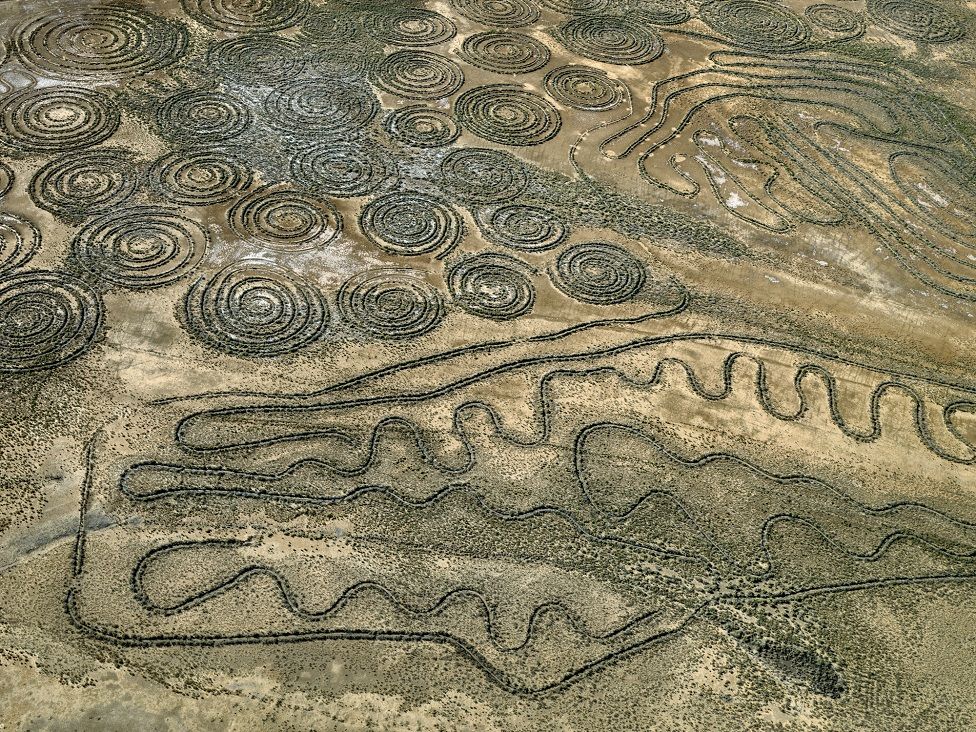
Those who work on the land, whether fertile or parched, sometimes transform its beauty but do not destroy it.
In South Africa, farmers try to hold back desertification by ploughing great ruts in the earth which collect water when it rains, allowing plants and trees to grow in a hostile environment.
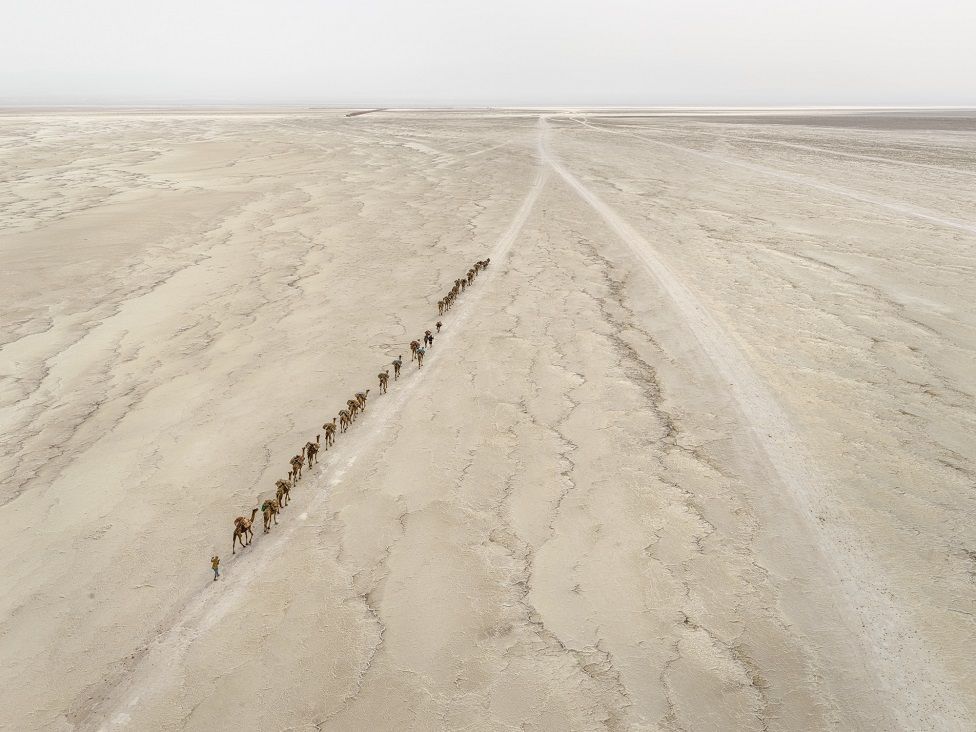
The land across Africa is replete with resources, some extracted with modern technology, others using techniques that are centuries old.
In Ethiopia, it was like stepping back in time as people harvested salt with pickaxes in temperatures of 50C.
Every day the salt is loaded onto camels, the ships of the desert.
We had to give up on our GPS instruments in Danakil. As it is about 125m below sea level the devices became confused, thinking we were operating under the ocean.
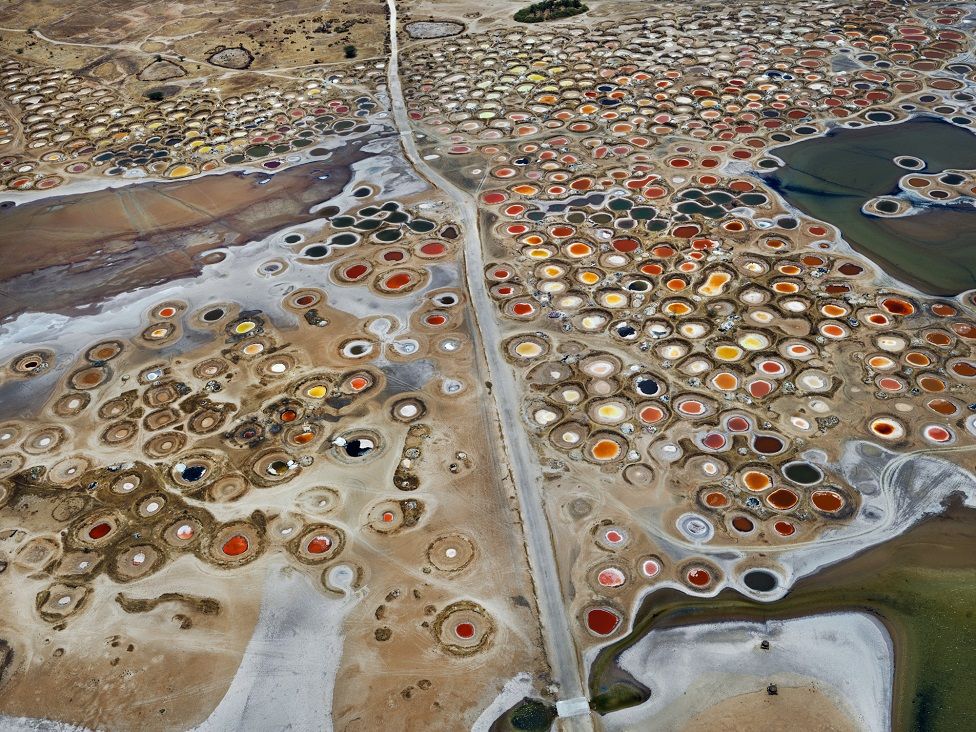
One of the highlights of my journey was a visit to the salt ponds of Senegal, West Africa's largest producers of salt.
Harvesters dig shallow depressions by hand which are then filled with salt water from nearby canals.
Once the water has evaporated, minerals, pigments and various algae combine with reflections of the sky to create a spectacle for the eye. The intricate, organic structures become almost hypnotic.
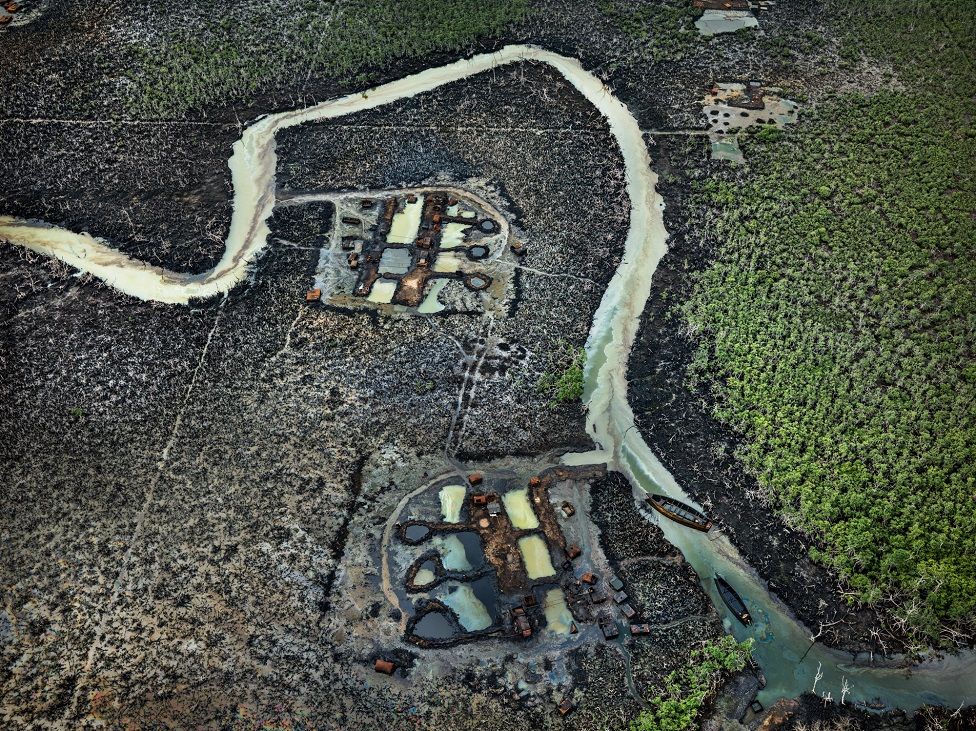
The stark result of corporate profiteering, poverty, ingenuity and ruthless piracy in the oil-rich Niger Delta easily ranks as one of the most profoundly disturbing, devastated landscapes ever created by humankind.
Coming to grips with the experience of that landscape was a major turning point in my understanding about the degree to which we as a species are capable of defiling our planet.
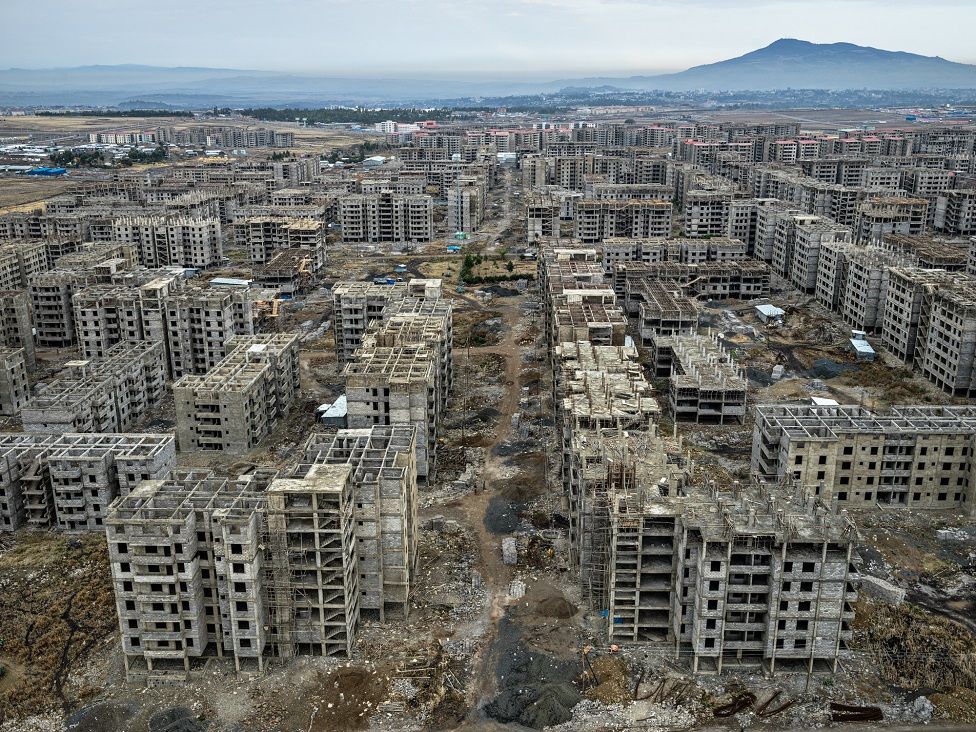
A striking difference between Chinese and African factories is that in Africa the essential workforce is from the local towns and villages while most often the floor bosses and site managers are Chinese.
With populations drifting to find work in the cities, China has embarked on a fever of construction often encroaching on precious rural land.
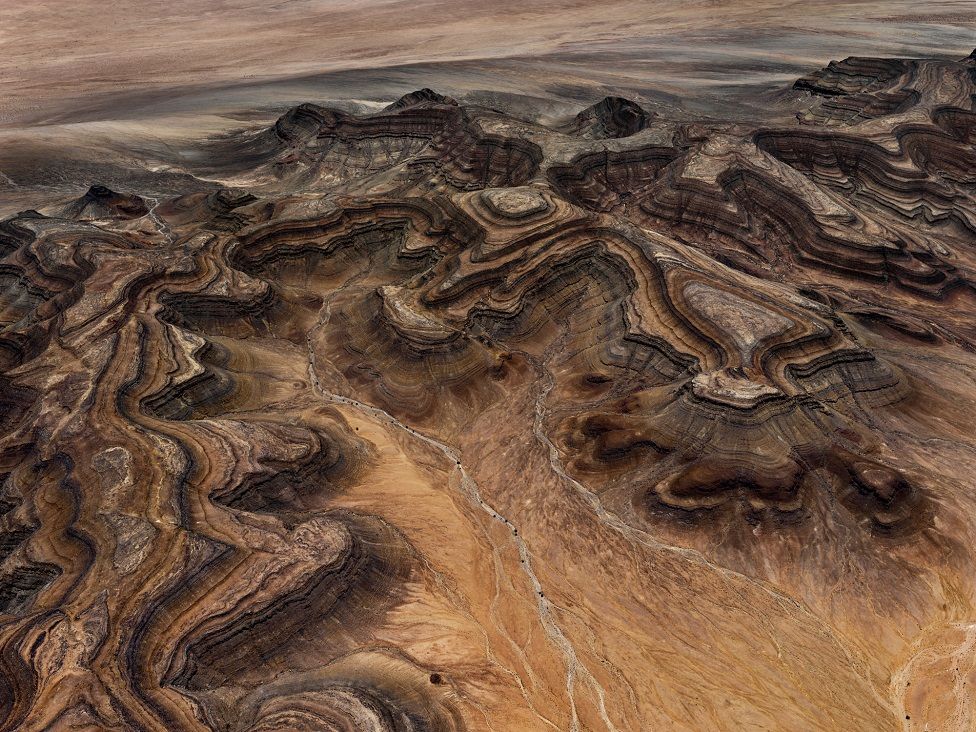
The Tsaus Mountains of the Sperrgebiet in Namibia are some of the most hauntingly beautiful land formations I have ever photographed.
Their topographic structures and richness of colour seemed to transcend the idea of landscape altogether and enter into a purely abstract realm.
Homo sapiens began migrating out of Africa some 200,000 years ago. Fast forward to the 21st Century and we have come full circle, returning to one of the last places on earth to be swept into the unrelenting machinations of the human industrial complex.
The African continent is a fragile, final frontier.
All pictures are subject to copyright.
Latest Stories
-
Brandon Asante and Coventry all but promoted to Premier League despite Sheffield Wednesday draw
16 minutes -
GPL 2025/26: Late Kwartemaa strike downs Hearts in Tema
22 minutes -
Ghana Faces Sierra Leone Moment as Prosecutorial Powers come under strain
32 minutes -
Don’t consume fish or seafood from Tema Shipyard until further notice – FDA warns
37 minutes -
Why volunteering might be Africa’s most underrated career accelerator
43 minutes -
ActionAid Ghana raises concern over gender gaps in Feed Ghana Programme
45 minutes -
Windstorm wreaks havoc in Gushegu, displacing nearly 2,000 residents and damaging schools
47 minutes -
Friends of Bridget Bonnie Marks her 35th birthday with donation to Kasseh Model Health Centre
2 hours -
From Ekumfi Kokodo to the Pulpit Stage: Essi Donkor’s gospel journey takes shape
2 hours -
Landfilling waste management creates no value, it’s an economic waste
2 hours -
Photos: Speaker Bagbin Commissions MPs constituency office under parliamentary decentralisation programme
2 hours -
Black Stars technical advisor Winfried Schäfer sacked as GFA shakes up backroom staff
2 hours -
Wenchi water project almost complete, critical to gov’t agenda – GWL MD
3 hours -
Anti-LGBTQ+ bill not part of government’s legislative agenda – Inusah Fuseini
3 hours -
Anti-LGBTQ Bill: Forget the rumour mongers, I’m a man of action, and will pass the bill – Speaker
3 hours