

Audio By Carbonatix
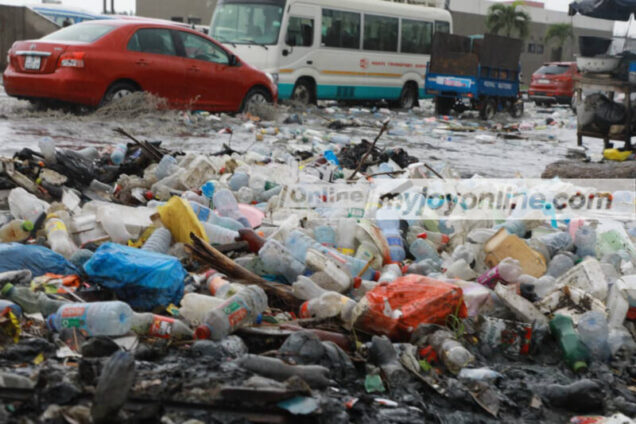
Ghana is losing more than GH¢6.2 billion every year to poor waste management and sanitation, with preventable diseases costing the country billions in healthcare expenditure, lost productivity and thousands of avoidable deaths, a new study by the Institute of Statistical, Social and Economic Research (ISSER) at the University of Ghana has revealed.
According to the policy brief titled Waste or Wealth? The Economic Returns to Sanitation Investment in Ghana, annual health and productivity losses linked to inadequate sanitation amount to over GH¢6.2 billion, while Metropolitan, Municipal and District Assemblies (MMDAs) collectively spend only GH¢180.2 million on waste management and sanitation.
The report concludes that Ghana spends about 30 times more dealing with the consequences of poor sanitation than it invests in preventing them.
ISSER identifies preventable sanitation-related diseases, including malaria, cholera and typhoid, as the major drivers of the country's economic losses.
The report estimates that these diseases result in 31.9 million lost work and school days every year and contribute to approximately 107,222 premature deaths annually.
Researchers estimate that direct medical treatment alone costs Ghana GH¢5.58 billion each year, while an additional GH¢650 million is lost through absenteeism and reduced productivity caused by illness.
The study warns that rapid urbanisation, population growth and changing consumption patterns are overwhelming the waste management capacity of many local authorities, with serious consequences for public health, environmental sustainability and economic development.
It notes that poor sanitation has become a major development challenge, with pollution and disease placing increasing pressure on households, businesses and public institutions.
According to the report, previous estimates by the World Bank indicate that poor sanitation alone costs Ghana about US$290 million, equivalent to roughly 1.6 per cent of GDP, each year through premature deaths, healthcare costs and lost productivity.
The researchers argue that waste management should no longer be regarded merely as a social or environmental obligation but rather as a strategic investment capable of delivering substantial economic returns.
"This study establishes that insufficient waste and sanitation management in Ghana is not merely a social and environmental concern, but also a significant economic burden," the report states.
ISSER says the current level of spending is inadequate to address the country's sanitation challenges and warns that continuing with existing investment levels will undermine Ghana's development objectives.
Instead, the institute argues that increased investment in sanitation infrastructure, waste collection and environmental health services would significantly reduce disease, improve productivity and enhance economic growth.
The report concludes that strategic investment in sanitation would not only improve public health but also strengthen human capital, create jobs, stimulate innovation in the circular economy and improve the quality of life for Ghanaians.
Read the full report below;
Waste or Wealth? The Economic Returns to Sanitation
Investment in Ghana
Latest Stories
-
Central banks should avoid reacting too strongly to headline inflation – IMF
2 minutes -
Kumasi: One injured, shops destroyed in Atasemanso fire in Kumasi
15 minutes -
Global economy proving resilient, growth projected at 3.1% in 2026 – IMF
19 minutes -
NDC targets all 6 parliamentary seats in Ahafo Region for 2028
22 minutes -
Ghana targets thousands of overseas nursing jobs under Labour Export Programme
24 minutes -
Pius Hadzide explains why Sports Ministry always attracts scandals
25 minutes -
APL says GoldBod terminated US$1bn Goldstream deal over failure to meet obligations
30 minutes -
Daily Insight for CEOs: Making better decisions under pressure
31 minutes -
Weta rice farmers seek urgent support after floods destroy crops
32 minutes -
Mahama commits GH¢200m in 2027 Budget to complete Police Hospital expansion
35 minutes -
Standard Chartered Bank delivers strong returns and sustainable shareholder value
46 minutes -
Akufo-Addo’s role in the artificial cedi stability is indisputable — Facts do not bend to political convenience
49 minutes -
Breaking Bad actor RJ Mitte dies aged 34
56 minutes -
Wontumi pleads not guilty in GH¢30m Exim Bank loan case
1 hour -
Beyond the Flyer: Awareness without screening is not enough
1 hour