

Audio By Carbonatix
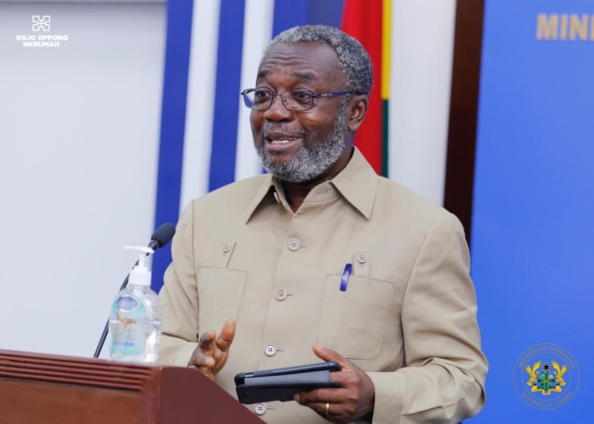
The Presidential Advisor on Health, Dr Anthony Nsiah Asare, has outlined a series of measures aimed at addressing the high rate of emigration among Ghanaian health professionals.
Over the years, influential persons in the country including Okyenhene Osagyefo Amoatia Ofori-Panin have expressed concern over the rate of medical brain drain in Ghana.
In 2023 alone, about 4,000 nurses and midwives are said to have left the country for greener pastures.
This growing trend became the theme for the 43rd Annual General Meeting of the Society of Private Medical and Dental Practitioners (SPMDP) where it pledged to play a crucial role in reversing the brain drain in Ghana's health sector while calling on government to uphold its responsibility to retaining health workers.
Thus, speaking on Joy FM's Super Morning Show, Dr Asare noted that the government is working earnestly to eliminate the push factors while enhancing pull factors to retain talent within the country.
As such, he revealed that the government has removed fees for postgraduate studies for doctors as part of its efforts to streamline the system and make it more accessible.
“No doctor pays fees for postgraduate studies anymore. We have streamlined the postgraduate system to ensure that all the cumbersome processes that were making the procedure difficult for people who wanted to enroll at the Ghana Postgraduate College have been removed," he stated.
He also mentioned plans to increase the number of training sites across the country, which would decentralise the system and provide more opportunities for career progression.
Addressing the economic factors contributing to brain drain, Dr. Nsiah Asare highlighted the need to stabilise the foreign exchange rate, which would make earnings in the country more comparable to those abroad.
“Once the cedi-dollar exchange rate is contained, then that means whatever money you get here will be a bit comparable to the one received abroad," he noted.
In addition to these measures, Dr Nsiah Asare disclosed plans to collaborate with the private sector to provide accommodation for health professionals stationed at various facilities.
“We also think that there will be accommodation provided for anybody sent to any health facility. And for this, the government cannot do it alone; we would have to do it with the private sector.
“And I am happy to say that a lot of the private sector people are very interested in helping the government put up accommodation for doctors like it has been done for judges so that we would have a medical village wherever a hospital is situated.”
Latest Stories
-
La Beach demolition: Senyo Hosi condemns lack of consultation
8 minutes -
Russian glide bomb attack on Zaporizhzhia kills at least 15 people
23 minutes -
Jinapor warns underperforming energy sector CEOs of consequences, says no protection for failure
25 minutes -
Fire destroys head of tipper truck on Lower Volta Bridge
30 minutes -
Palmer signs new Chelsea contract until 2034
31 minutes -
World Cup visa scandal: Mahama will act on corruption allegations – Abass Nurudeen
33 minutes -
Abass Nurudeen accuses Minority of ‘scandal scavenging’ over World Cup visa controversy
34 minutes -
US Embassy recognised NSA, GFA and GTA as separate entities for visa applications – Sports Minister’s aide
41 minutes -
Only 30% of Ghanaian teachers satisfied with their jobs – CAPCOE data reveals
52 minutes -
Communities affected by construction of Akosombo Dam urge government to speed up compensation process
1 hour -
World Cup visa scandal: Sports Ministry not shielding anyone – Sports Minister’s special aide
2 hours -
World Cup visa scandal: Over 30 people misrepresented as GTA board members to US Embassy – Vincent Assafuah alleges
2 hours -
Fire destroys wooden structure near Yesu Mo Villa at Bush Road
2 hours -
NDC threatens sanctions over oversized campaign posters, gives aspirants 5 days to comply
2 hours -
Star Oil paid GH¢2.7bn in taxes, levies in nine months of 2026
3 hours