

Audio By Carbonatix
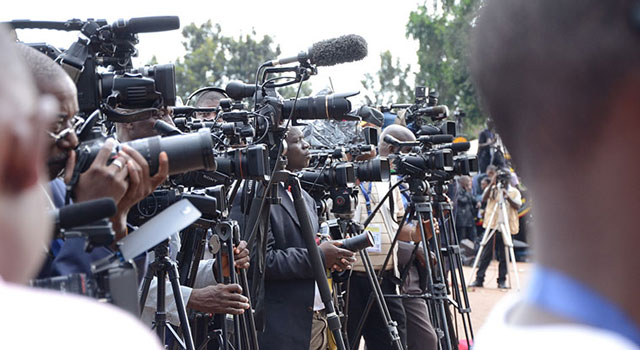
Journalists have been urged to investigate the use of stumpage fees paid to communities in timber logging areas to ensure locals benefit from the timber business.
Under the Timber Resource Management and Legality Licensing Regulations of 2017, timber contract holders are required to contribute 5 percent of stumpage fees toward the development of communities within their operational zones as part of a Social Responsibility Agreement (SRA).
Mr. Daryl Bosu, Deputy National Coordinator of A Rocha Ghana, emphasized that the media should track whether these contract holders honour their SRA commitments and determine if the funds are being used for the actual benefit of the community members.
He made the call during a presentation at a training for journalists in Accra on Forest Management, Carbon Markets, and Revenue Mobilization.
The two-day training was organized by the Media Foundation for West Africa (MFWA) as part of the “Tax for Development” project, which is funded by NORAD through OXFAM in Ghana.
The training aimed to equip journalists with the knowledge to report effectively on issues related to forest and biodiversity conservation, environmental and climate protection, and the livelihoods of local communities.
Mr. Bosu also highlighted that Ghana loses 2 percent of its 266 Forest Reserves annually, equating to approximately 2.6 million hectares of protected forest areas.
He pointed out that illegal mining remained a significant threat to the country’s forest resources, jeopardizing both biodiversity conservation and water resource protection.
“The more journalists are able to project the issues at it is, the better communities are able to understand and take action,” Mr Bosu said.
Ghana is one of the few countries in Africa to develop a comprehensive Carbon Market Framework – an initiative that seeks to unlock investments to create green businesses and provide jobs.
Mr. Daniel Lamptey, Principal Programmes Officer, Environmental Protection Agency, said the Carbon Market framework was one of the ways to mobilise funding from the private sector to implement conditional climate actions.
He appealed to the media to shed light on Ghana’s carbon office and the opportunities for the private sector to help increase participation and raise funds to undertake critical climate interventions.
Ms. Rosemond Ebi-Adwo Aryeteey, Senior Programmes Manager, MFWA said the training empowered journalists to understand the technical issues relating to carbon market and forest management to enable them support awareness creation on the topics.
“Our expectation is that with all that has been shared by the facilitators, the participants have gotten new ideas to pursue impactful stories to improve our forest management and enhance our climate actions,” she said.
Latest Stories
-
Ecobank Group commits US$2.6bn to women-led businesses and agribusinesses across Africa
51 seconds -
Ghana to host high-level conference on scaling education initiatives in emergencies
24 minutes -
Democracy must not be for sale: Who pays for Ghana’s politics, and how do we confront money, influence and accountability?
39 minutes -
Aburi Amanfrom landowners appeal for government support for Atwapim development project
43 minutes -
Cargill Ghana and International Cocoa Initiative celebrate 111 young graduates building skills for the future
1 hour -
Video: Madina MP Francis-Xavier Sosu collapses while addressing students at GIMPA
1 hour -
Hunnyboy reveals how social media landed him Shatta Wale feature
1 hour -
I am a perfectionist – Actor William Lamptey
1 hour -
No room for another false start as Ghana begin AFCON qualifying campaign
2 hours -
“We are grateful for what you have achieved” – AGI President tells Finance Minister
2 hours -
“No Nation is Inferior”: Mahama champions human dignity and security council reform at the UN
2 hours -
Manhyia South residents, NPP executives fume over botched EOCO arrest of MP
2 hours -
Mahama unveils new deal with global philanthropy
2 hours -
Daily Insight for CEOs: Building customer-centric leadership
3 hours -
Democracy must deliver food, jobs and healthcare, not just elections – Mahama
3 hours