

Audio By Carbonatix
To reclaim the future, Africa must stop dancing with empty, ash-filled anklets like Badare (Ananse) and instead remember that it is itself the sun.
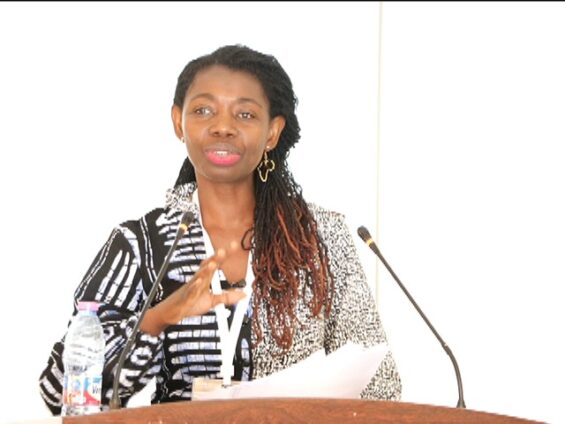
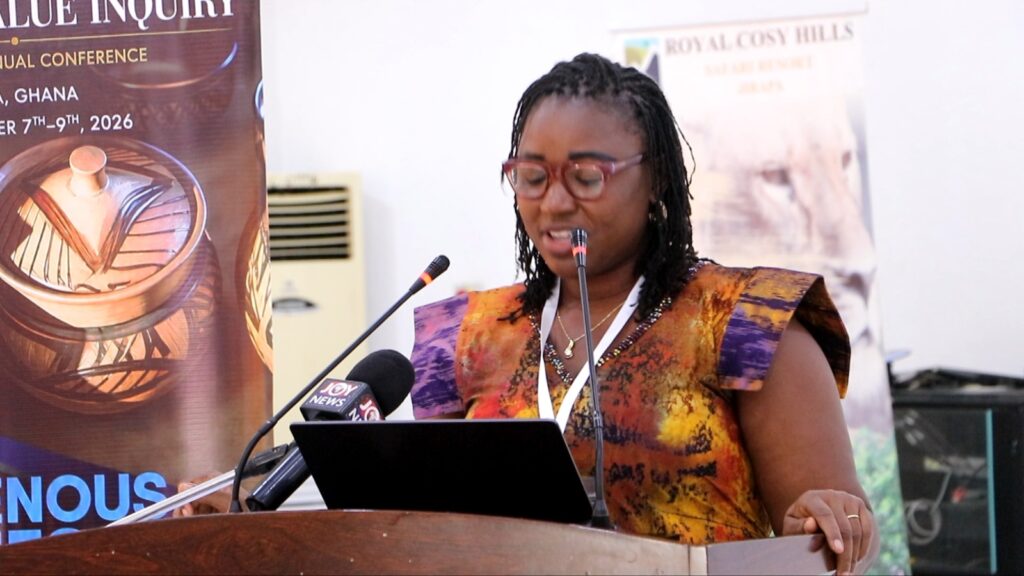
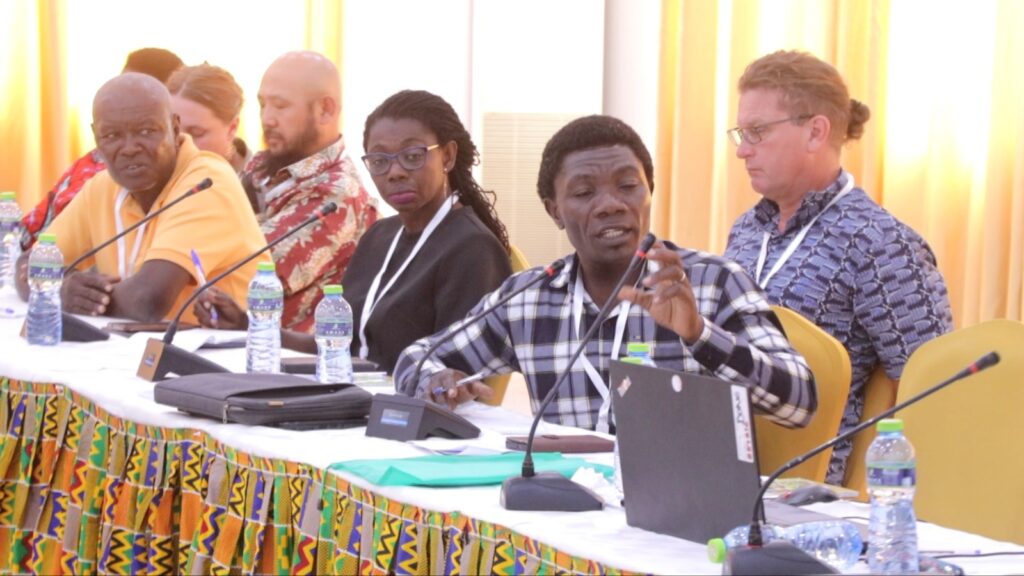
This was the powerful call by Prof. Sylvia Bawa as she delivered the keynote lecture at the maiden Institute of Global Value Inquiry (IGVI) Conference held at the Royal Cosy Hills Hotel in Jirapa.
Speaking on the theme, " (Re)Centring Epistemic Logics of the Future: Dismantling Disempowerment through African Value Systems", Prof. Bawa told scholars, traditional leaders, and students that decolonisation must move beyond buzzwords to become an exercise in reclamation, reparation, and restoration.
The Badare (Ananse) parable
She opened her lecture with a story of a harvest contest in a prosperous village, where the person who could raise dust by dancing on a rock would be crowned the best dancer for life. After the best dancers failed, Ananse tied a belt of ashes around his waist and filled his anklets with ash.
With every step he took, dust rose, and he won the contest. However, drunk on his own trickery, he asked for one more dance after his ashes were exhausted. He danced, shook, and stamped, but nothing happened, causing him to vanish in disgrace.
The parable, Prof. Bawa explained, mirrors hollow development models that perform empowerment without substance.
Jirapa: A place of many firsts
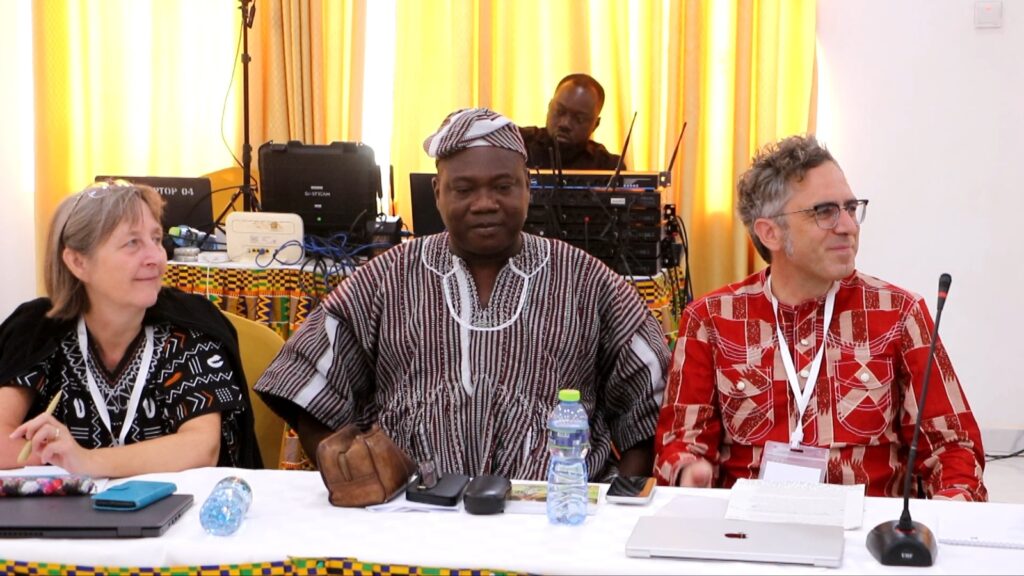
Prof. Bawa paid tribute to IGVI Directors Dr. Valentine Beck and Prof. Dr. Anke Graness, alongside host Prof. Constance Awinpoka Akurugu, describing Jirapa as a historic location of notable milestones.
"Jirapa is home to the very first all-girls secondary school in the region, established by the first Catholic bishop who was also the first true convert of the first Christian missionaries. This place is the birthplace of Christianity in this region. Today, you join these historic firsts by hosting the first IGVI global conference in the global south and the place of many firsts," she stated.
Greeting the gathering in Waali—"Ye Ansumaa, ye da gyen yeng?"—she noted that she brought greetings from her home, describing it as a feminist intellectual powerhouse of mothers and foremothers whose labour nourishes scholarship even in their absence.
African exceptionalism and the culture trap
At the heart of her lecture, Prof. Bawa interrogated the conceptualisation of culture. Culture, she argued, was constructed as Africa's primary marker of difference from European colonisers and is now used to sustain "African Exceptionalism"—the notion that Africans are static, fossilised, and content with their plight.
This framing, she contended, achieves two damaging outcomes: it sets African women up for pity parties and Western-led empowerment projects, while locally enabling non-women bodies to escape sacrifice by making women the sole custodians of culture.
"We can use African feminist methodologies of deconstruction, centre women's experiences and knowledges, to reject exceptionalism, reclaim the only culture that has ensured our survival, and harness it to thrive," she declared.
That culture, she emphasised, is the culture of knowledge and its transmission. If we accept the principle of Ubuntu—expressed as "N tan bebe mang me bebe" in Dagaare and "te gyaa bonyeni" in Waali, meaning "we are one"—then marginalisation based on sex, gender, and sexuality is alien to the African world sense.
She criticised the flattening of rich, relational identities such as senior mother, junior mother, and anatomically female fathers into generic terms like "women" and "aunty", as well as the romanticisation of the "Hardworking, hard suffering woman."
She further warned that scholars remain complicit through intrusive ethnography that homogenises women without examining their specific familial and societal roles beyond wives, such as daughters and mothers.
The decolonisation that never happened
On the subject of decolonisation, Prof. Bawa argued that immediate post-independence leaders retained colonial infrastructure. Preoccupied with political survival, they had little opportunity to imagine a genuinely African governance system. Having been educated in Europe, many protected their own privileges, ensuring that the "class suicide" advocated by radical Pan-Africanists like Amílcar Cabral never materialised.
Sixty years on, she observed, quoting Mahmood Mamdani, Africa has become a system of "decentralised despotism" where women's labour—biological, cultural, and political—is indispensable, yet women remain marginalized. She described them as "disposable indispensables."
Hippos, crocodiles, and human-nature relationality
To illustrate the depth of African value systems, Prof. Bawa presented two evidence bases.
First, she highlighted relationality beyond human beings. Citing Wangari Maathai's Green Belt Movement, she explained that for the Dagara people, Tengban (mother earth) is the source of all life, while the Bagre ritual teaches humans that they are custodians of the land.
She referenced the people of Wechiau, whose history tells of how hippos formed a bridge with their bodies to save them from slave raiders, and the people of Paga, who view crocodiles as siblings and ancestors for rescuing them in times of need.
During the Jumbeti harvest festival, the Waala people preserve KpinSao—food set aside for ancestors—because the departed return to celebrate with the living.
"Our humanness is defined in relation to non-humans. We lost siblings forcibly removed from their Tengbane to strange lands," she said.
Second, she juxtaposed two gendered images from South Africa's democratic transition: Nelson Mandela and F.W. de Klerk jointly receiving the 1993 Nobel Peace Prize, compared to Winnie Madikizela-Mandela being vilified while Joyce Seipei, mother of murdered 14-year-old Stompie Seipei, became the sympathetic grieving mother of the nation.
She argued that while Mandela and de Klerk were celebrated together for bridging peace, the complex middle ground was occupied and navigated by disposable bodies—particularly women like Winnie, who entered public spaces historically reserved for men and were subsequently made scapegoats.
Afrofuturism: "We are the sun"
Looking to the future, Prof. Bawa advocated "imagineering" through Afrofuturism—a framework pioneered by writer Octavia Butler that fuses speculative fiction, technology, African art, spirituality, and creative imagination to envision a just society.
She rejected dependency narratives surrounding issues like "period poverty"—stating, "We have made and can make our own pads!"—and criticized micro-credit schemes that target only women in poverty-stricken communities, thereby increasing their financial burdens.
She also questioned slogans like "men too can cook" when stripped of context. She pointed out that among the Dagara, the kitchen doubles as a barn where food is stored after harvest, representing a woman's exclusive domain of authority within her husband's home. Furthermore, she noted that rural men routinely cook on farms, asserting that it is urban colonial informants who falsely claim they cannot.
She concluded her address with the words of celebrated filmmaker Ousmane Sembène when asked how his films might be understood in Europe: "Europe was never my centre. Why be the sunflower and turn toward the sun? I myself am the sun."
Other knowledges, she remarked, have brought light—Changnu—but whether that light was truly enlightening—Chang—remains the fundamental question. Without genuine enlightenment, light functions merely as a candle providing tunnel vision, leaving society in complete darkness (liirung) once it burns out.
Quoting Ama Ata Aidoo's The Dilemma of a Ghost and referencing Jean Berkolo's description of colonisation as a bad accident, she asked: "We must not forget that we were headed somewhere before the colonial encounter. Do we need to keep centring the accident?"
The alternative, she emphasized, remains Sembène's imperative: to stand firm and hold space as the sun.
Latest Stories
-
Diaspora Nasara Caucus congratulates Mohammed Ali Suraj, new NPP executives
8 minutes -
Dr Antwi-Boasiako’s cybersecurity book showcased at UN crime prevention congress
10 minutes -
We will empower the grassroots and protect every vote – NPP’s 1st Vice Chair Kojo Bamba
20 minutes -
I do not see myself as better than anyone – NPP’s 1st Vice Chair Kojo Bamba
49 minutes -
Police blur the line between invitations and arrests – Reindorf Twumasi Ankrah
1 hour -
Turning invitations into arrests is making citizens reluctant to assist police – Twumasi Ankrah
2 hours -
The Traffitech-GH SMS spot-fine system: The good, the sad, and the funny – Bright Simons writes
2 hours -
Hawa Koomson pledges experienced and mature leadership of NPP women’s wing
3 hours -
Young woman found dead at Kasoa Peace Town
4 hours -
Playback: The Law examined lawful arrest in Ghana
4 hours -
Mahama urges African governments to treat healthcare as an investment, not budget cost
5 hours -
Bawumia congratulates John Boadu and new NPP executives, pledges support ahead of 2028
5 hours -
Aksa Energy delegation pays courtesy call on GRA Commissioner-General
5 hours -
‘No talent should be left out’ – Bawumia pledges inclusive NPP campaign for 2028
5 hours -
Prof. Mike Oquaye recounts how he blocked the Special Prosecutor’s attempt to arrest Bawku Central MP
5 hours