

Audio By Carbonatix
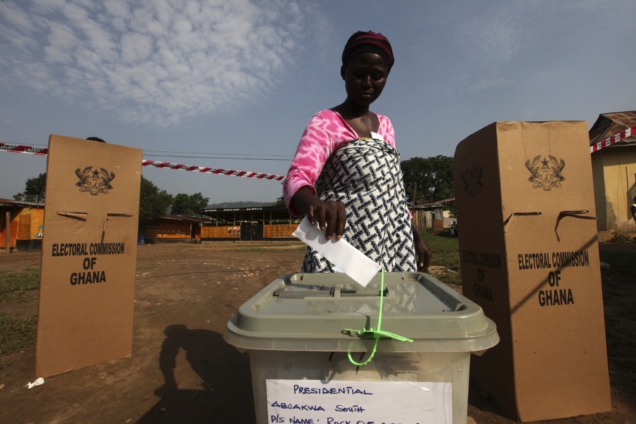
Even though I have not as yet seen any detailed analysis on the voting pattern of women and first-time voters in particular in Ghana’s election results, I am beginning to imagine something extraordinary will happen at the December 7 2020 polls.
I am imagining that there will be some impact from women and youth votes on the winning fortunes of parliamentary and presidential candidates when the election results are finally declared.
Women
Women because it is a known statistical truth that women form the majority of the Ghanaian population.
So my deduction is that if women were to look out for their own, then with as many as four women standing for top positions in their political parties at the December polls, there is a foregone conclusion that female votes would be split between the four parties.
These parties are the National Democratic Party (NDP)with Mrs. Nana Konadu Agyeman Rawlings as flag bearer; the Progressive People’s Party (PPP) with Madam Brigitte Dzogbenuku leading them as flag bearer; the National Democratic Party (NDC), featuring Professor Jane Naana Opoku-Agyeman as the running mate of its presidential candidate and the Ghana Freedom Party (GFP) with Madam Akua Donkor as its flag bearer.
From what I have seen of the NDC and the New Patriotic Party (NPP) manifestos, they both promise juicy packages for women. Coupled with that, their leading members are all over emphasising and highlighting those women-favoured promises as they tour the country.
Indeed the other smaller parties have also not shied away from promises to women. It would therefore be interesting to see how these promises would impact on women votersand how they would translate into votes for any or all of the parties.
Youth
It is also a known fact that we have a growing youth population. But perhaps more importantly, the Electoral Commission (EC) made it known during the recent voter registration exercise that we have as many as one million first-time voters who were expected to register. That is a huge number to made significant impact on election results.
Last week, something I read in the press has been my pick for this week as I began to gather thoughts together for this article. I read that a youth group known as “Youth Bridge Foundation” has been set up with the aim to mobilise and build the capacity of Ghana’s first-time voters to ensure they made informed decisions when they went to the polls.
Adding her voice to the conduct of the first-time voters, the leader of the Group, Clara Amoateng Benson said , “We are happy that for the first time, the youth in this country are showing a keen interest in the electoral process”. Indeed showing interest in and being part of the success story of the process is far rewarding than getting involved in electoral violence which is often accredited to the youth.
There seems to be everything going for the youth in this coming election. All the political parties, particularly the two leading ones have exhibited some level ofcommitment to carry the youth of this country with them. They have both specifically committed to heightened youth development and employment under their tenure with entrepreneurship as the active agent.
The other dimension which seems to bring first-time votersinto the conversation is the case of Senior High School (SHS) graduates. These 18 year olds or more are the first beneficiaries of the free SHS policy of this government. As first time voters, will it be payback time to vote for their benefactor to come back to power to continue to do more for their younger siblings?
Surely, under normal circumstances and with all things being equal, the juicy promises from the various parties to women and the youth should translate to votes depending on which promise appeals most and sounds more doable.
It would be an interesting development to be able to track these two voting population, women and the youth, and establish how they casted their votes. What decisionsinformed their choices would be interesting to know. It would be an added focus to shape the direction of future politicians seeking to govern the country.
Perhaps, going forward, the Electoral Commission willhelp us understand how the voting pattern for this and future elections. After all, voting dynamics are changing as the electorate gets more discerning.
We are gradually seeing more of issues driven discussions in the election space; an encouraging development in our growing democracy.
Writer’s email: vickywirekoandoh@yahoo.com
Latest Stories
-
‘Big Push’: Government assures contractors of prompt payments
4 minutes -
Court fines miner for breaking into gold buying shop
14 minutes -
Tarkwa court jails labourer for three years over GH¢123,000 theft
1 hour -
GAEC must retain nuclear scientists for Ghana’s nuclear ambitions – Minister
2 hours -
Man reportedly mistaken for game and shot by hunter dead in forest
2 hours -
19-year-old mason jailed 15 years for defiling seven-year-old pupil
2 hours -
Ghana’s banking sector assets rise 20.47% to GH¢500.2bn – BoG Governor
2 hours -
22 injured as Sprinter bus overturns at Sege after tyre burst
2 hours -
UN housing expert urges Ghana to strengthen Rent Control Department amid housing affordability concerns
2 hours -
Delta-BCI partnership reaches 166,000 people with breast cancer education
2 hours -
Power restoration fault suspected in Kumasi Central Market fire
7 hours -
The 7-foot giant of Ngleshie Amanfro: Seven-foot Ghanaian Ephraim Saawa dreams of joining the national basketball team
8 hours -
Government promises support for Kumasi Central Market fire victims
8 hours -
Vibes The Movie: Big Ghun’s Ghanaian film earns five nominations at 2026 REFFA
9 hours -
‘I’m a fulfilled man’—Justice Korbieh on missing out on Supreme Court despite two nominations
9 hours