

Audio By Carbonatix
A midwife and rural health worker, Eyram Davordzi-Banini, is calling on the government to extend rural incentives to cover all CHPS zones and compounds, warning that many communities would be left with no healthcare at all if rural nurses and midwives are not given the recognition and support they deserve.
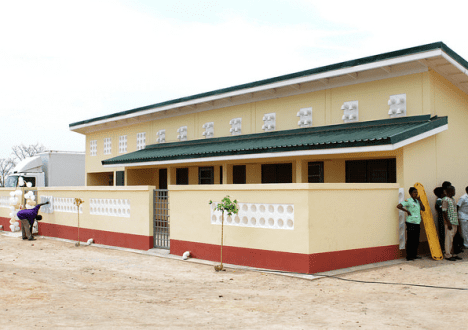
In a passionate appeal addressed to the President, Parliament, and the Ministries of Health and Finance, Davordzi-Banini paints a stark picture of life at a typical CHPS compound in rural Ghana.
“When you visit many CHPS facilities, you may see only one nurse or midwife on duty. What most people do not realise is that this single person is carrying the responsibilities of many professionals,” she said.
That one health worker, she explains, doubles as the cleaner, records officer, OPD and emergency nurse, consulting room “doctor,” laboratory technician, dispensary assistant, cashier, NHIS claims officer, HIV and TB counsellor, data officer, and even the facility’s security.
On top of that, the same midwife or nurse conducts antenatal care, assists with deliveries, provides postnatal care, runs 24-hour services, and goes on home visits—sometimes walking long distances to plead with clients to seek care.
Yet, Davordzi-Banini notes, when the health worker is not visible at the facility for even a moment, community members quickly complain to the local assembly member, forgetting that the worker is entitled to rest, privacy, and a personal life.
She also highlights the stark lack of social amenities in rural communities—poor roads, unreliable transport, no good schools for their children, no recreational centres, and no libraries—making the posting even more punishing compared to city postings.
“When discussions about rural incentives arise, some CHPS zones and compounds are still excluded. This is deeply unfair,” she wrote.
“If Ghana truly wants to strengthen primary healthcare, then rural incentives must cover ALL CHPS zones and compounds, not just a selected few.”
Her appeal comes amid ongoing national conversations about the government’s efforts to improve primary healthcare under the Ghana Health Service, including the Agenda 111 hospital projects and the revitalization of the Community-based Health Planning and Services (CHPS) strategy.
However, health worker unions have repeatedly complained about the uneven distribution of rural allowances, poor infrastructure, and chronic understaffing at remote facilities.
Latest Stories
-
Sexual abuse in schools persists because perpetrators are not held accountable – Dr Nyarkoa
4 minutes -
Chief Justice has designated Achimota Court to handle petroleum diversion cases – NPA CEO
6 minutes -
Philip Nai and friends gear up for bigger seventh Christmas outreach
8 minutes -
GSA strengthens electricity meter testing to protect consumers and improve energy reliability
9 minutes -
‘Dismissed or suspended? Ghanaians deserve clarity’ – NPP demands clarity on Ampofo Ankrah’s fate
13 minutes -
Teach consent and sexual boundaries from pre-school to prevent abuse – Gender advocate
18 minutes -
Zonda Tec launches HOWO T3M truck to support agric and logistics
27 minutes -
Obuasi SHTS scandal: Eduwatch calls for sex offenders’ register and mandatory background checks for teachers
39 minutes -
GloMeF CEO urges intensified public education on new road traffic regulations
51 minutes -
‘Any tax on ChatGPT is an attack on education and innovation’- Akim Swedru, MP
54 minutes -
Obuasi SHTS sexual abuse scandal exposes systemic failure in child protection – Moving Masculinity
55 minutes -
Hubtel CEO calls for national data-sharing framework to boost AI development
57 minutes -
Twelve Golden Rules of real estate development in Ghana, Africa
1 hour -
Five new telephony cell sites in Ashanti Region to be activated in October 2026 – Sam George
1 hour -
Mahama cuts sod for Afienya Industrial Park, targets 120 enterprises
1 hour