

Audio By Carbonatix
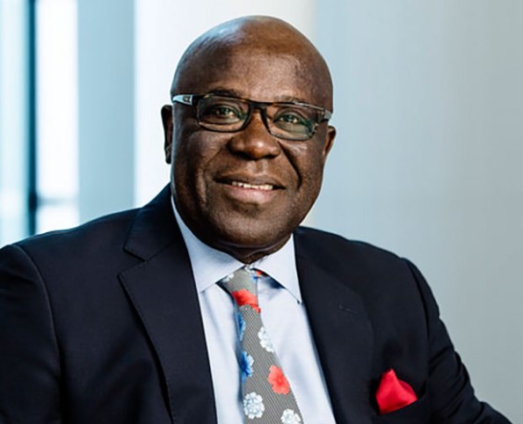
Ghanaian businessman and chancellor of the University of Cape Coast, Sam Jonah, has advised President Akufo-Addo to begin solving Ghana’s economic crises by tackling the importation of foreign goods.
Speaking at the 60th anniversary of the University of Cape Coast (UCC) on Thursday, he explained that the high demand for foreign goods especially foodstuff has largely contributed to the economic challenges the country currently faces.
“I personally believe that unless and until we take concrete measures and actions to ensure an integrated economy, which would make us less dependent on foreign goods, I am afraid our economic challenges would be further exacerbated,” he explained.
Mr Jonah stressed that most food items consumed in Ghana are imported, hence the need to tackle that first.
“I think it is unconscionable that most of the tilapia we consume comes from China. Our frozen chicken comes from the Netherlands and the United States and, of course, we rely on Burkina Faso for our onions and tomatoes,” he added.
Mr Jonah said that “now, I am sure you all learnt that the Chinese having taken over and destroyed our land are now producing cocoa and exporting cassava and gari and yams. The cost of food is a major part of any nation’s economy and it behooves on all of us to do whatever we can to improve accessibility and affordability.”
This comes after the cedi was cited by a Bloomberg report as the worst-performing against the dollar worldwide.
The Ghana cedi also lost further grounds Friday morning to trade at ¢14.70 to the dollar, quotations from the forex bureaus indicate.
The free fall of the local currency is having adverse effects on importers who rely on the dollar to trade.
On Saturday, on Newsfile, a Senior Lecturer at the Department of Economics, University of Ghana, Legon, Dr Twumasi Baffour urged importers and members of the Ghana Union of Traders Association (GUTA) whose capital has been greatly affected because of the depreciation to source local alternatives for their products.
“I know that about some months ago GUTA was in talks with the Ministry of Trade looking at options available in terms of import substitution. I share in their sentiment because if you are trading and you consistently losing the value of your capital it is not a comfortable place to be,” she said.
“But the question also is that all the things that a lot of their members are importing, is there the option to source local alternatives? Is there the option for the government to sit down with these groups and see the possibility of them moving into areas where they could be producing locally and supporting local manufacturing firms?” Dr Twumasi Baffour quizzed.
Latest Stories
-
Ghana eyes stronger trade ties as Australia hosts multicultural trade and investment forum
1 minute -
Margaret-Marie Krakue
4 minutes -
Ayariga announces plans for live broadcast of MMDAs’ meetings on local radio stations
7 minutes -
Mrs Anna Tackie
9 minutes -
Ghana links Afghan heroin and Brazilian cocaine to global drug markets – Global Organised Crime Index
16 minutes -
NHIA launches nationwide inter-school quiz to deepen students’ knowledge of NHIS
23 minutes -
Political protection could be masking Ghana’s cocaine trade – Global Organised Crime Index
28 minutes -
AFCON 2027Q: ‘We have to dissolve the GFA’ – Effia MP after Black Stars lose to Gambia
30 minutes -
NPP announces voting schedule and ID requirements for October 3 national elections
32 minutes -
Lupus can mimic HIV symptoms and damage kidneys if untreated – KNUST expert
35 minutes -
Focus on Sickle Cell Foundation seeks to introduce sickle cell education through comics in Ghanaian schools
41 minutes -
NPP rewrites the campaign playbok as opposition reality shapes National Executive contest
42 minutes -
Road safety education will fail without enforcement – NRSA boss
43 minutes -
Daily Insight for CEOs: Finishing Q3 strong and entering Q4 with purpose
44 minutes -
National Ambulance Service begins ‘Operation Restore Fleet’ to restore grounded ambulances
45 minutes