

Audio By Carbonatix
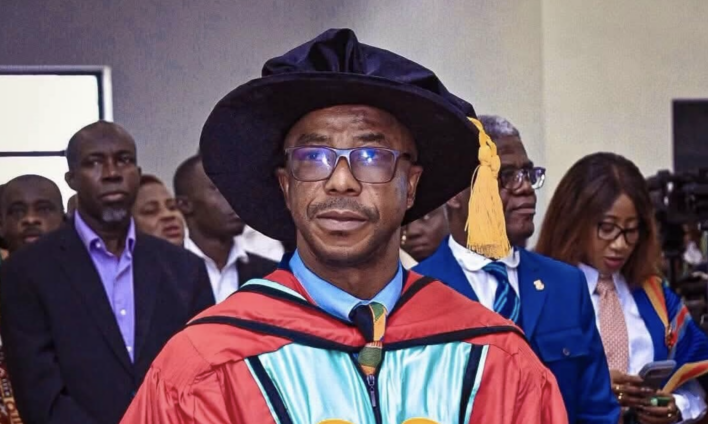
Professor Edward Wiafe Debrah, Pro-Vice-Chancellor of the University of Environment and Sustainable Development (UESD), has called for science-driven conservation measures and stronger stakeholder collaboration to safeguard Africa’s biodiversity and ensure sustainable development.
He warned that continued biodiversity loss and environmental degradation could undermine the continent’s food security, climate resilience, public health, water resources and economic growth.
Prof Debrah made the call during his inaugural lecture at UESD in Somanya on the theme: “Biodiversity at the Crossroads: Science, Conservation and Sustainable Development in Africa.”
He described biodiversity as the foundation of sustainable development and stressed that ecosystem protection should be treated as a development priority rather than merely an environmental concern.
The conservation scientist noted that habitat destruction, climate change, illegal mining, deforestation, pollution and land degradation were placing unprecedented pressure on Africa’s ecosystems.
“Conservation should not be regarded as an environmental issue alone but as a development priority requiring strong political commitment and scientific evidence,” he said.
Prof Debrah advocated stronger collaboration among governments, academic institutions, civil society organisations, local communities and the private sector to safeguard biodiversity for future generations.
He emphasised that development should not come at the expense of the natural systems that sustain human life and called for science-based policies that balance economic growth with environmental protection.
Drawing on more than three decades of research, Prof Debrah highlighted his contributions to primate conservation, wildlife management, forest ecology, ecosystem restoration and environmental governance.
He cited his work on endangered primates within the Upper Guinea Forest ecosystem, including the Roloway Monkey, Lowe’s Monkey, White-thighed Colobus and Olive Colobus. Research findings from those projects, he said, had informed conservation policies, International Union for Conservation of Nature (IUCN) Red List assessments and species recovery programmes.
The Pro-Vice-Chancellor advocated community-centred conservation approaches, stressing that local communities must become active partners and beneficiaries of biodiversity protection efforts.
According to him, sustainable livelihoods, environmental education and responsible governance were essential to achieving successful conservation outcomes.
He expressed concern over indiscriminate deforestation and the unsustainable exploitation of natural resources across Africa, stressing that development must be pursued without destroying the environment.
Prof Debrah described environmental stewardship as a collective responsibility, saying conservation could not be left in the hands of a few individuals.
“Government, scientists, communities and individuals all have a role to play in protecting our natural resources,” he stated.
He also called for stronger climate resilience measures through green infrastructure and sustainable land-use practices.
He cautioned against the increasing concreting of river bodies and wetlands, explaining that wetlands serve as natural water-retention systems that help minimise flooding.
“If we continue to build concrete bridges and artificial rivers, we will come back and complain every day,” he said.
Prof Debrah urged government institutions to rely more on scientific evidence and expert advice from ecologists and environmental scientists in environmental decision-making.
Commenting on the lecture, the Vice-Chancellor of UESD, Professor Eric Nyarko-Sampson, commended Prof Debrah for his contributions to conservation science, research, mentorship and academic leadership.
He described him as a distinguished scholar whose work had advanced environmental sustainability in Ghana and beyond.
Prof Nyarko-Sampson noted that Prof Debrah, a conservation scientist, primatologist and environmental manager, had amassed more than 30 years of experience in biodiversity conservation, forestry, wildlife management and environmental governance.
He described him as a distinguished scholar whose work had advanced environmental sustainability in Ghana and beyond.
Professor Gibrilla Abass, Senior Lecturer at the Department of Water Resources and Sustainable Development, described the lecture as insightful and timely, citing its strong linkage between biodiversity conservation and environmental sustainability.
He observed that Ghana’s environment was under increasing pressure from illegal mining, flooding and other environmental challenges, and stressed the importance of protecting natural resources to safeguard lives and future generations.
He also called for increased investment in research to address national development challenges.
The Chairman of the UESD Council, Mr Seth Terkper, and the Registrar, Mrs Mary Abena Agyepong, commended Prof Debrah for his contributions to biodiversity conservation and environmental science.
The lecture attracted traditional authorities, university management, academics, students, environmental practitioners, development partners and members of the public.
Latest Stories
-
‘I never said I’ll declare a state of emergency’ – President Mahama on galamsey
5 minutes -
Bobby Banson condemns EOCO’s attempted arrest of Nana Agyei Baffour Awuah
30 minutes -
When Kumasi begins to look like somebody is in charge
31 minutes -
Parliamentary probe into cocaine seizure would be a waste of time – Inusah Fuseini
37 minutes -
Cocaine seizure: Focus on Ghana’s reputation, not partisan blame – Osae-Kwapong
43 minutes -
Two Invitations, Three Interrogations: Did Baffour Awuah tell the whole story?
53 minutes -
Drug cartels may be seeing Ghana as easy route – Lenin Anane Agyei
2 hours -
Ghana risks gaining notoriety as drug-trafficking hub – Bobby Banson
2 hours -
Government dismissed my drug trafficking warning, then tried to arrest me – Ntim Fordjour
2 hours -
Day Two: 3rd Republic Bank-JoyNews Habitat Fair Clinic underway at Junction Mall
2 hours -
NACOC addressing inherited gaps in fight against drug trafficking – Deputy Director-General
2 hours -
Taekwondo goes to school as GTF launches five-region youth campaign
2 hours -
The issues Mourinho is struggling to fix at Real Madrid
2 hours -
Hundreds throng EducationUSA College Fair in Kumasi in pursuit of abroad studies
2 hours -
Drug bust: NACOC should be part of port inspection team – Twum-Barimah
2 hours