

Audio By Carbonatix
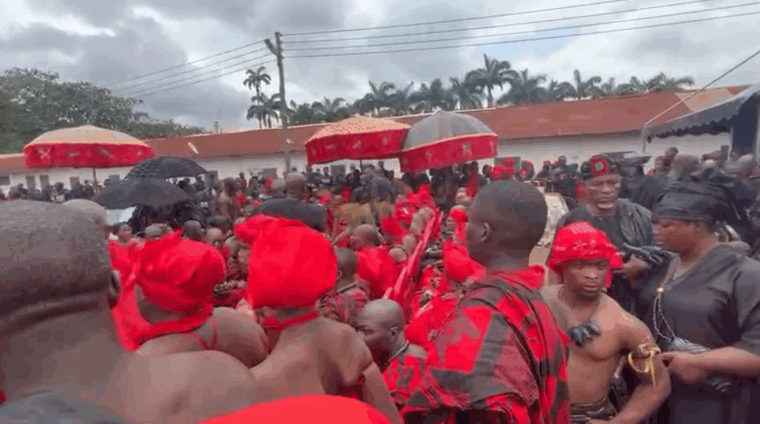
The Manhyia Palace in Kumasi once again became the heartbeat of solemn tradition on the third day of the burial rites of the late Asantehemaa, Nana Konadu Yiadom III.
The palace courtyard echoed with the sights and sounds of heritage, the rhythm of drums, the call of horns, and the wailing of dirges as hundreds gathered to honour the memory of the revered queen mother.
Day three of the Dote Yie rites saw a growing number of dignitaries arriving at the palace grounds.
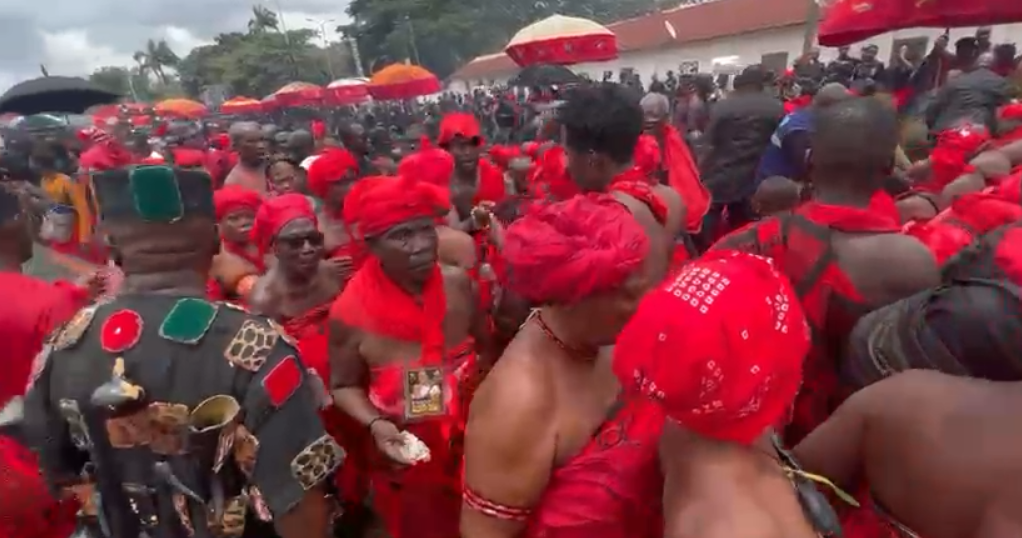
Political leaders, religious figures, and high-profile personalities joined mourners dressed in red and black, each paying their respects to the late Asantehemaa.
Traditional leaders from various tribes across Ghana were also in attendance, commiserating with the Asantehene, Otumfuo Osei Tutu II, and the Ashanti royal family.
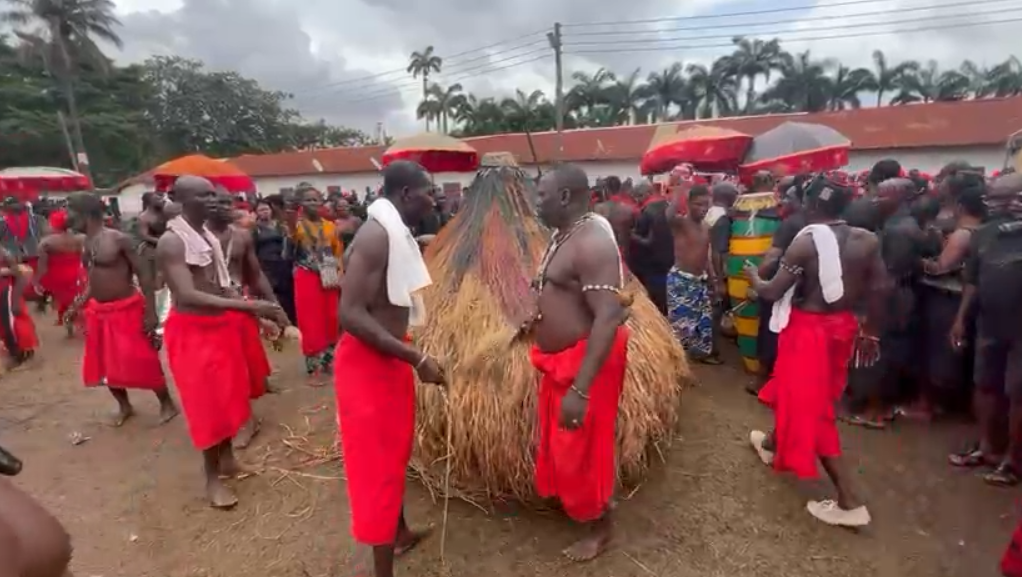
Notably, Igbo traditional leaders resident in Ghana joined the solemn procession, underscoring the cultural significance of the rites beyond Asanteman.
Chukwudi Jude Ihenetu and his entourage of Igbo tribesmen in Ghana have arrived in Kumasi to attend the third day of funeral rites for the late Asantehemaa, Nana Konadu Yiadom III. pic.twitter.com/KdLN9sOrTq
— SIKAOFFICIAL (@SIKAOFFICIAL1) September 17, 2025
With one more day of mourning rites ahead, Manhyia Palace continues to serve as the center of Ghana’s traditional and political convergence, reflecting the deep reverence for Nana Konadu Yiadom III and her lasting impact on the Ashanti Kingdom.
Yesterday, the Asantehene, Otumfuo Osei Tutu II, stood as the embodiment of a grieving kingdom, his attire speaking volumes where words fall short.

Clothed in a black mourning cloth intricately adorned with cowries, his presence reflects both the sorrow of loss and the weight of cultural continuity.
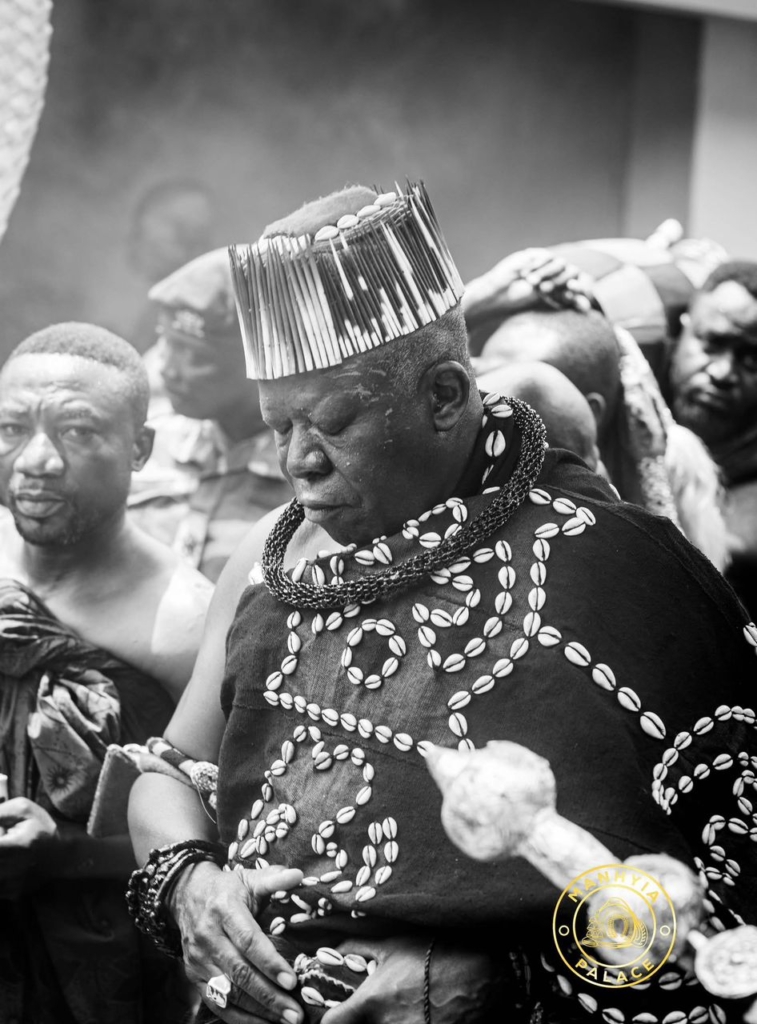
In Asante tradition, black is the ultimate symbol of bereavement, evoking solemnity and respect for the departed.
The cowries stitched across his garment carry a deeper resonance as they are not mere ornaments but ancient emblems of wealth, spirituality, and ancestral connection.
Once used as currency, cowries in this context symbolise the priceless value of the departed queen mother, the Asantehemaa, whose life and service to the Golden Stool cannot be measured.
Mfantse delegation, led by Oguamanhene Osaberima Kwesi Atta, joins Asantehemaa’s Dote Yie.
Below is the royal household of Tepa led by Tepamanhene and Tepamanhemaa, together with the children of Tepa Barnie.
Watch as the Mfantse delegation, led by Oguamanhene Osaberima Kwesi Atta, joins Asantehemaa’s Dote Yie.
Latest Stories
-
Trump says he is considering firing US ambassador to Greece
4 hours -
Man City bananas ‘brought fun back’, says Varadi
4 hours -
Meta releases Muse Wonder AI models to challenge Anthropic and OpenAI
5 hours -
Daily Insight for CEOs: The CEO as Chief Decision Maker
5 hours -
Burnham had formal meeting with Man City chair while mayor
5 hours -
Is Ghana producing too many lawyers? What is the best lawyer-to-citizen ratio?
5 hours -
NDC sinking Ghana’s democracy with Emelia Agbenyo’s appointment – Miracles Aboagye
5 hours -
Seedorf back in football as Corinthians head coach
5 hours -
Hincapié and Zubimendi injured in post-match training session
5 hours -
Fridges in French supermarkets hit by cyberattack
5 hours -
Qantas flight grounded after bedbug outbreak
6 hours -
Reality Zone with Vicky Wireko: International Day of the Girl, shaping today’s girl for tomorrow’s future – ZONTA Clubs lead the way
6 hours -
Global health must be led by countries, not designed for them – Mintah Akandoh
7 hours -
Mahama honoured at 2026 World Health Summit in Berlin for global health leadership
7 hours -
Breast cancer is not a death sentence – Besease Kontire Obaapanin, Magmina Foundation lead awareness campaign
7 hours