

Audio By Carbonatix
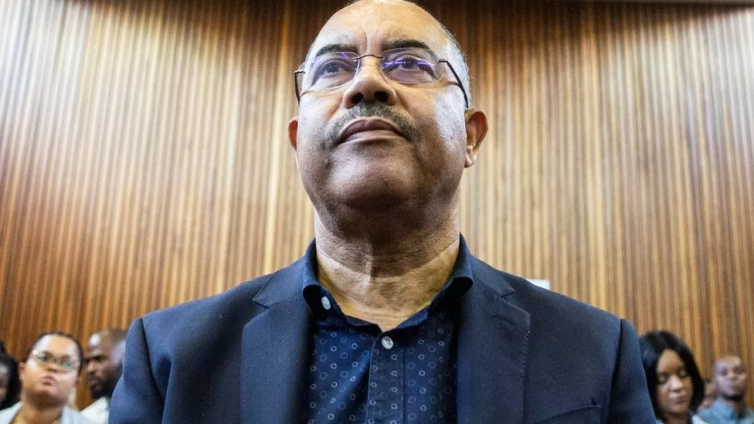
South African police have confirmed that former Mozambican Finance Minister Manuel Chang will be handed over to the FBI to face fraud and corruption charges in the US.
Mr Chang has been in jail in South Africa since December 2018.
He was in charge of Mozambique's finances when the country guaranteed more than $2bn (£1.5bn) in secret borrowing by state-owned firms.
It was the country's biggest corruption scandal and led to economic collapse.
It is alleged that the money was used to buy a large tuna factory, among other things, leading to the affair being dubbed the "tuna bond" scandal.
Last year 11 people - including the son of Mozambique's ex-president - were convicted of embezzlement and money laundering as part of the same scheme.
Mr Chang denies any wrongdoing.

The BBC understands that Mr Chang will be escorted by FBI officials later on Monday from Lanseria airport in Johannesburg to New York, where he will face trial.
The Mozambican authorities had wanted Mr Chang to be sent back to be tried on home soil, instead of in the US.
South African authorities says Mr Chang is expected to face charges in the US relating to loans obtained from Credit Suisse and Russia's VTB bank that were guaranteed by the Mozambican government.
Some of these loaned funds were not disclosed and were signed off by the former finance minister during his term in office between 2005 and 2015.
The US indicted Mr Chang and argued that he was implicated in the looting of funds which were donated by US investors.
How did the scandal happen?
Between 2013-2014, three newly established companies took on $2.2bn of debt, much of it without the knowledge or approval of the country's parliament. Despite this, the Mozambican government stood as guarantor of the loans, meaning the state would repay the money if things went wrong.
The money was allegedly used to buy a large tuna factory and a maritime security fleet, as well as to finance other deals involving companies in which the state is a leading shareholder.
In 2016, the government swapped some of the debt for a conventional bond, issued by the state. Soon afterwards, it admitted the full scale of the borrowing, triggering an economic crisis in Mozambique.
The country's currency lost a third of its value, inflation surged and foreign donors pulled out.
Auditors also reportedly discovered $500m of the money was missing.
The loans were issued by Credit Suisse and the Russian bank VTB, with three former Credit Suisse bankers pleading guilty to US charges of money laundering over the case.
In late 2021, UK authorities fined the investment bank $178m over the scandal.
The fine was part of a $475m settlement with UK, Swiss and US regulators.
Latest Stories
-
Okada riders must belong to registered unions or companies from 2027 – NRSA
30 seconds -
CRC recommendations: Christian Council rejects proposed five-year presidential term
38 seconds -
UKGCC/Ecobank PLC Golf Invitational caps off investment summit with renewed focus on partnerships and growth
50 seconds -
NCCE must be well funded to promote civic education – Sheikh Aremeyaw Shaibu
1 minute -
Republic Bank-JoyNews Habitat Fair heads to Ho Sports Stadium for 4th clinic set for October 16-18
1 minute -
AMA orders Accra shops, markets to close from 6am to noon for National Sanitation Day
2 minutes -
Dangote defends $16bn Kenya refinery as residents raise compensation, environmental concerns
3 minutes -
Work begins on 160-bed Western North Regional Referral Hospital – Kwakye Ofosu
4 minutes -
GPRTU says non-member commercial vehicles pose challenge to road safety enforcement
4 minutes -
Fuel transport licensing gaps could enable abuse and diversion – Transparency International Ghana
5 minutes -
Former Youth and Sports Minister questions Carlos Queiroz appointment process, alleges possible corruption
7 minutes -
NHIA targets 80% population coverage under 2026–2028 strategic plan
9 minutes -
MTTD must intensify enforcement against unregulated drivers – NRSA
9 minutes -
NRSA proposes separate registration and number plates for Okada riders
11 minutes -
National PTA backs striking teacher unions, urges Mahama to intervene
16 minutes