

Audio By Carbonatix
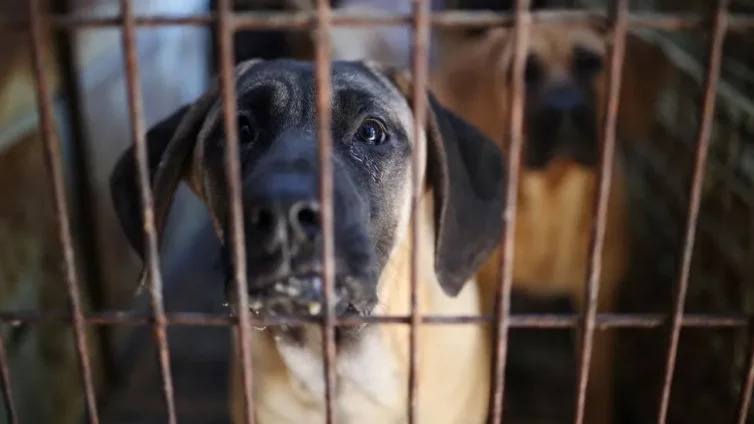
South Korea has passed a new law, which aims to end the slaughter and selling of dogs for their meat by 2027.
The law aims to end the centuries-old practice of eating dog meat.
Dog meat has fallen out of favour with diners over the past few decades. Young people especially shun it.
Under the law, raising or slaughtering dogs for consumption will be banned, as will distributing or selling dog meat. Those found guilty of doing so could be sent to jail.
Those butchering dogs could face up to three years in prison, while those who raise dogs for meat or sell dog meat could serve a maximum of two years. However, the consumption of dog meat itself will not be illegal.
The new legislation will come into effect in three years' time, giving farmers and restaurant owners time to find alternative sources of employment and income. They will have to submit a plan to phase out their businesses to their local authorities.
The government has promised to fully support dog meat farmers, butchers and restaurant owners, whose businesses will be forced to close, though the details of what compensation will be offered have yet to be worked through.
According to government statistics, South Korea had around 1,600 dog meat restaurants and 1,150 dog farms in 2023.
Dog meat stew, called "boshintang", is considered a delicacy among some older South Koreans, but the meat is no longer popular with young people.
According to a Gallup poll last year, only 8% of people said they had tried dog meat in the past 12 months, down from 27% in 2015. Less than a fifth of those polled said they supported the consumption of the meat.
Previous governments, dating back to the 1980s, have pledged to ban dog meat, but failed to make progress. The current President Yoon Suk Yeol and the First Lady Kim Keon Hee are known animal lovers. The couple owns six dogs, and Ms Kim has called for the practice of eating dogs to end.
Animal rights groups, which have long been pushing for the ban, praised the outcome of Tuesday's vote.
Jung Ah Chae, the executive director of the Humane Society in Korea, said she was surprised to see the ban in her lifetime. "While my heart breaks for all the millions of dogs for whom this change has come too late, I am overjoyed that South Korea can now close this miserable chapter in our history and embrace a dog friendly future", she said.
Dog meat farmers had campaigned against the ban. They argued that, given the declining popularity among young people, the practice should be allowed to die out naturally over time. Many farmers and restaurateurs are elderly and said it would be difficult for them to switch livelihoods so late in life.
One dog farmer, Joo Yeong-bong, told the BBC the industry was in despair.
"In 10 years, the industry would have disappeared. We're in our 60s and 70s and now we have no choice but to lose our livelihoods", he said, adding that this was "an infringement of people's freedom to eat what they like".
Latest Stories
-
Media urged to intensify awareness campaigns on breast cancer
3 minutes -
Interior Minister urges public to share drug intelligence
9 minutes -
Afadzato South DCE commissions water projects, teachers’ bungalow
14 minutes -
Council of State urges sustained dialogue, negotiations as teachers resume work
19 minutes -
We are committed to leaving a legacy in Mandari – Bole-Bamboi MP
23 minutes -
Greater Accra teachers resume work after strike suspension
31 minutes -
Education Minister assures teachers of salary adjustments by October 16
36 minutes -
Abass Osabutey declares bid for NDC Deputy National Organiser position
38 minutes -
Education Minister inaugurates NDU Governing Council, announces $25m seed funding
46 minutes -
THE LAW 101: La Beach Demolitions – The State’s own documents, the courts’ orders – and the bulldozers
49 minutes -
DVLA contributes GH¢17.7m to Consolidated Fund in 2025
52 minutes -
Why disaster risk reduction must connect early warnings, preparedness and financial protection to household-level resilience
59 minutes -
Fentuo Tahiru narrates how 2018 Commonwealth Games visa scandal became an international embarrassment
1 hour -
The AI Gold Rush: Who strikes gold and who gets left behind?
1 hour -
Australia visa scandal: Pius Hadzide says failed checks left him carrying the blame
2 hours