

Audio By Carbonatix
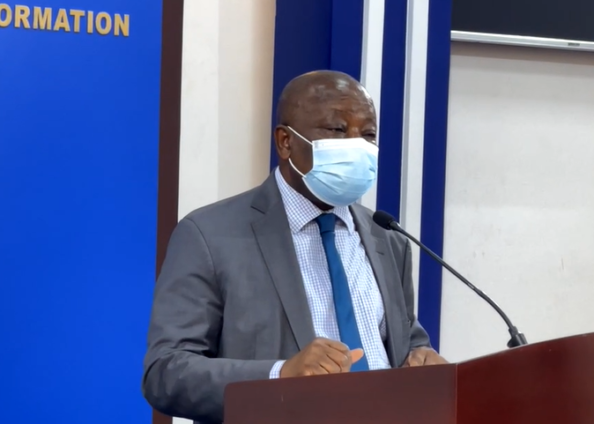
Health Minister Kwaku Agyeman-Man has warned health service providers to refrain from charging patients for services already covered by the National Health Insurance Scheme (NHIS) to revive public confidence in the scheme.
According to Kwaku Agyeman-Manu, the co-payment — a separate charge imposed by service providers for conditions already covered by the scheme — had become a major challenge for the scheme, and called on service providers, particularly, the Ghana Health Service (GHS), to help address the situation.
“Co-payments have been banned. The President hates to see poor patients being charged out of pocket for healthcare services,” he said.
“Maternal services such as deliveries are supposed to be free, but some facilities are charging patients as high as GH¢1,000 for the service, and that is unacceptable.
"When it happens that way, to the end-user it will look as if the scheme is not working,” he added.
Speaking to the Daily Graphic in Accra, the sector minister said co-payments created a barrier to access, and so the Ministry was working to end the illegality through meaningful engagements.
“Fortunately, the government has, in recent times, been doing well with timely payments. We have been doing frequent monthly payments in bits to ensure service providers get monies frequently.’’
“The arrears gap has been bridged over time. Service providers are owed about four or five months as compared to the situation that persisted some years back when they were owed 12 months and beyond.
“Service providers have therefore, no justification to indulge in co-payments. The act amounts to extortion, and that is illegal,” he said.
The minister said the NHIS was still effective and continue to provide unfettered access to healthcare delivery.
He said the government would continue to invest in the scheme, and added that the scheme had not shown any signs of crumbling.
Call on GHS
Mr Agyeman-Manu urged managers of the GHS, who constitute about 70 per cent of healthcare provider agencies under the ministry, to combat the canker that could make the NHIS unattractive.
“From the end-users' point of view, it looks like the scheme is not working as a result of the extortions.
"This statement is not meant to insinuate that health insurance is not working, but is an admonition to the managers of the Ghana Health Service to help end this criminality by every means possible,” he said.
The minister said the government was investing to strengthen the scheme, especially to deliver on the universal health coverage, a policy that seeks to ensure that there were no barriers to accessing health care.
“With huge investments and efforts being made, there is no way I would, in any way, suggest that the scheme is ineffective as being speculated,” he said.
NHIA caution
In January this year, the Chief Executive Officer (CEO) of the National Health Insurance Authority (NHIA), Dr Bernard Okoe Boye, cautioned facilities against co-payment arrangements or risk losing their accreditation.
"I am announcing confidently that very soon the accreditation of health facilities which additionally charge active NHIS patients with impunity will be revoked.
“The NHIA annually injects GH¢120 million into the health sector, an average of GH¢1.5 million is paid to each health facility every month across the nation.
"So we are pumping so much into the health sector on a monthly basis, and, therefore, we demand that patients who visit the hospitals should be taken care of and not be made to pay for services covered by the NHIS," he said.
Admitting that there were often delays in the payment of claims, Dr Okoe Boye, however, attributed the delay in the payment of claims partly to the fact that "some of the tariffs are high and unrealistic."
In February this year, the MoH and the National Health Insurance Authority (NHIA) reviewed upward the prices of medicines and services paid to the service providers and suppliers on the health insurance scheme to prevent them from making losses or refusing to offer services.
He said that the reviews were in accordance with the National Health Insurance Act, 2012 (Act 852), explaining that they were necessary to enhance service delivery for subscribers and give providers value for money to avoid certain gaps in accessing medications and services under the scheme.
Latest Stories
-
Young girls demand climate action, stronger protection against child marriage
3 minutes -
Ex-gang boss sentenced to 40 years for orchestrating Tupac Shakur’s murder
4 minutes -
From near-deferral to three awards: UMaT graduate’s academic journey
6 minutes -
Atta Akyea denies seeking presidential pardon for Wontumi in galamsey case
44 minutes -
Photos: Mahama commissions 85-bed Police Hospital ward, donates two ambulances
52 minutes -
GTEC directs Ghana’s public universities to reopen by October 16 and begin lectures on October 19
54 minutes -
Star Oil donates GH¢1million towards construction of new CID facility
57 minutes -
Court hands Adjetey Sowah, two others lifetime bans after Amputee Football legal dispute
1 hour -
NDC appoints Julius Kwame Anthony as a Deputy Communications Director
1 hour -
Ghana repatriates 120 Nigerians rescued from suspected cybercrime centres
1 hour -
NPP rejects Emelia Agbenyo’s appointment as Deputy EC Chair, demands withdrawal
1 hour -
EOCO grants Suame MP John Darko enquiry bail in GH¢27m SIC investigation
1 hour -
NPP cannot question EC appointment after appointing own people to Commission – Kwakye Ofosu
1 hour -
BoG deepens public trust with regional stakeholder forum in Techiman
2 hours -
‘We have turned the tide’ – Ato Forson says Ghana is ready to take off
2 hours