

Audio By Carbonatix
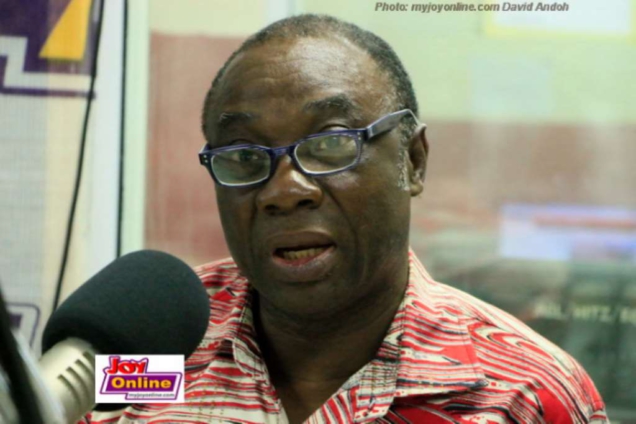
The Ranking Member of Parliament’s Employment, Social Welfare, and State Enterprises Committee, Dr. Kwabena Donkor, has voiced strong criticism of the Supreme Court’s recent dismissal of an application by Speaker of Parliament Alban Bagbin.
The application sought to overturn a previous ruling by the Court that prevented Bagbin from enforcing his declaration of four parliamentary seats vacant, but the Court upheld its initial stance, effectively maintaining the current occupancy of these seats.
In an interview with Citi FM on Wednesday, October 30, Dr. Donkor alleged that the Supreme Court’s ruling was influenced more by political motivations than by legal reasoning.
He expressed concern that the Court’s decision was swayed by political considerations, which he believes undermines judicial independence and impartiality.
He argued that the court’s approach has serious implications for the objectivity of Ghana’s legal system in critical democratic matters.
Dr. Donkor took issue with Chief Justice Gertrude Torkornoo’s justification that upholding the occupancy of the seats was necessary to prevent the affected constituencies from temporarily losing representation.
He found this reasoning inconsistent, pointing to the ongoing case of the people of Santrokofi, Akpafu, Likpe, and Lolobi (SALL), who have lacked representation in Parliament since the 2020 elections due to administrative issues and boundary challenges, yet have seen no intervention.
According to Dr. Donkor, the Court’s emphasis on preserving representation for the four disputed seats starkly contrasts with its stance on the disenfranchised SALL communities.
He argued that this selective application of the principle of representation suggests a bias in favour of certain constituents while neglecting the rights of others, casting doubt on the judiciary's impartiality in maintaining fair representation across the nation.
Dr. Donkor questioned the Supreme Court's dedication to upholding democratic fairness, especially for Ghanaians without a parliamentary voice.
He stressed that judicial decisions must prioritise equitable representation, warning that selective rulings could erode public confidence in the judiciary’s role in safeguarding democratic principles.
“The decision is not a legal one but a political one. I have also stated that this particular Supreme Court is more political than legal. If you listened to the argument of the Chief Justice in her ruling, that thousands of Ghanaians will not have representation if the ruling of the Speaker is not stayed, it is the most flawed reasoning I have heard in Ghana’s political economy."
“It is flawed because Parliament, per its calendar, will be rising in two weeks from today. And also, the people of SALL have been without representation and they are not Ghanaians.”
Latest Stories
-
Teacher unions declare nationwide strike over unpaid promotion arrears and delayed negotiations
27 minutes -
Engage Now Africa and LDS church commission boreholes for five communities in Upper East
48 minutes -
GPL 2026/27: Karela United bank on home form against Hearts of Oak
57 minutes -
NPLs declined to 15.7% in August 2026
1 hour -
Existing Cedi notes to remain legal tender alongside Heritage Series – BoG
1 hour -
Consumer, business sentiments positive – BoG
2 hours -
There’ll be no GH¢500 Cedi note as part of Heritage Series issuance – BoG
2 hours -
Heritage Series Cedi notes to modernise cedi while preserving national identity – BoG
2 hours -
Ghana’s business environment at ‘Inflection Point’ as private Sector takes greater lead — Vish Ashiagbor
2 hours -
At least 2 new airlines could join domestic aviation market by 2027 – GCAA Director General
2 hours -
What if Ghana’s next tourism boom begins with Ghanaians?
3 hours -
Energy Commission to monitor EV charging stations
3 hours -
Invest with confidence, Ghana’s golden era is beginning – Finance Minister
3 hours -
Do Ghana to launch The Great Ghana Day Out on World Tourism Day
3 hours -
Clean up our politics before politics cleans us up
3 hours