

Audio By Carbonatix
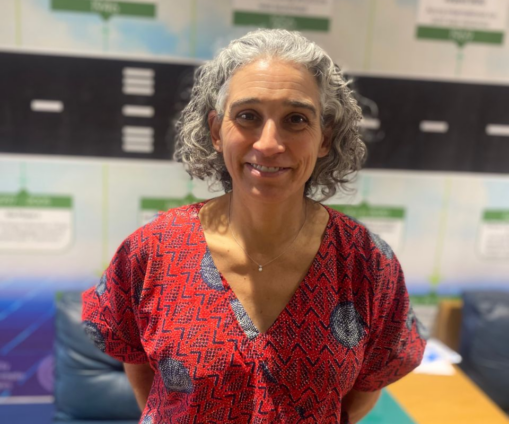
Ghana possesses significant potential to become a hub for sustainable aviation fuel (SAF) production, offering both environmental and economic benefits, according to Damiana Serafini, Technical Consultant to the International Civil Aviation Organization (ICAO).
Speaking to journalists on Tuesday at the ACT-SAF Feasibility Study Delivery Programme, themed “Feasibility Study on the Use of Sustainable Aviation Fuels”, Serafini highlighted the country’s abundant feedstock resources and the value that SAF development could bring across multiple sectors of the economy.
“Ghana has enough feedstock, and a variation of feedstocks, that can be sourced for the production of sustainable aviation fuels,” Serafini said.
While noting challenges in feedstock collection, aggregation, pre-treatment, and conditioning, she emphasised that these obstacles are common in many nations and can be overcome with the right policies.
“The potential exists in Ghana, and our findings show which feedstocks make the most sense in terms of quality, volume, and sourcing paths,” she explained.
“Decision-making processes and clear policy signals will define how the industry develops, because investors use policy frameworks to de-risk their investments.”
Serafini stressed that Ghana is not unique in its potential, but the country can differentiate itself through strategic policy decisions that attract investment and guide the SAF sector.
The ICAO expert highlighted that SAF offers far-reaching benefits beyond reducing aviation emissions.
While aviation is a relatively small contributor compared with other industries, its exponential growth means that SAF will play a critical role in national and global climate targets.
“SAF brings economic development across the upstream, middle, and downstream sectors, but most benefits are upstream where the feedstock is produced,” Serafini said.
“Emission reductions are just the final outcome; the real gains happen throughout the value chain.”
She cited the example of cocoa husks, which are often discarded in fields, generating methane emissions and representing wasted resources.
“If these husks are collected, pretreated, and conditioned for SAF production, investors will buy them, creating value where there was none. Small farmers producing cocoa would then find value not only in the pods but also in the husks,” she explained.
According to Serafini, using agricultural residues or municipal solid waste as feedstock requires efficient systems for collection and conditioning, which in turn creates employment opportunities, stimulates local economies, and promotes sustainable agricultural practices.
Serafini emphasised that Ghana’s SAF potential extends far beyond aviation. By integrating sustainable practices in feedstock collection and certification, inefficiencies in existing agricultural and waste management systems can be resolved, generating economic value and reducing environmental harm simultaneously.
“The benefit is way beyond aviation, way beyond emissions. It’s a sector that extends across multiple industries in the economy, providing opportunities for innovation, investment, and social development,” she said.
The ACT-SAF programme, funded by the UK Department for Transport and supported by ICAO, is expected to provide critical guidance for policy, investment, and regulatory frameworks, helping Ghana realise the full potential of its SAF industry.
Latest Stories
-
Prioritise cocoa sector with better prices, timely payments-Annoh-Dompreh urges NDC
14 minutes -
Lands and Mines Watch Ghana endorses Heath Goldfields’ mining capacity
29 minutes -
Gbintiri residents protest alleged diversion of 24-hour market project
54 minutes -
Justin Bieber headlines Coachella with nostalgia-fuelled set
56 minutes -
Ukraine and Russia accuse each other of hundreds of ceasefire violations
1 hour -
Asha Bhosle: The sound of Bollywood dies aged 92
1 hour -
Fire destroys section of 4-bedroom apartment at Tantra Hill
1 hour -
Safe city: Unnoticeable protection
2 hours -
North East Regional Police Commander raises alarm over burning of checkpoints
2 hours -
Free Primary Healthcare Programme set for take-off — Health Ministry confirms readiness
2 hours -
3 co-wives, 5 children perish in canoe disaster – Maritime Authority insists life jackets use mandatory for all water transport
3 hours -
Iran war lands ‘triple blow’ to flood-ravaged Sri Lankans
3 hours -
Gunmen kill at least 11 people at Afghanistan picnic spot
4 hours -
Woman, 25, in court for stealing baby at Bogoso
4 hours -
Trump unveils giant gold-accented victory arch design for US capital
4 hours