

Audio By Carbonatix
Introduction
Ghana, a nation known for its rich natural resources, is facing an environmental crisis. Illegal small-scale mining, known locally as galamsey, has become a rampant issue, causing severe damage to the environment. Beyond the immediate environmental degradation, galamsey is also contributing to the global problem of climate change. This story explores how galamsey is affecting Ghana’s environment and its broader implications for climate change.
The Rise of Galamsey
Galamsey, a term derived from "gather them and sell," refers to the illegal mining activities that have spread across Ghana’s mineral-rich regions. While the formal mining sector contributes significantly to the economy, galamsey thrives in the shadows, driven by poverty, unemployment, and the lure of quick profits. However, the cost of this informal mining is far greater than the benefits it brings to the few who profit from it.
Environmental Devastation
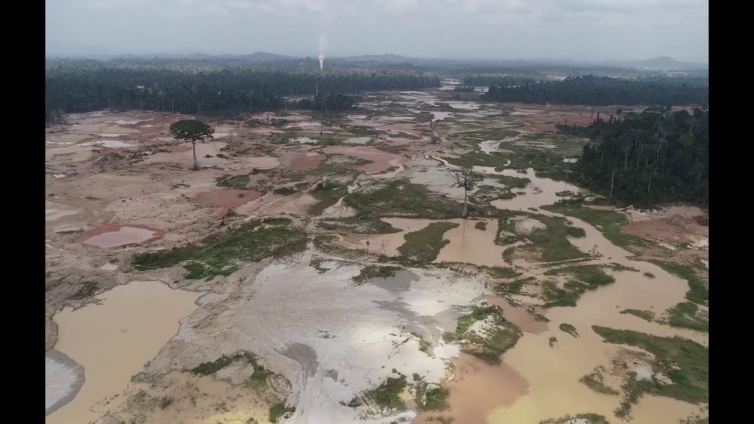
The environmental impact of galamsey is profound and multifaceted. Forests, rivers, and farmlands are being ravaged by these unregulated activities. Miners clear large tracts of land, often using dangerous chemicals like mercury and cyanide, to extract gold from the earth. This practice leads to deforestation, soil degradation, and the contamination of water bodies.
- Deforestation: Ghana has lost vast areas of forest cover due to galamsey. These forests, which serve as critical carbon sinks, are being cleared at an alarming rate, leading to a reduction in the country’s ability to absorb carbon dioxide (CO2) from the atmosphere. The loss of these forests also disrupts local ecosystems, leading to the extinction of species and the destabilization of natural habitats.
- Water Pollution: Rivers and streams near mining sites are heavily polluted with chemicals used in the extraction process. Mercury, a potent neurotoxin, is widely used in galamsey operations and ends up in water bodies, poisoning aquatic life and making the water unsafe for human consumption. The pollution of rivers like the Pra, Birim, and Ankobra has led to water shortages, as many communities can no longer rely on these once-pristine sources.
- Soil Degradation: The heavy use of machinery and chemicals in galamsey strips the land of its fertility. Farmlands are being destroyed, rendering them barren and unsuitable for agriculture. This not only threatens food security but also exacerbates poverty in rural areas where farming is a primary source of livelihood.
Contribution to Climate Change
The environmental damage caused by galamsey has direct implications for climate change. Deforestation, for instance, reduces the number of trees that can absorb CO2, a major greenhouse gas contributing to global warming. The destruction of forests also releases stored carbon back into the atmosphere, further accelerating climate change.
Moreover, the pollution of water bodies contributes to the disruption of local climates. Healthy rivers and wetlands play a crucial role in regulating temperatures and maintaining the balance of ecosystems. When these water bodies are polluted and their ecosystems destroyed, it can lead to localized climate changes, such as altered rainfall patterns and increased temperatures.
Socioeconomic Impacts
The socioeconomic consequences of galamsey cannot be overlooked. The degradation of the environment has led to the displacement of communities, loss of livelihoods, and health issues related to pollution. As agricultural lands are destroyed, food production decreases, leading to higher food prices and increased poverty. Communities that once depended on clean rivers for water are now suffering from waterborne diseases due to pollution.
Government Response and the Way Forward
The Ghanaian government has taken steps to combat galamsey, including military interventions, policy reforms, and community engagements. However, these efforts have met with limited success, as the underlying issues of poverty and unemployment remain unaddressed. To effectively tackle the problem, there needs to be a comprehensive approach that includes creating alternative livelihoods, enforcing stricter regulations, and promoting sustainable mining practices.
Conclusion
Galamsey is not just a local issue; it is a global concern with far-reaching consequences. The environmental degradation caused by this illegal mining activity is contributing to climate change, threatening ecosystems, and undermining the livelihoods of countless Ghanaians. Addressing this crisis requires collective action from the government, communities, and the international community to protect Ghana’s environment and mitigate its impact on the planet’s climate.
Latest Stories
-
Gov’t to establish Prison Industrial Hub to equip inmates with income-generating skills – Prison Service boss
8 minutes -
Alhassan Tampuli donates cement, roofing sheets to support storm victims in Gushegu
8 minutes -
Alhassan Tampuli appeals for urgent support for storm victims in Gushegu
11 minutes -
The hypocrisy must stop; pass Anti-LGBTQ+ Bill now – Alhassan Tampuli to Mahama
15 minutes -
Imprisonment should be rehabilitative, not punitive – Ghana Prisons boss at UNGA
37 minutes -
Ga Adangbe traditional priests petition Mahama over McDan aviation licence revocation
48 minutes -
Anti-LGBTQ Bill: NDC’s arrogance is worrying – Hassan Tampuli
58 minutes -
Let’s give OSP time to mature, not to scrap it – Hassan Tampuli
1 hour -
Nigeria convicts 386 Islamist militants in mass trials
1 hour -
Djibouti president wins election with 97.8% of vote, state media says
1 hour -
We don’t have mandate to deduct tax from rent allowance of security services personnel – Interior Ministry clarifies
1 hour -
Ablakwa receives Presidential Special Envoy on Reparations to advance global agenda
2 hours -
Christina Koch becomes first woman to travel around the moon on Artemis II
2 hours -
Epstein survivors’ calls to meet King Charles and Queen harder to ignore as US visit approaches
2 hours -
UN Secretary-General names Ghana’s Anita Kiki Gbeho as South Sudan envoy
2 hours