

Audio By Carbonatix
Men’s hairstyles in Ghana have long represented more than just fashion, they reflect culture, identity, and personal expression.
From the clean-shaven looks of decades past to today’s bold and unconventional styles, male grooming trends continue to evolve. But what exactly influences these choices?
Across the country, an increasing number of Ghanaian men are exploring diverse hairstyles. While some stick with classic low cuts, others embrace dyed hair, braids, or dreadlocks—whether long or short. In the 1960s, afros were the look of the day.
These eventually gave way to the Jheri curl, popularised by American R&B stars. Then came the high-top fade, a style that involves completely shaving the sides of the head while leaving a prominent section of hair in the middle.
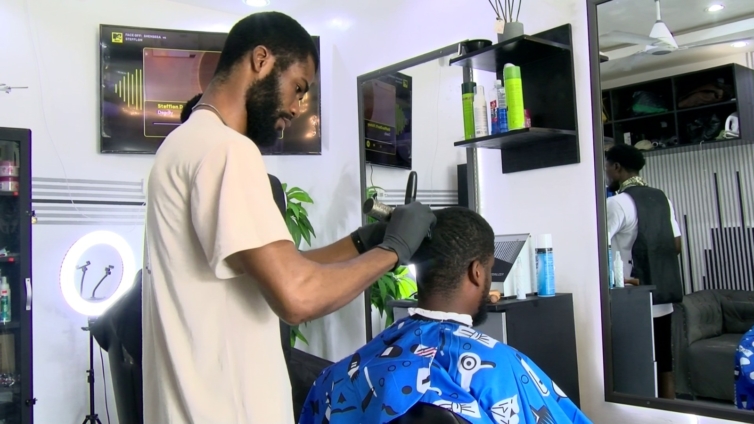
Prosper Hagan, a hairstylist with over a decade of experience, offers insight into why once-controversial styles like braids and dreadlocks are now widely embraced.
“Braids and dreadlocks were some of the hairstyles that used to be frowned upon. Some people didn’t keep them neat, so they were seen as unacceptable. But things have changed. Now, they’re accepted and even trending,” he explained.

Beyond reflecting one’s fashion sense, hairstyles also signal the spirit of a society and the identity of a generation. Selorm Mensah, was influenced by his barber to try something new.
“It’s a style that’s in vogue. You see a lot of young lads doing it. My barber does it dapper, that’s why I prefer this hairstyle,” Selorm says.
Social media has also transformed the grooming landscape. Mark Gates, a barber, notes that social media now drive hair trends more than ever.

“Social media has a huge influence on barbering today. Most clients now come in with pictures they’ve found online, photos of celebrities, icons, or mentors they want to look like. In the past, we used to put posters in the barber shop for clients to choose from. Now, they just Google what they want,” he shared.
Perhaps one of the most personal and expressive ways for men to present themselves is through their hair.
As trends change, so too do perceptions, and many are becoming more intentional about how they present their image to the world.
Latest Stories
-
Power restoration fault suspected in Kumasi Central Market fire
3 hours -
The 7-foot giant of Ngleshie Amanfro: Seven-foot Ghanaian Ephraim Saawa dreams of joining the national basketball team
4 hours -
Government promises support for Kumasi Central Market fire victims
4 hours -
Vibes The Movie: Big Ghun’s Ghanaian film earns five nominations at 2026 REFFA
4 hours -
MamaCare CEO warns unresolved conflicts among health workers could undermine maternal and neonatal care
5 hours -
Health professionals urged to translate medical knowledge into practice to save mothers
5 hours -
Conflicts among care providers linked to maternal, neonatal deaths – Expert
6 hours -
GIS marks 10th TIME conference, champions improved teaching practices
6 hours -
BRICS Or Balance? What Ghana’s bid really means
7 hours -
GPRTU wants full TRAFFITECH-GH implementation to start in 2027
7 hours -
Mahama announces plans to import electric wheelchairs for PWDs
7 hours -
KGL U17 Colts 2026: Western beat Prempeh Elite Academy to set up final final with Greater Accra Region
8 hours -
Late Solanke strike salvages 10-man Spurs draw at Man United
8 hours -
Gender Ministry to monitor welfare of Nana Akua Addo’s children amid domestic violence case
8 hours -
Benedict Okyere Yeboah: Ghana’s football problem goes beyond sacking a coach
8 hours