

Audio By Carbonatix
Cape Coast has never been an ordinary town, and it must not be an ordinary town. Long before many parts of Ghana experienced modern education and urban culture, Cape Coast had already begun shaping the intellectual and social foundations of the country.
It is a city that produced scholars, lawyers, teachers, and public servants who helped define Ghana’s national life. The presence of institutions such as the University of Cape Coast, alongside historic schools like Mfantsipim School and Wesley Girls' High School, gave the town a reputation as a place of discipline, refinement, and intellectual leadership.
For generations, Cape Coast was regarded as a city of elite learning and civic order.
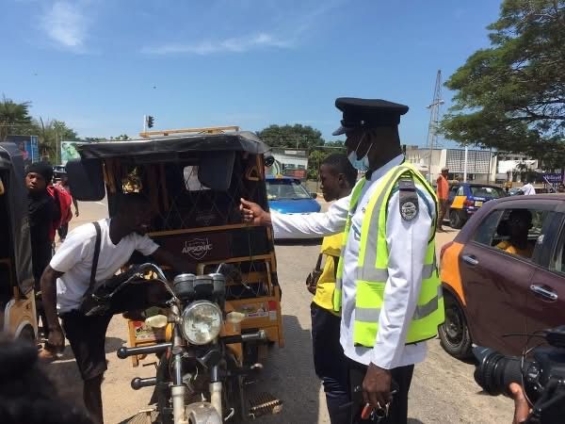
Yet today, as one moves through the bustling corridors of Kotokuraba, Pedu, Abura, and Adisadel, a different image emerges. Tricycles, popularly called Pragya, have gradually become part of the city’s transport landscape.
They weave through traffic, squeeze and meander through narrow streets, and sometimes brush past parked cars and pedestrians in their rush to pick up passengers. Their presence has become so widespread that many residents have begun to ask an uncomfortable question: how did Cape Coast, a historic city that prides itself on education and order, allow this situation to take root?
This question has become even more relevant at a time when the city has launched an ambitious eight-year development plan aimed at transforming Cape Coast into a modern urban center. The plan seeks to improve infrastructure, strengthen tourism, and enhance the city’s economic potential.
But if modernization is truly the goal, then the issue of urban order and transport regulation cannot be ignored. A city that hopes to project itself as modern cannot afford to allow informality and disorder to define its public spaces.
Over the years, unemployment and the absence of bold urban leadership appear to have shaped the direction of development in Cape Coast. Instead of a carefully structured transport system, the city has gradually allowed informal solutions to fill the gaps.
Pragya tricycles were originally designed to serve rural communities where conventional vehicles struggle to operate, particularly in areas with poor roads or limited transport access. Their growing presence in Cape Coast is often justified as a response to youth unemployment. Many young men have turned to the trade as a means of survival in an economy where formal job opportunities remain limited.
Yet the deeper question remains whether unemployment should dictate the planning standards of a historic city. Cities across the world face similar challenges, but successful urban centers do not allow informal systems to grow unchecked. They regulate them, restructure them or replace them with more efficient alternatives. In Cape Coast, however, the situation appears to have evolved without a clear framework.
Residents frequently complain about the nuisance created by some operators. Reckless riding, sudden overtaking, and careless maneuvering through traffic have become common sights. Some drivers scrape parked cars while attempting to navigate tight spaces, while others ignore basic road safety rules. For visitors arriving in the city to explore heritage landmarks such as Cape Coast Castle, the experience can sometimes feel inconsistent with the image of a historic tourism destination.
The irony is that Cape Coast is surrounded by other historic towns that have managed similar challenges differently. In nearby Elmina, traditional authorities and local leadership have been more cautious about allowing tricycles to dominate the urban environment.
The contrast has led many residents to question why Cape Coast’s own authorities have appeared hesitant to act. Some even speculate, perhaps unfairly, that powerful individuals with commercial interests in tricycles may have influenced the city’s tolerance for the situation.
At the same time, the issue cannot be reduced to a simple argument about banning Pragya. The young men who operate them are not the problem; they are symptoms of deeper structural challenges. Many of them are school dropouts or young people who have abandoned vocational training in search of quick income.
For them, the tricycle represents opportunity, even if it is temporary. But the long-term consequence is worrying. When young people see informal transport as their most accessible livelihood, education and skill development often become secondary.
Interestingly, some institutions within Cape Coast have already taken firm positions on the matter. The University of Cape Coast does not permit tricycles to operate within its campus. The university’s decision reflects concerns about safety, congestion, and the need to maintain an orderly environment. If a major academic institution can regulate its transport space effectively, residents wonder why the broader city has struggled to do the same.
As a fisherman, my point is that Cape Coast does not need to blindly copy foreign models; it can instead draw valuable lessons from them. One option is to introduce zoning rules that restrict tricycles to peripheral communities where conventional transport is limited.
Another is to establish licensing, training, and safety requirements that bring existing operators into a regulated system. At the same time, the city must invest in modern transport alternatives, such as structured shuttle services or small urban buses, that provide reliable mobility while creating formal employment.
Equally important is the need to address youth unemployment beyond the Pragya economy. Vocational training, entrepreneurship support, and digital skills programmes could provide more sustainable opportunities for young people who currently see tricycles as their only path to income.
Ultimately, the debate about Pragya in Cape Coast is not simply about transport. It is about the identity and direction of the city itself. Cape Coast stands at an important moment in its history. Its new development plan offers a chance to redefine what the city should look like in the coming decades. The choice before its leaders is clear.
They can continue to let circumstances and unemployment dictate the pace of development, or they can pursue a deliberate vision for a modern city that reflects Cape Coast’s historic role as a center of learning, discipline, and civic pride.
Latest Stories
-
President Mahama is not sincere with Ghanaians on LGBTQ bill matter – Hassan Tampuli
17 minutes -
Gov’t to establish Prison Industrial Hub to equip inmates with income-generating skills – Prison Service boss
36 minutes -
Alhassan Tampuli donates cement, roofing sheets to support storm victims in Gushegu
36 minutes -
Alhassan Tampuli appeals for urgent support for storm victims in Gushegu
39 minutes -
The hypocrisy must stop; pass Anti-LGBTQ+ Bill now – Alhassan Tampuli to Mahama
43 minutes -
Imprisonment should be rehabilitative, not punitive – Ghana Prisons boss at UNGA
1 hour -
Ga Adangbe traditional priests petition Mahama over McDan aviation licence revocation
1 hour -
Anti-LGBTQ Bill: NDC’s arrogance is worrying – Hassan Tampuli
1 hour -
Let’s give OSP time to mature, not to scrap it – Hassan Tampuli
2 hours -
Nigeria convicts 386 Islamist militants in mass trials
2 hours -
Djibouti president wins election with 97.8% of vote, state media says
2 hours -
We don’t have mandate to deduct tax from rent allowance of security services personnel – Interior Ministry clarifies
2 hours -
Ablakwa receives Presidential Special Envoy on Reparations to advance global agenda
2 hours -
Christina Koch becomes first woman to travel around the moon on Artemis II
2 hours -
Epstein survivors’ calls to meet King Charles and Queen harder to ignore as US visit approaches
2 hours