

Audio By Carbonatix
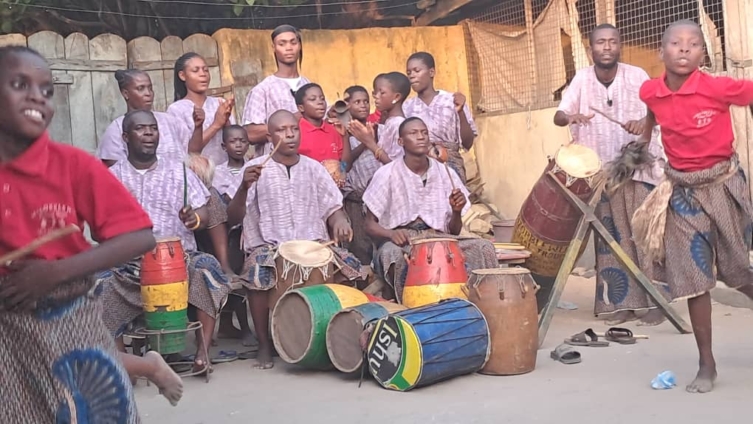
In the heart of Ghana’s Volta Region, mostly in the southern Volta area of Anlo, where tradition pulses through the land like a steady drumbeat, the Agbadza dance stands as a powerful symbol of cultural identity.
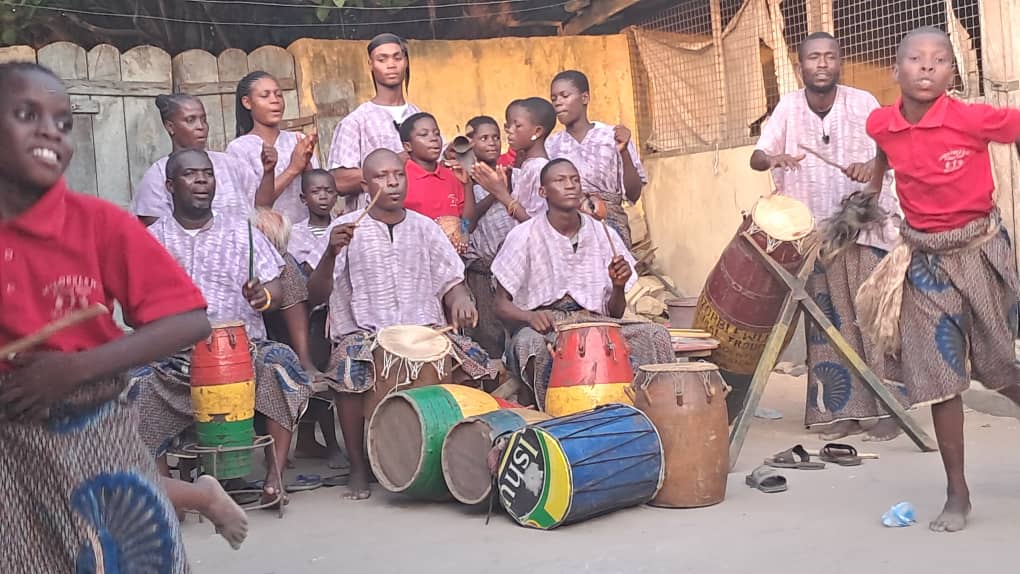
Its rhythmic movements, intricate drum patterns, and deep historical roots make it one of Ghana’s most celebrated traditional dances.
More than just a performance, Agbadza is a story told through movement and music—a story of resilience, unity, and heritage.
Whether performed during joyous festivals in Anlo Afiadenyigba, somber funerals in Tegbi, or on international stages in California, Agbadza remains a bridge between the past and the present, connecting generations of Ewe people and beyond.
The origins of Agbadza: a war dance turned cultural symbol
To truly understand Agbadza, one must go back to its origins. Historically, the dance evolved from Atrikpui, a war dance performed by the Ewe people during times of battle.
It was designed to boost warriors' morale before combat, with its energetic drumming and footwork symbolising strength and courage. Over time, as conflicts faded, the dance was adapted for social and ceremonial occasions, becoming a cornerstone of Ewe cultural life.
Today, Agbadza is performed at festivals, funerals, and social gatherings, uniting communities through its powerful beats and synchronised movements. It is a dance of freedom, expression, and storytelling, carrying the legacies of ancestors forward.
Agbadza in celebration: the mizogblewu cultural troupe in Anlo Afiadenyigba
In the bustling town of Anlo Afiadenyigba, the Mizogblewu Cultural Troupe takes pride in preserving the authenticity of Agbadza.
Their performances are electrifying—dancers move in perfect harmony, their arms flapping like eagle wings, their feet tapping in sync with the commanding beat of the drums.
"Agbadza is not just drumming and dancing. It tells the story of our ancestors—the migrations, the struggles, and the victories," explains the troupe's leader, AKEGEY WISDOM KWAMETSEY.
"The lead drummer sets the tone, the supporting drums respond, and the dancers interpret with their bodies."
Every motion in Agbadza is symbolic. The arm swings represent the flapping of an eagle’s wings, signifying freedom. The quick, rhythmic footwork mirrors the march of warriors, reminding spectators of the bravery of their forefathers.
In Anlo, Agbadza is a celebration of identity—a dance that binds the community together, ensuring that the traditions of their ancestors remain alive in the hearts of the younger generation.
Agbadza in mourning: a dance of farewell in Tegbi
While Agbadza is widely recognised for its energetic and joyous nature, it also has a more solemn side. In Tegbi, a coastal community in the Volta Region, Agbadza is performed at funerals—its tempo slowed, its drumbeats heavy with grief.
"At funerals, Agbadza is not for entertainment. It is a final farewell, a way to guide the departed into the afterlife," says a funeral ensemble leader. "The dance offers comfort to the grieving family and reminds them that life continues."
Here, the dance is stripped of its celebratory energy. The movements are more subdued, the rhythms more meditative. Yet, even in mourning, Agbadza carries a message of unity, resilience, and hope.
Agbadza beyond Ghana: a global cultural connection
Agbadza is no longer confined to Ghana. Across the Atlantic, Ghanaian communities in the United States, the United Kingdom, and other parts of the world are keeping the tradition alive.
One of its passionate ambassadors is Derrick Gomashie, a traditional dancer based in California. Having performed Agbadza at international festivals, he sees it as more than just a dance—it is a cultural connection to home.
"Even in the diaspora, Agbadza connects us to home. I have performed in different parts of the U.S., and people are always fascinated by the rhythm. The world is embracing our traditional music and dance," Gomashie shares.
Beyond Ghanaian communities, foreigners are also learning Agbadza. Workshops in the U.S. and Europe now teach the dance, proving that its rhythm is universal.
Why Agbadza remains relevant today
Despite modernisation and the rise of contemporary music and dance, Agbadza continues to thrive. It is taught in schools, performed at state functions, and showcased at cultural festivals.
Its endurance can be attributed to:
- Community significance: Agbadza is deeply woven into social and spiritual life.
- Cultural education: Young people are encouraged to learn and perform Agbadza to keep traditions alive.
- Global recognition: The dance’s increasing presence on international stages has helped preserve its relevance.
- Adaptability: While staying true to its roots, Agbadza has evolved to fit modern settings, ensuring its survival.
A dance that lives on
From Anlo Afiadenyigba to Tegbi, from Accra to California, the rhythm of Agbadza continues to beat strong. It is a testament to the resilience, pride, and cultural wealth of the Ewe people.
More than just music and dance, Agbadza is a bridge between generations and continents—a living, breathing tradition that continues to inspire.
As the drums pound and the dancers move, one thing is certain: Agbadza will never fade. Instead, it will evolve, ensuring that the heartbeat of Ghanaian heritage echoes for generations to come.
Latest Stories
-
Ghana’s democracy must accommodate dissent and constructive criticism – Haruna Iddrisu
1 second -
Fact check: Trump posts fake quote of Denzel Washington supposedly praising him
52 seconds -
UPSA students lament high fees at private hostels, call for government intervention
12 minutes -
We will upgrade Ghana’s credit ratings if government maintains fiscal discipline, policy effectiveness – Moody’s
13 minutes -
Gender Ministry supports four siblings allegedly sexually abused by their father
16 minutes -
UMB MD wins ‘CEO of the Year’, banking category at 2026 Ghana Credit Excellence Awards
17 minutes -
Don’t throw away empty egg cartons — 6 smart ways to reuse them
21 minutes -
GoldBod poised to surpass 2025 forex performance – Sammy Gyamfi
22 minutes -
Old students of Peki SHS break ground to give 70-year-old school infrastructure a facelift
36 minutes -
Ablakwa facing ‘personal vendetta’ over refusal to grant Nana B service passport – Majority
37 minutes -
Every year, the lawyers come out, and so does the nonsense! – Ace Ankomah writes
49 minutes -
Digital transformation without an ownership culture can digitise poor service
52 minutes -
Fishing communities demand revocation of offshore gold exploration licences over livelihood concerns
55 minutes -
How Ghanaian tycoon Manoj Lakhiani built a water and plastics empire from a $25,000 loan
57 minutes -
GoldBod recovers GH¢38.7m of GH¢55.8m outstanding receivables; remainder subject to legal action – Sammy Gyamfi
1 hour