

Audio By Carbonatix
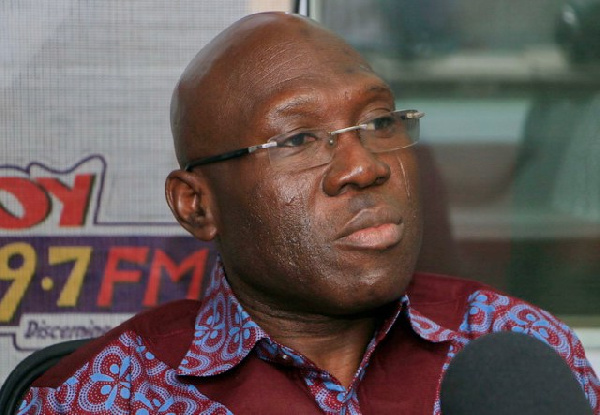
Former Member of Parliament for Tamale Central, Inusah Fuseini, says there is no such thing as ex-gratia in the constitution of Ghana.
According to him, what is often referred to as ex-gratia by the general public is the retirement benefits Members of Parliament and other Article 71 officeholders are entitled to after serving their term of office.
Speaking on JoyNews’ PM Express, he argued that calls for the scrapping of the retirement benefits of Article 71 officeholders are misplaced due to the fact that MPs and other Article 71 officeholders are contract workers and as such must receive their retirement benefits at the end of their tenure.
“There’s no ex-gratia, there’s nothing like ex-gratia. Ex-gratia is a lexicon taken from the ordinary people and put on the payments to Members of Parliament. There’s no ex-gratia in the constitution. The constitution says they should pay you retirement benefits.
He noted that the retirement benefit should not be confused with the Pension scheme Members of Parliament contribute to.
He explained that while the Pension scheme works on intergenerational equity, the retirement benefit is calculated on the basis of one’s salary.
The practice he says is common across the world.
“No because you’re a contract worker. You’re working for four years and at the end of the four years you’re gone. So your retirement benefits will be calculated on the basis of your salary.
“This is not the case, the principle is quite different. With the greatest respect, it’s all over the world. In fact in Britain it’s called gratuity. Even the court in Apasera called it gratuity.
“Gratuity means you’re working, you’re being paid salary and when your contract ends they pay you a percentage of your salary as gratuity,” he explained.
He, however, admitted that said gratuity only benefits public workers at the elite class of government.
“I agree there some kind of conspiracy and that is what is evoking the anger of the people that you can’t bring together a class of people and treat them differently. So when his Excellency John Mahama was in power, I remember this matter came out very seriously, very prominently, and he thought that committee [Presidential Emoluments Committee] should be a standing committee.
“And it should not be at the instance of a sitting President. And any time there’s a new parliament, you don’t need to change the members unless you replace some who are dead or who cannot perform then they take decisions,” he said.
Latest Stories
-
Ghana targets rice self-sufficiency by 2028 as government secures $18.8m AfDB grant
43 seconds -
Israelis mark three years since October 7 as Palestinians mourn Gaza’s destruction
3 minutes -
Support constitutional amendment to fix voting day on Tuesday – Asiedu Nketiah urges SDA Church
4 minutes -
‘It’s a systemic problem’ – All Black PRO dismisses Kurt’s resignation calls
9 minutes -
Vance says Iran must cut enrichment to end war
10 minutes -
Mahama orders sanctions for officials who fail to enforce building safety rules
12 minutes -
Court grants bail to banker accused of stealing GH¢1 million
16 minutes -
We have a winning team for 2028 – NPP Atwima Nwabiagya South Secretary
18 minutes -
Bono East Minister cracks whip on contractors over delayed 24-Hour Economy Market projects
20 minutes -
Zelensky condemns ‘vile’ large-scale Russian attacks that killed 15
23 minutes -
Trump to speak to Putin about plague lab worker’s death in Russia
24 minutes -
GHIPO makes case for local plant breeders to protect developed varieties for food sovereignty and reinvestment
26 minutes -
Ghana’s bamboo bikes entrepreneur gets a seat at World Economic Forum
27 minutes -
After years under trees, Akatsi children get a permanent school
27 minutes -
Kanton SHS appeals for more teachers, ICT facilities and infrastructure support
30 minutes