

Audio By Carbonatix
Transparency International Ghana (TI-Ghana) has called for stronger enforcement of the Right to Information (RTI) Act and enhanced accountability mechanisms to support anti-corruption efforts and improve transparency in governance.
The organisation said weak implementation of existing legal and institutional frameworks continued to limit citizens’ access to public information and undermine efforts to combat corruption despite reforms adopted across Ghana and other African countries.
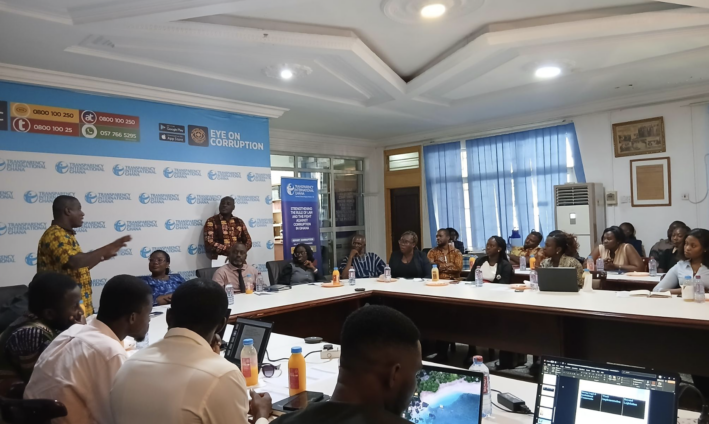
Mr Bright Sena Ayivi, Assistant Programmes Officer of TI-Ghana, made the call at a national advocacy engagement organised under the “Stopping Impunity for Corruption through Enhanced Accountability” (SICA) project in Accra.
He said findings from a TI-Ghana study on the implementation of RTI frameworks in selected West African countries revealed persistent barriers to accessing public information, including information on high-profile corruption cases.
“As citizens, we often do not know what happens to corruption cases after investigations and prosecutions begin. This project seeks to build a database and a community of practice that will enable us to track such cases and ensure accountability,” he said.
The SICA project, being implemented by TI-Ghana in partnership with the Transparency International Secretariat in Berlin, seeks to establish a community of practice across 11 African countries to promote anti-corruption reforms, strengthen accountability systems and improve monitoring of high-level corruption cases.
Mr Ayivi said the initiative was intended to address challenges in obtaining information on the progress and outcomes of corruption-related prosecutions while leveraging existing accountability mechanisms, particularly the RTI regime, to empower citizens to demand information and monitor government actions.
According to the study, corruption remained a major threat to development in the West African sub-region, underscoring the need for stronger transparency and accountability measures.
The study, which covered Ghana, Liberia and Togo, identified low public awareness of RTI laws as a key challenge, particularly among ordinary citizens and grassroots communities.
Mr Ayivi said knowledge and use of the RTI law remained largely concentrated among civil society organisations, journalists and media practitioners.
Other challenges identified included bureaucratic resistance, administrative bottlenecks and delays in processing information requests.
Excessive bureaucracy and difficulties in navigating public institutions were found to discourage citizens from seeking information.
The study further identified fees associated with information requests as a barrier, especially for vulnerable and low-income citizens.
It also found that many public institutions failed to proactively disclose information, releasing it only after formal requests had been submitted.
“We should not wait for citizens to demand information before making it available. Public information belongs to the people and should be proactively disclosed to promote transparency and accountability,” Mr Ayivi said.
The report also cited inadequate digital infrastructure, poor internet connectivity and centralised RTI systems as factors limiting access to information, particularly in remote communities.
It also noted that some public officials perceived information requests as personal attacks rather than legitimate exercises of citizens’ rights.
Mr Ayivi called for continuous training for information officers and other duty-bearers to improve understanding and implementation of the RTI regime.
To address the challenges, he recommended strengthening the enforcement powers of the RTI Commission, expanding public education, reducing administrative barriers, improving digital infrastructure and promoting proactive disclosure of public information.
Mr Ayivi also advocated a coordinated national anti-corruption framework to harmonise existing laws and strengthen the prosecution and monitoring of corruption cases.
“There are many anti-corruption laws and institutions, but they are not sufficiently coordinated. We need a more integrated framework that supports effective prosecution and monitoring of corruption cases,” he said.
Mr Ayivi underscored the importance of collaboration among accountability institutions, including the Office of the Special Prosecutor and the Financial Intelligence Centre, and urged authorities to expedite the passage of the Legislative Instrument (LI) to support implementation of the RTI Act.
Mr Stephen Owusu, Head of Legal at the RTI Commission, expressed concern over what he described as growing reluctance by some institutions, particularly security agencies, to comply fully with the RTI Act five years after its implementation.
He reiterated that while certain categories of information might be exempt from disclosure under the law, no public institution could exempt itself entirely from the provisions of the Act.
Mr Owusu said public awareness and utilisation of the RTI law had increased significantly, with individual citizens now accounting for most applicants, compared with the early years when requests were largely submitted by media organisations and civil society groups.
He said work on the draft LI had largely been completed and was undergoing review by the Commission’s governing board before submission to Parliament.
Mr Owusu expressed optimism that the LI would be passed before the end of the year.
Latest Stories
-
Education Ministry commends Ghanaian teachers on World Teachers’ Day 2026
2 minutes -
NPP can reconcile with aggrieved members who want to return – Nana Akomea
14 minutes -
Tamale Child Deaths: Vehicle owner arrested as IGP deploys homicide team
30 minutes -
From ShattaFest to MoMo Fest: Entertainment takes centre stage in youth engagement
36 minutes -
Nigerian military aircraft crashes, killing 32
41 minutes -
MTN encourages Ghanaians to use MoMo for saving, investing and financial planning
41 minutes -
Absa Bank Ghana names Stephen Ato Frimpong as Board Chair
49 minutes -
Pickford ‘almost caused crash’ with careless driving
51 minutes -
Author and former politician Jeffrey Archer dies aged 86
1 hour -
No education reform can succeed without teachers – Education Ministry
1 hour -
Gauff condemns racist abuse after China Open win
1 hour -
Medvedev disqualified for hitting spectator with ball
2 hours -
Oliseh scores twice in late comeback win for France
2 hours -
Pentagon stops using Anthropic AI tools after blacklisting company, BBC told
2 hours -
From despair to dance: Family of nurse Salomey Baffoe rejoices after GH¢100k bail granted
2 hours