

Audio By Carbonatix
The UK government has brought in a temporary ban on holidaymakers bringing in cheese and meat products from the EU in a bid to prevent the spread of foot-and-mouth disease.
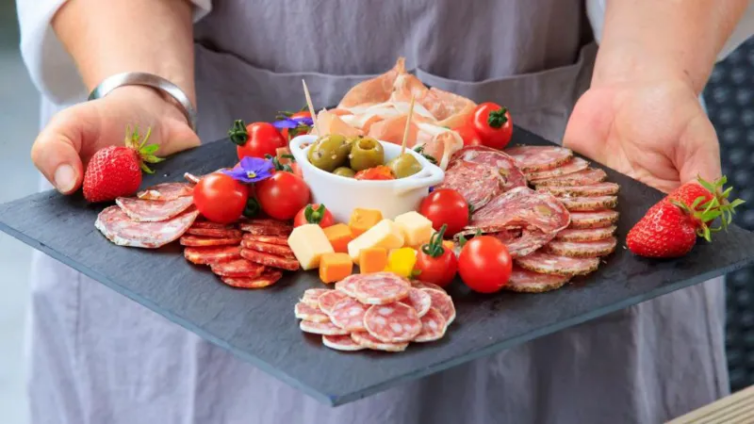
Travellers have not been allowed to bring back items such as cured meat and cheese, including in sandwiches, since Saturday due to the growing outbreak on the continent.
The restrictions apply regardless of whether the goods are packed or packaged, or bought from duty free.
It follows an earlier ban of similar products from Germany, Hungary, Slovakia and Austria after rising cases of the cattle disease in those countries.
The restrictions apply to people arriving in Great Britain, not Northern Ireland, Jersey, Guernsey, or the Isle of Man.
Products will be seized and destroyed if people try to bring them in, and in "serious cases" people could be fined up to £5,000.
The list of restricted products includes:
- pork
- beef
- lamb
- mutton
- goat
- venison
- other products made from these meats, for example sausages
- milk and dairy products like butter, cheese and yoghurt
People can bring up to 2kg per person of powdered infant milk, infant food, or special food needed for medical reasons.
Foot and mouth disease is a highly infectious virus which causes blisters inside an animal's mouth and under their hooves, and can cause lameness and problems feeding.
There are currently no cases of foot-and-mouth disease in the UK.
The last outbreak in the UK was in 2001. Although there were only 2,000 confirmed cases, more than six million sheep, cattle and pigs were slaughtered.
This is because each of those cases meant a farm having all of its livestock killed and burned.
The Guild of Fine Food, which represents independent food and drink retailers, said the ban on "holiday treats" had been "hurried", but added it brought UK government policy for holidaymakers more in line with restrictions already placed on small businesses.
"The food and drink industry absolutely supports the fact that we must protect our farmers and that biosecurity is paramount," said John Farrand, managing director of the Guild of Fine Food.
However, he said that "bureaucracy" brought in after Brexit had added "significant constraints" for small food and drink importers and exporters.
Latest Stories
-
Ghana housing finance conference adopts communiqué to improve affordable housing access
3 hours -
Special Initiatives Minister urges Wa Technical Institute to enrol more girls as EU-backed solar training lab opens
4 hours -
In the matter of my first year at the Bar
4 hours -
ActionAid Ghana calls for an end to child marriage, greater investment in girls’ rights
4 hours -
Newsfile to tackle World Cup visa scandal, beach demolitions, education strikes, BRICS bid
4 hours -
UK-Ghana Trade & Investment Summit: Trade Resource Centre to help businesses maximise UK-Ghana trade opportunities
5 hours -
Embassy of Denmark celebrates World Maritime Day
5 hours -
Linking LEAP to productive inclusion could cut extreme poverty by 2030 – UNICEF
6 hours -
Trade Ministry backs use of creative arts to rehabilitate prison inmates
6 hours -
Negotiations with government to continue despite strike suspension – GNAT
6 hours -
‘Ghana cannot afford to waste public resources; every cedi has a job’ – Ato Forson
6 hours -
Ghana expects economic boost as World Assemblies of God Congress brings 10,000 delegates to Accra
6 hours -
Joy in Nayilifong as Farouk Aliu Mahama donates 100kVA transformer to improve power supply
7 hours -
Chief Justice urges employers to tackle mental health stigma in workplaces
7 hours -
Analysis: Ghana’s yellow fever numbers reveal a gap between vaccination and protection
8 hours