

Audio By Carbonatix
More than 700 people have been killed and 2,800 injured in just five days since fighting escalated in the east of the Democratic Republic of Congo (DRC) between January 26-30, UN Secretary-General spokesperson Stephane Dujarric told reporters Friday.
“The WHO (World Health Organization) and its partners conducted an assessment with the government between the 26th and yesterday and report that 700 people have been killed and 2,800 people injured,” Dujarric said, noting that these totals are expected to rise.
“Humanitarian organizations in Goma continue to assess the impact of the crisis including the widespread looting of warehouses and the offices of aid organizations,” he added.
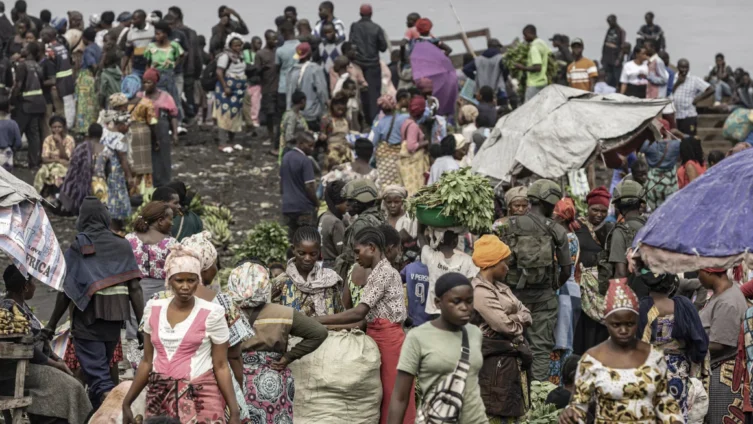
Goma, the largest city in eastern DR Congo’s North Kivu province, fell under the control of the AFC/M23 rebel coalition on Monday, the rebels told CNN. This was the latest in a string of territorial acquisitions by the group in recent weeks. The Congolese government, which accuses Rwanda of backing M23, has not confirmed the rebels’ takeover in Goma but acknowledged the city was under siege.
On Wednesday DRC President Felix Tshisekedi vowed “a vigorous and coordinated response” against the rebel alliance that has besieged swathes of the nation’s mineral-rich east and forced hundreds of local troops to surrender.
Under-Secretary-General for Peace Operations Jean-Pierre Lacroix told reporters Friday that “the situation remains tense” in Goma with “occasional shooting” but “overall calm is gradually restored.”
He also warned that the rebel groups are about 60 kilometers north of another major city, Bakavu, and “seem to be moving quite fast.”
Experts have repeatedly warned that the chaos of the conflict would leave civilians in Goma with shortages of basic necessities and at the risk of the spread of disease.
The United Nations Office for the Coordination of Humanitarian Affairs (OCHA) found on Friday that access to safe drinking water in Goma has been cut off, “forcing people to use untreated water from Lake Kivu with all the risk that entails,” Dujarric said.
He added, “Without urgent action OCHA cautions the risk of water born disease outbreaks will just continue to increase.”
Latest Stories
-
Two bodies stuck at St. Anne’s mortuary after refrigeration engines break down
23 minutes -
‘We will not let this matter rest’ – Afenyo-Markin after Bagbin rejects narcotics probe
26 minutes -
AFCON 2027Q: Ghana suffer 4-2 defeat to Gambia
30 minutes -
Your strike could disrupt academic calendar – GES urges teachers to return
37 minutes -
Speaker’s ruling has failed integrity test required of Parliament to discharge its duties – Afenyo-Markin
1 hour -
St. John’s Grammar edges Mfantsipim in nail-biting NIQ showdown
1 hour -
Expanding Financial Inclusion: Advans Ghana’s client base more than doubles to 160,000
1 hour -
AFCON 2027Q: Ghana surrender two-goal lead to lose to Gambia
1 hour -
Daily Insight for CEOs: Preparing the organisation for 2027
1 hour -
‘Don’t just sit silent and expect a referral’ – Speaker urges Human Rights Committee to investigate abuses
2 hours -
‘Give caucus leaders adequate time to speak before ruling’ – Afenyo-Markin to Bagbin
2 hours -
Petrosol gives back to society by donating 3,600 books and bags to Sawla DA Primary
2 hours -
Bagbin dismisses Minority motion on narcotics seizures as inadmissible
2 hours -
From Oversight to Impact: Why board committees will make or break Africa’s organisations
2 hours -
‘Strong criticism is legitimate but insult is not argument’ – Speaker urges restraint in public discourse
2 hours