

Audio By Carbonatix
Every day, millions of people around the world are forced to flee their homes because of war, persecution, political instability, violence, or gross violations of human rights. Others find themselves trapped in an equally devastating situation: they belong to no country at all. In an era of rising conflicts, climate-related displacement, and humanitarian crises, understanding the concepts of human rights, refugee protection, statelessness, and asylum is no longer the preserve of lawyers and diplomats. It is a matter of global citizenship.
The United Nations (UN), established in 1945 after the devastation of the Second World War, placed human dignity at the heart of the international order. The UN Charter commits member states to promoting and protecting fundamental human rights without discrimination based on race, religion, nationality, language, or gender. This commitment later gave rise to landmark instruments such as the Universal Declaration of Human Rights (1948), which proclaims that every person is born free and equal in dignity and rights.
Yet, despite these legal commitments, millions continue to experience persecution that forces them to cross international borders in search of safety. Under the 1951 Convention Relating to the Status of Refugees, a refugee is a person who has a well-founded fear of persecution because of race, religion, nationality, political opinion, or membership of a particular social group, and who is unable or unwilling to return to their country. Refugee status is therefore not simply a label. It is a legal recognition that a person requires international protection because their own state cannot or will not protect them.
Equally misunderstood is the concept of asylum. Seeking asylum is a legal right recognised under international law. An asylum seeker is an individual who requests protection in another country but whose application has not yet been decided. Every refugee begins as an asylum seeker, but not every asylum seeker will ultimately be recognised as a refugee. This distinction is important because asylum systems must balance humanitarian obligations with fair and thorough assessments of individual claims.
Perhaps one of the least discussed humanitarian challenges is statelessness. A stateless person is someone who is not recognised as a national by any country under the operation of its laws. Without nationality, individuals often face significant barriers to education, healthcare, employment, property ownership, voting, and freedom of movement. Statelessness can arise from discrimination, gaps in nationality laws, state succession, conflict, or the failure to register births. It is a condition that strips people of legal identity and often leaves them invisible within the international system.
These issues are not abstract legal theories; they are lived realities. From Sudan and the Democratic Republic of the Congo to Myanmar, Syria, Ukraine, and beyond, millions have been displaced by conflict and persecution. According to the United Nations High Commissioner for Refugees (UNHCR), the number of forcibly displaced people worldwide has reached unprecedented levels, underscoring the urgent need for stronger international cooperation and durable solutions.
Africa, in particular, has demonstrated significant leadership through the 1969 Organisation of African Unity (OAU) Convention Governing the Specific Aspects of Refugee Problems in Africa. Unlike the 1951 Refugee Convention, the OAU Convention expands the definition of a refugee to include people fleeing external aggression, occupation, foreign domination, or events seriously disturbing public order. This broader framework reflects the continent’s recognition that displacement is often driven by complex political and security realities.
A cornerstone of refugee protection is the principle of non-refoulement, which prohibits states from returning individuals to territories where they face threats to their lives, freedom, or risk of torture and persecution. This principle is widely regarded as a norm of customary international law and represents one of humanity’s strongest legal safeguards against injustice.
The international community must also confront emerging challenges that existing legal frameworks were not originally designed to address. Climate change, environmental degradation, and prolonged humanitarian crises are forcing increasing numbers of people to move across borders, yet international law does not currently recognise climate refugees as a distinct legal category. This growing gap raises important questions about whether international protection mechanisms should evolve to address new forms of displacement.
Ultimately, the strength of any society is measured not only by the rights enjoyed by its citizens but also by the protection it extends to the most vulnerable. Human rights, refugee protection, asylum, and the prevention of statelessness are not merely legal obligations; they are reflections of our shared humanity. Governments must uphold their international commitments, while citizens should reject misinformation and approach these issues with empathy, informed debate, and respect for the rule of law.
As the world becomes increasingly interconnected, the protection of human dignity cannot stop at national borders. It is a collective responsibility that defines the values of the international community and will continue to shape global peace, security, and justice for generations to come.
******
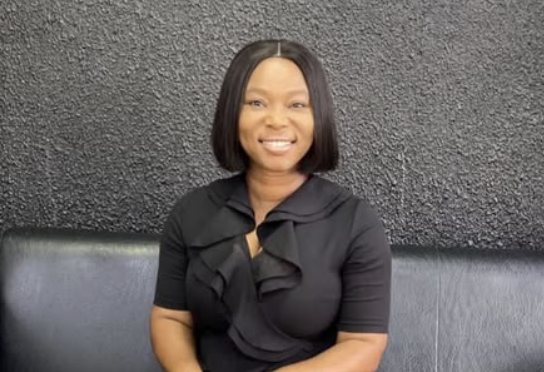
The writer, Lilian Afreh-Sika Boateng, is a Certified Advanced International Law, Security and Diplomacy Expert
Latest Stories
-
2,000 ECG containers retrieved; 283 still unidentified at ports – Deputy Energy Minister
14 minutes -
St. Joseph the Worker Credit Union hits 44,800 clients, ranking 3rd in Ashanti
15 minutes -
Insults generally are not crimes, but some may be criminal under the law – Samson Lardy Anyenini
22 minutes -
IGP deploys specialised police team, armoured vehicle to strengthen security in Nkwanta
22 minutes -
Dr Bawumia advocates solar power, access to credit, training and certification for artisans
24 minutes -
Trade Minister engages Russia, UAE and UNDP to boost trade, investment
26 minutes -
7 best foods to help keep blood sugar levels steady
29 minutes -
Ghana to host signing of UN trade convention to modernise global cargo documentation on October 26
44 minutes -
Family announces memorial mass for Nana Konadu Agyeman-Rawlings
48 minutes -
Mahama, Trade Minister, tours Afienya and Tema factories, schedules meeting on Free Zones incentives
53 minutes -
Gyakie and FlipTheMusic unveil ‘Your Body’ following a new distribution deal with Warner Music Africa
54 minutes -
Stop looking down on new media practitioners as if they don’t matter – New Media President
55 minutes -
Ghana’s BRICS partnership bid aimed at broadening development opportunities – Mahama
1 hour -
Fiabci-Ghana inaugurated to promote professionalism and global collaboration in real estate sector
1 hour -
‘No flying in just for matches’ – Kofi Adams sets conditions for next Black Stars coach
2 hours