

Audio By Carbonatix
A leading public health advocacy group, Vision for Accelerated Sustainable Development (VAST) Ghana, has sounded the alarm over what it describes as a growing “breathing crisis” in Ghana, warning that air pollution is fast becoming one of the country’s most dangerous but neglected public health threats.
In a newly released policy brief titled “Breathing Crisis: Making Air Pollution a Priority in Ghana’s National NCD Response”, the organisation is calling on government to urgently integrate air pollution control measures into national strategies for combating non-communicable diseases (NCDs).
The report, launched on March 24, 2026, highlights that air pollution is now the second leading risk factor for premature death globally, responsible for an estimated 7.9 million deaths annually, with more than 90 percent occurring in low- and middle-income countries like Ghana.
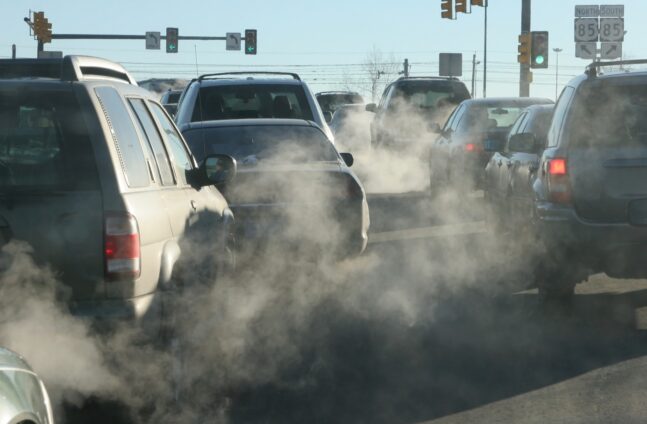
According to the group, the situation in Ghana is particularly worrying, as rapid urbanisation, increased vehicle emissions, industrial activity, and the widespread use of solid fuels for cooking continue to degrade air quality, especially in major cities such as Accra and Kumasi.
“Air pollution is one of the most significant but overlooked drivers of NCDs globally,” the report stated, linking it to diseases such as cardiovascular conditions, stroke, chronic respiratory illnesses, lung cancer, diabetes, and even mental health disorders.
Rising Death Toll and Economic Burden
The report paints a stark picture of the human cost of polluted air in Ghana. Data from the Global Air Report indicates that 23,100 deaths in 2023 were linked to household air pollution from solid fuels alone. Among these, 4,541 were children under the age of 10, while 12,790 were adults between 50 and 85 years.
Beyond the health implications, the economic impact is equally severe. The World Bank estimates that air pollution costs Ghana approximately 4.2 percent of its GDP annually, driven by healthcare expenses, lost productivity, and premature deaths.
Executive Director, Vision for Accelerated Sustainable Development Ghana, VAST Ghana, Labram Musah, warned that failure to address air pollution could place enormous strain on emerging health financing initiatives such as the Ghana Medical Trust Fund, popularly known as Mahama Cares, as chronic disease cases continue to rise.
Policy Gaps and Weak Coordination
Despite the scale of the crisis, the report identifies major gaps in Ghana’s policy framework. Air pollution, it argues, is still largely treated as an environmental issue rather than a central public health concern.
Ghana’s existing National NCD Policy does not sufficiently incorporate air pollution as a risk factor, limiting the country’s ability to develop coordinated and effective responses.
The group also pointed to weak coordination among key institutions, including the Environmental Protection Agency Ghana and the Ministry of Health, as well as inadequate air quality monitoring systems and limited integration of pollution data into health planning.
Public awareness remains low, with many communities continuing practices such as open burning of waste without understanding the associated health risks or legal consequences.
Call for Urgent National Action
In response, VAST Ghana is urging government and stakeholders to take immediate and coordinated action. Key recommendations include the following:
- Integrating air pollution control into Ghana’s next National NCD Policy
- Expanding and modernising air quality monitoring systems
- Restricting the importation of high-emission vehicles
- Promoting cleaner household energy solutions such as solar power
- Strengthening enforcement of environmental regulations, including bans on open burning
- Introducing pollution taxes for major emitters
- Scaling up public education and awareness campaigns
The organisation emphasised that Ghana is at a critical policy moment, with the current NCD framework nearing the end of its implementation cycle, creating a window for reform.
Global Context
The urgency of the issue has also been recognised internationally. During the Third United Nations High-Level Meeting on Non-Communicable Diseases, world leaders formally acknowledged air pollution as a key driver of NCDs, marking a shift in global health policy.
VAST Ghana insists Ghana must align with this global direction.
“Clean air is essential for healthy lives,” the group stressed, urging policymakers, civil society, and the private sector to treat air pollution as a national health emergency.
With millions of Ghanaians exposed to unsafe air daily, the organisation warns that without decisive intervention, the country risks a deepening public health crisis with long-term economic and social consequences
Latest Stories
-
Ablakwa receives Presidential Special Envoy on Reparations to advance global agenda
12 minutes -
Christina Koch becomes first woman to travel around the moon on Artemis II
23 minutes -
Epstein survivors’ calls to meet King Charles and Queen harder to ignore as US visit approaches
28 minutes -
UN Secretary-General names Ghana’s Anita Kiki Gbeho as South Sudan envoy
30 minutes -
Mali withdraws recognition of Sahrawi Republic, backs Morocco’s autonomy plan
34 minutes -
Gov’t distributes over 8,500 laptops to One Million Coders project
35 minutes -
Julius Debrah, ‘man to beat’ as NDC’s James Agbey dismisses Musah Dankwah’s polls
42 minutes -
GPRTU in Savannah Region to protest alleged eviction in Damongo
1 hour -
Re: Reinsurance does not replace process — A response to the SIGA–SIC defence
1 hour -
Gender Ministry supports Harriet Amuzu in ongoing abuse case
2 hours -
AG joins plaintiff to scrap OSP ?: We should be mindful of the mischief in this – Bobby Banson
2 hours -
Samson Lardy Anyenini questions willingness of Attorneys-General to prosecute political colleagues
2 hours -
It is only fair the OSP is heard in Supreme Court case – Bobby Banson
2 hours -
Asiedu Nketia resumes Ashanti tour, second leg kicks off on Sunday
2 hours -
NLA denies salary cut claims, threatens legal action over reports
2 hours