

Audio By Carbonatix
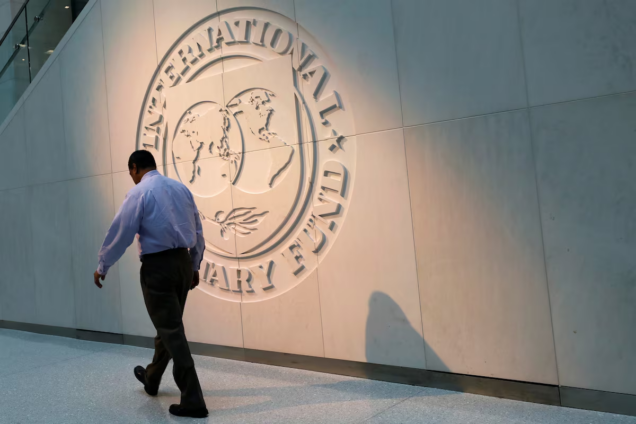
A visiting team from the International Monetary Fund (IMF) is expected to conclude the final review of Ghana’s Extended Credit Facility programme on Friday, May 15.
This is what JoyBusiness has picked up from sources familiar with the engagement.
The IMF mission team, led by Ruben Atoyan, has been in Ghana since April 29, 2026, for the two-week sixth review mission.
Progress on Mission Visit
Information gathered by JoyBusiness indicates that engagements between government officials and the IMF team are progressing largely as planned and remain broadly on course.
This is despite lingering concerns in the energy sector, particularly around funding, restructuring and fiscal pressures.
In the monetary and banking sector, the Fund is said to be satisfied with steps taken regarding banks with significant government ownership.
However, issues relating to a specific private commercial bank are yet to be resolved.
It is not yet clear whether the mission will set prior actions for government before the team leaves to prepare its report for board consideration in August this year.
Focus of Review
The mission is assessing Ghana’s overall performance since the fifth review earlier this year.
It will also determine whether delayed targets and structural reforms have been completed or are close to completion.
On the fiscal side, attention is expected to centre on developments in the energy sector, especially structural reforms and debt management.
The team is also expected to examine government spending priorities, including whether adequate allocations have been made to critical areas, particularly social protection.
A major part of the discussions will focus on prior actions required under the sixth review.
These conditions will be necessary for Ghana to qualify for the final tranche of IMF support and successfully complete the programme.
In the monetary and banking sector, the mission is also expected to seek updates on efforts to resolve legacy challenges within the financial system.
Finance Minister Ato Forson on Sixth Review
Finance Minister Cassiel Ato Forson used his first engagement with the mission team to reflect on Ghana’s recovery since the 2022 economic crisis.
He said the partnership between government and the IMF has delivered strong and measurable outcomes.
“It has been a long, demanding, but ultimately transformative journey,” he said.
According to him, the programme has helped stabilise the economy, restore credibility and renew hope among Ghanaians.
He expressed appreciation to the IMF on behalf of the President and the people of Ghana, describing the progress as significant and anchored on discipline and difficult policy decisions taken in the national interest.
While acknowledging the gains, Dr Forson said government remains focused on sustaining momentum and consolidating the recovery.
He said the next phase of the programme would prioritise policies that unlock private sector growth at scale and translate macroeconomic stability into tangible outcomes for citizens.
“We must ensure that stability translates into more investment, more jobs, and more opportunities for all,” he said.
He added that the true test of the recovery lies beyond headline economic indicators.
Programme performance and outlook
Ghana’s 36-month Extended Credit Facility arrangement was approved in May 2023, with access of 303.8 per cent of quota, equivalent to SDR 2.2419 billion, or about US$3 billion.
At the fifth review, the IMF said Ghana’s performance had been broadly satisfactory despite delays in some structural reforms.
It noted that reforms were beginning to yield results after earlier policy slippages.
The Bank of Ghana’s reserves have also reached record levels, strengthening the country’s buffer against external shocks.
In its latest economic outlook, the IMF maintained Ghana’s 2026 growth projection at 4.8 per cent, slightly above the 4.6 per cent forecast for Sub-Saharan Africa.
This comes against a revised global growth forecast of 3.1 per cent, reflecting rising energy costs and geopolitical tensions.
The Fund also projects Ghana’s inflation to decline to 7.9 per cent in 2026, slightly below government expectations, assuming current disinflation trends continue.
Inflation is expected to remain in single digits through 2026 and 2027.
Latest Stories
-
He entered at eight. He is now 16: Ghana’s children growing up in prayer camps
2 hours -
‘Development must not always begin from Accra’ — Anwelle Foundation launched in Jirapa
2 hours -
PKO trio eye victories at Odwira Festival
5 hours -
346 Ghana Navy recruits pass out after 26 weeks of intensive training
5 hours -
Newsfile to discuss EOCO-MP arrest, drug trafficking, speech arrests and $235m water debt
6 hours -
JoyNews gets results as listeners raise GH¢40,000 to help 17-year-old student with cerebral palsy attend SHS
6 hours -
Vice President calls for stronger local pharmaceutical production to reduce medicine imports
6 hours -
The brewing tension at KNUST; Beware the Ides of October….
7 hours -
Health Ministry moves to integrate traditional medicine into mainstream healthcare
7 hours -
550 pupils in Kintampo South get educational lifeline as ‘Seeds of Hope’ reaches farming communities
7 hours -
Opoku Mensah urges Christian Council, House of Chiefs to speak up on democratic freedoms
8 hours -
Teacher unions’ strike: Minority demands immediate payment of teacher arrears, 20% deprived area allowance
8 hours -
The Accra-Kumasi Expressway: Building it right
8 hours -
Beyond gold exports: Building value and economic resilience from Ghana’s gold
8 hours -
2027 AFCONQ: Ghana under pressure as Gambia beat Somalia 2-1
8 hours