

Audio By Carbonatix
Ghana's welding industry, together with the general public, indigenous Ghanaian companies, multi-international companies, and organisations look forward to the 24-hour economy, a policy captured in the National Democratic Congress (NDC) 2024 manifesto.
Resetting Ghana for jobs, accountability, and prosperity is in sync with the 24-hour economy, and that is exactly what people living in Ghana have been hoping to experience in their lifetime and generations to come. Kudos to President-Elect John Dramani Mahama, Vice President Professor Jane Naana Agyemang, and the NDC team for producing such a revolutionary and transformational policy.
We, the professionals in the welding fraternity have kicked off the move to embrace the 24-hour economy. When the Mahama-led government implements the 24-hour economy policy effectively and efficiently, about 50,000 welding-related jobs will be created in the Ghana welding industry in the first two years of your term in office.
The question that comes to mind is, how can such many jobs be created?
The welding industry comprises the welding workforce, welding materials and equipment supply group, welding education and training group, welding organization group, and the end-user group. In a broader scope, the end-user group includes industrial sectors such as automotive, aerospace, shipbuilding, biomedical, light industrial manufacturing, heavy industrial manufacturing, construction, capitalized repair and maintenance, renewable energy, etc.
Thousands of decent and well-paying welding jobs, if not a million, can be created in these industrial sectors while building national capabilities in welding. Several projects significant to the United Nations Sustainable Development Goals (SDGs) can be initiated and implemented.
Also, seeing the NDC manifesto promising strategic investments under the 24-hour policy block excites me. Satisfactorily, it details key sectors that are the primary focus under the 24-hour economy policy. Welding-related jobs can be created in ten (10) of the targeted areas mentioned in the NDC manifesto. These are 1. Agro-Processing, 2. Manufacturing, 3. Construction, 4. Extractive industries, 5. Sanitation and Waste Management, 6. Hospitality Industry, 7. Retail Centres, 8. Transportation Services, 9. Health Services, 10. Security Services. Welding is predominant in all these targeted areas.
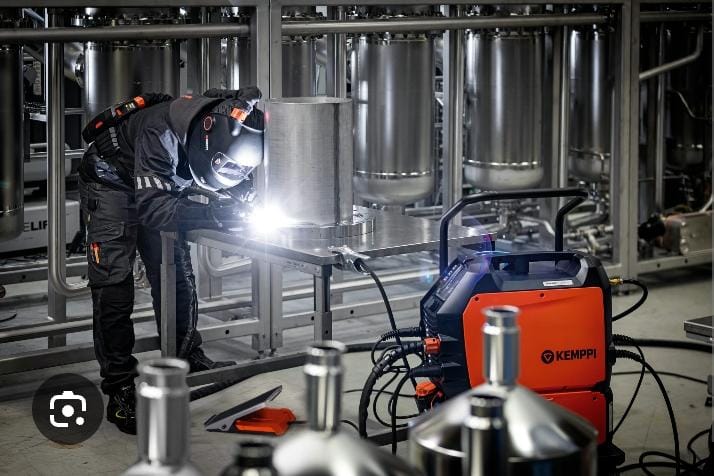
The Ghana welding industry can manufacture and produce welded products in Ghana to fulfill the “Made in Ghana Agenda”, as we need cheaper and more reliable electricity to operate. “Dumsor” should be a monster of the past! The Ghana Welding Industry is ready to increase labor productivity and enterprise competitiveness to fulfill the “Aspire 24” agenda. Therefore, we embrace the catalytic investments the NDC manifesto proposes to grow, generate jobs, and propel the economy's growth.
As welding has been identified as one of the skills needed in the Ghanaian domestic market, Ghana deliberately needs to build a national welding capacity. The Commission for Technical and Vocational Education and Training (CTVET) Ghana and other stakeholders have done some work in this area. The Ghana Welding Industry hopes the Mahama-led administration will continue the works of CTVET in a more effective, efficient, and sustainable manner.
Sadly, Ghana has a shortage of well-trained welding personnel – the core workforce of the welding industry. Over the years, countless efforts have been made to elevate the image of welding in Ghana and within the international welding community. Today, Ghana is a member society of the International Institute of Welding (IIW). Ghana's membership with the IIW through the Ghana Welding Bureau aims at welding training, education, personnel qualification and certification, and company certification.
Therefore, welding companies, firms, and organizations need to be supported since they are struggling and cannot effectively contribute to providing training and creating avenues for employment opportunities for Ghanaians. Also, small and medium-sized enterprises (SMEs) in the welding business should be massively funded under “The National Employment Trust” as they present high growth and job creation potential.
Welding in a 24-hour economy cannot be downplayed as it presents diverse entrepreneurial opportunities in job creation. Welders and other welding personnel need to be trained to expose them to the myriad employment opportunities in the welding industry. We in the welding fraternity uphold the “leveling up” strategy captured in the NDC manifesto.
Youth, women, and persons with disabilities (PWDs) must be empowered with welding skills through training, education, qualification, and certification. This action will help achieve equity in the job market thereby creating a successful link between the formal and informal sectors in the welding landscape for prosperity for all.
An effective and sustainable way to achieve the “leveling up” strategy is through the “National Apprenticeship Programme (NAP)” which the NDC manifesto captured. As stated, the NAP is “to generate self-employment through the provision of free technical and vocational training for young people in various crafts, and trained apprentices will be issued with appropriate certification and supported with start-up capital and equipment to set up businesses”.
Welding and allied joining skills training fit perfectly within the NAP agenda, which I will explain in my next article.
In conclusion, by creating an enabling environment and uninterrupted financial support, Ghana can achieve a high employment record in welding in the proposed 24-hour economy. Welders and other welding personnel need to be trained by a factor of three (3) for Ghana’s Welding Industry to work 3 shifts in a day, increase productivity by a factor of 3, increase quality by a factor of 3, and increase exports of manufactured products by a factor of 3.
The Ghana welding industry is available for a round table discussion with the Mahama-led government to initiate and implement welding projects to create jobs for the youth, the unemployed, females, and PWDs.
About the Author
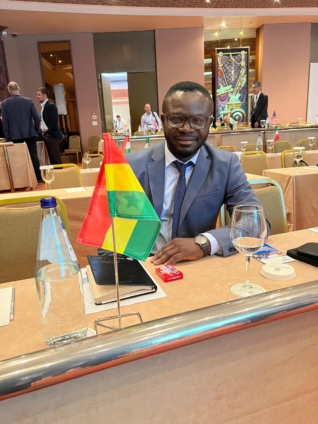
Dr. Emmanuel Afrane Gyasi won the International Institute of Welding (IIW) 2024 prestigious Chris Smallbone Award. Additionally, the IIW conferred on him as an outstanding individual who has made a significant contribution to improving the global quality of life through the optimum use and innovation of welding and joining technologies in his region and internationally. He is pursuing the international welding engineer (IWE) course at The Welding Institute (TWI), UK. He is a research and development engineer and a social entrepreneur.
E-mail: emmanuel.gyateg@gmail.com
Tel: +233207341037
Latest Stories
-
Baffour Awuah deliberately refused to honour EOCO invitation – Deputy AG, Srem-Sai
9 minutes -
‘Believe in these players’ – Carlos Queiroz tells Ghanaians after leaving Black Stars job
9 minutes -
ECG announces planned maintenance outage in parts of Accra on Friday
21 minutes -
Carlos Queiroz sacked as Black Stars head coach
28 minutes -
Parliamentary Sports Committee to ‘interrogate’ Black Stars struggles with Ministry, GFA invitations
37 minutes -
Asutifi North Police arrest 7 in crackdown on suspected drug activities
47 minutes -
Attijariwafa Bank: What to know about the Moroccan Group taking over SG Ghana
51 minutes -
University Librarians Ghana honours past leaders for distinguished service
57 minutes -
Seychelles President leads high-level dialogue on Africa’s digital future at FALS Global Conversations in New York
58 minutes -
24-hour economy requires faster justice for commercial cases – Chief of Staff
1 hour -
Five Agric Colleges receive digital tools to drive climate-smart farming
1 hour -
GPL 2026/27: Kotoko face Karela test as Hamza Obeng takes temporary charge
1 hour -
Morocco strike late to overcome 10-man Black Starlets
2 hours -
Nyaho-Tamakloe calls on Kurt Okraku to resign amid Black Stars struggles
2 hours -
Societe Generale Group agrees to sell Ghana subsidiary to Attijariwafa Bank
2 hours