

Audio By Carbonatix
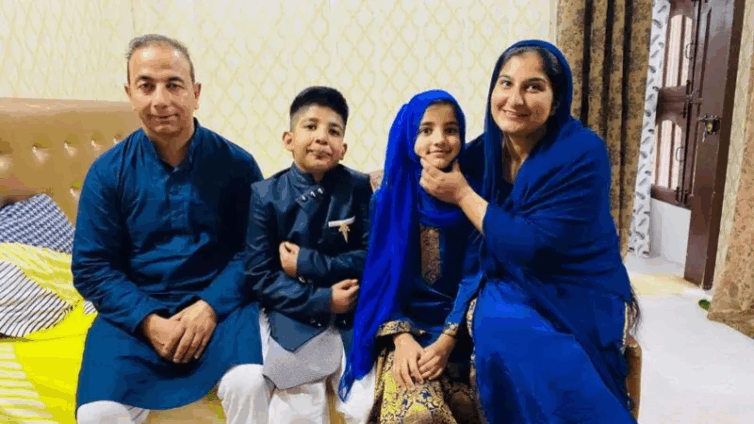
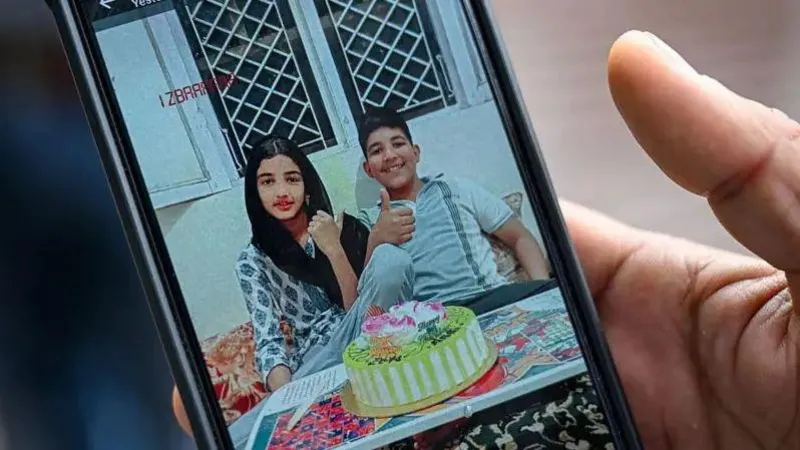
Maria, who lives in Indian-administered Kashmir, lost her nephew and niece - 12-year-old twins Zain Ali and Urwa Fatima - to cross-border shelling on 7 May. Their parents, her sister Urusa and brother-in-law Rameez Khan, were also injured and are still in hospital.
Hours earlier that day, India had launched a series of strikes in Pakistan and Pakistan-administered Kashmir in retaliation for an earlier militant attack in Indian-administered Kashmir that killed 26 tourists.
The strikes were followed by a series of military actions from Islamabad and Delhi that went on till Saturday, including heavy cross-border shelling and drone strikes.
People living along the Line of Control (LoC), the de-factor border between India and Pakistan, were the most vulnerable as shells fell near their homes.
Maria, who lives in Poonch, a town in Indian-administered Kashmir near the LoC, is among dozens of people who lost family members in the conflict.
India has said that 16 people were killed on the morning of 7 May in the shelling by Pakistan. Pakistan has said that at least 30 civilians have died since India launched its retaliatory strikes in the early hours of 7 May.
On 6 May, like every other day, Zain and Urwa came back from school, did their homework, played a bit, had dinner and then went to sleep.
It wasn't yet dawn when the Khan family heard the sound of gunfire just a few kilometres away from their home.
Terrified, they hunkered down at home and waited for a relative to come pick them up, Maria says.
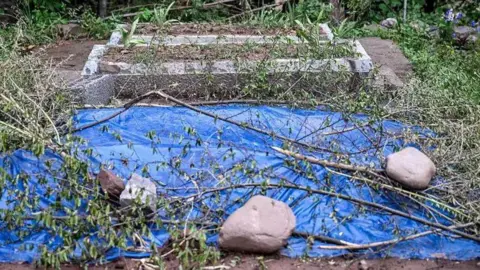
"My sister was holding Urwa's hand and my brother-in-law was holding Zain's hand. They had just left the house when suddenly a shell exploded [nearby]. The splinters hit them - Urva died right there and Zain was flung somewhere in the force of the explosion," Maria says.
She adds that her sister kept calling out to Zain. When she finally spotted him, a stranger was performing CPR on the boy, trying to revive him. But he was unsuccessful.
Meanwhile, Rameez, who lay bleeding and unconscious, was rushed to hospital - first a local one in Poonch and later to a bigger hospital in Rajouri, about four hours away.
Since his injuries were serious, he was shifted again to a hospital in Jammu city, another four-hour journey.
Maria says that Urwa and Zain were the centre of their parents' lives. Rameez, a teacher, wanted to give them the best education they could get and hence, they shifted to a house that was closer to the children's school, called Christ School.
On 9 May, India's Foreign Secretary Vikram Misri said in a press briefing that during heavy shelling along the LoC, a Pakistani shell had fallen behind Christ School in Poonch town and exploded.
Rameez, Maria says, still doesn't know about the deaths of his children as the family doesn't want to upset him.
After the shelling on 7 May, hundreds of people left Poonch and other border towns to escape to safer areas. They are slowly returning after the ceasefire.
"The government should have informed people living near border areas earlier, so that they could leave from there and go to a safe place. Perhaps then our children would have been with us today," she says.
"If war is necessary for the country's security, we support it," says Maria.
"We are also saddened by the Pahalgam attack, but we should also think about the lives of those living near the border. Are we not humans?" she asks.
"Now, whether there is a war or ceasefire, our children will not come back."
Latest Stories
-
IMMILAC president recounts personal losses as security women lead breast cancer awareness campaign in Wa
1 minute -
University of Ghana postpones October 12 reopening as GAUA strike persists
15 minutes -
Bahass Foundation launches vocational skills training to support mental health recovery in Wa
47 minutes -
NPP orders parliamentary aspirants and their supporters to suspend campaign activities
1 hour -
Techiman unites against child marriage: Joy Impact Makers Awardee leads charge on International Day of the Girl Child
2 hours -
Ghana Psychological Association calls for greater involvement of people with lived experience in mental health care
3 hours -
Ablakwa says Ghana could evacuate more citizens from South Africa if the situation worsens
3 hours -
Violence against girls must be tackled through individual responsibility – Gender advocate
3 hours -
Ghana’s BRICS bid must be guided by national interest – International Affairs Analyst
3 hours -
Journalists look back on a decade of breast cancer reporting in Ghana
4 hours -
President Mahama ends Resetting Ghana tour of Ahafo Region
6 hours -
African negotiators seek delivery of climate commitments at COP31
6 hours -
BoG develops AI rules for financial sector
6 hours -
‘Big Push’: Government assures contractors of prompt payments
6 hours -
Court fines miner for breaking into gold buying shop
6 hours