

Audio By Carbonatix
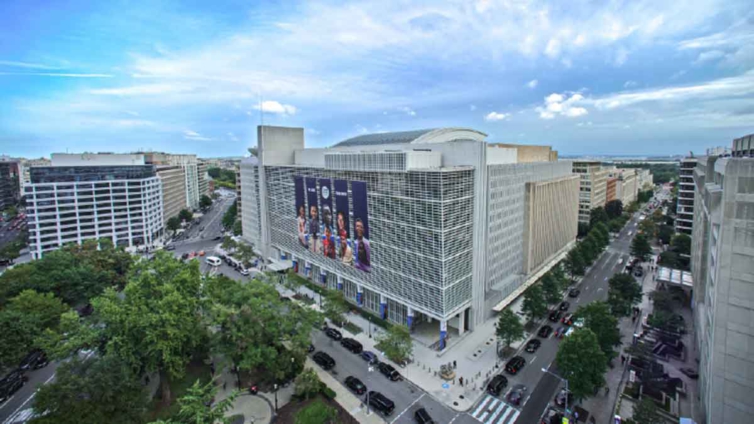
With less than three months to end the year, the World Bank is projecting a significant rise in Ghana's total public debt for this year.
According to the Bretton Wood's institution October 2020 Africa Pulse Report, this is due to the widening fiscal deficit as a result lower revenue and high expenditure brought about by covid-19.
The country’s debt has already hit GHS263 billion, about 68.3% of Gross Domestic Product in July 2020.
Ghana still remains a high risk debt distress country, according to the World Bank’s analysis. Neighboring Ivory Coast is however classified as having moderate debt levels and in the moderate risk category.
The Sub Saharan Africa region’s level of public debt will however hit 63.1% of GDP in 2020.
The World Bank said sustainability of post-COVID-19 will depend on the ability of Sub-Saharan African countries to alleviate their mounting debt burdens and create increased fiscal space.
According to volume 21 of the Africa’s Pulse, the World Bank said effective economic policies, which include macroeconomic and debt management, will increase a country’s capacity to repay its debts. “Enhancing debt management requires better debt transparency and improved efficiency in the use of borrowed resources to expand the fiscal space”, it said.
It also emphasized that creating fiscal space will help the economy cushion the effects of the pandemic crisis and avoid a deeper recession—including in countries with less diversified economic structures.
Additionally, managing a country’s borrowing patterns will reduce the risk profile of debt and may help alleviate the adverse growth effect of the pandemic shock, it added.
Components of Ghana’s debt
The external component of the GHS263 billion debt is estimated at GHS138 billion [$24.3bn], representing 35.8 percent of GDP.
The domestic component of the debt is also estimated at GHS125.1 billion, approximately 32.5% of GDP.
The financial sector resolution bond however constitutes GHS14.2 billion, which is equivalent to 3.7 percent of GDP.
Interest payments
Ghana is expected to pay about GHS26 billion on interest payments for this year alone.
This will be a little over GHS6 billion interest payments in 2019. Last year, interest payments cost the nation about GHS19.756 billion on loans borrowed.
Out of this, GHS4.60 billion was spent on the external debt, while GHS15.156 billion was used to service loans contracted from the domestic market.
Latest Stories
-
NSA extends 2026/2027 National Service registration deadline to October 23
3 minutes -
Mahama reaffirms commitment to private investment and industrial growth
19 minutes -
‘We have been used and dumped’ – NDC’s James Agbey warns over grassroots neglect
28 minutes -
Ghana defender Marvin Senaya begins training ahead of comeback
31 minutes -
Joyce Bawah Mogtari urges women leaders to build strong support networks
47 minutes -
Bawumia engages GUTA over import duties, VAT and rising business costs
48 minutes -
Fuel prices begin to fall as Star Oil cuts petrol to GH¢16.45
49 minutes -
GoldBod supplies banks with US$282m in weekly forex sales
51 minutes -
Joyce Bawah Mogtari says Obaasima Conference should help women connect and learn
52 minutes -
Ghana’s Crude Oil Production Rebounds by 30% After Five Years of Decline
1 hour -
Nzema East launches Responsible Cooperative Mining Programme to tackle environmental destruction
1 hour -
Ghana included in WHO lead-testing programme as questions remain over local exposure risks
1 hour -
2026 Amputee World Cup: We will win the trophy – Samson Deen
2 hours -
Controller and Accountant-General pays promotion arrears to 56,003 GES teachers ahead of deadline
2 hours -
2026 Amputee World Cup: We want to make the continent proud – Black Challenge coach
2 hours