

Audio By Carbonatix
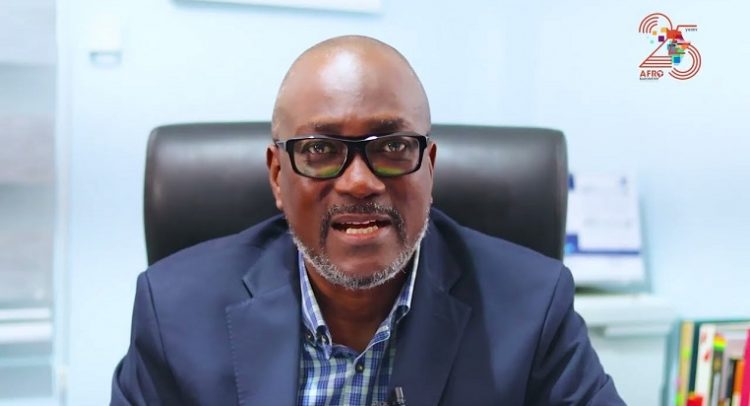
Chairman of the Constitution Review Committee, Professor H. Kwasi Prempeh, has defended calls for broader public deliberation on Ghana's constitutional review process, insisting that while a more consultative approach may delay the exercise, democracy and constitution-making are not designed to be rushed.
Speaking on JoyNews' PM Express on Monday, Prof Prempeh said Ghana must resist the temptation to fast-track reforms that will shape the country's governance for generations.
He explained that constitutions differ fundamentally from ordinary politics because they are intended to outlive governments, political parties and individual leaders.
"Constitutions are different; they are forward-looking. They last at least a generation. They set the foundational rules of the game for how the country is to be governed, how we recruit our national political leadership, how we exit them, how we distribute power, and these things transcend party governments."
Prof Prempeh expressed hope that the political class, which he described as the gatekeepers of the review process, would approach the exercise with patriotism rather than partisan interests.
"They will come to this with a certain sense of patriotic obligation, not deference to party, because this is going to last beyond any party's tenure, any president's tenure."
He urged political leaders to think beyond their time in office and focus on the legacy they leave for future generations.
"If you see it as just a zero-sum game of another way for one incumbent party to get their preferences vis-à-vis the rival party, then I think we have lost an opportunity to do some real game-changing reforms."
While acknowledging that politics cannot be completely separated from constitutional reform, Prof Prempeh argued that extensive public debate is essential to producing legitimate and enduring reforms.
"Rather than rush things and go quickly to cast a vote, let us debate and argue it, and let the public be part of that debate, and let us see who has the superior arguments, because we are reforming our state, the republic, and how it's governed."
The constitutional law expert also admitted that the review process had already lost valuable time.
"I think we've lost time."
Looking back, he said the process could have moved faster if the government's position on constitutional reforms had been submitted directly to the Constitution Review Committee alongside proposals from other stakeholders.
"That would have saved us the wait period because we've waited quite a bit from the end of January to now… we've lost quite a bit of time."
Although he acknowledged the argument for aligning a possible constitutional referendum with the next local government elections to boost voter turnout, Prof Prempeh maintained that the remaining time should be devoted to broad public engagement rather than accelerating the process.
Asked whether that approach would inevitably delay the reforms, he said such trade-offs are part of democratic constitution-making.
"That's what makes constitutions and constitution-making and democracy slower than the alternative. You slow it so that you hopefully improve the outcome, the legitimacy of the outcome."
"So yes, there is some trade-off that needs to be done. It will push it a little bit."
Latest Stories
-
Hawa Koomson pledges experienced and mature leadership of NPP women’s wing
12 minutes -
Young woman found dead at Kasoa Peace Town
45 minutes -
Playback: The Law examined lawful arrest in Ghana
1 hour -
Mahama urges African governments to treat healthcare as an investment, not budget cost
2 hours -
Bawumia congratulates John Boadu and new NPP executives, pledges support ahead of 2028
2 hours -
‘No talent should be left out’ – Bawumia pledges inclusive NPP campaign for 2028
2 hours -
Prof. Mike Oquaye recounts how he blocked Special Prosecutor’s attempt to arrest Bawku Central MP
2 hours -
Make health sovereignty a priority for Africa – Mahama
2 hours -
Dorimon Naa, Wa West DCE lead massive clean-up exercise; threaten sanctions against recalcitrant residents
3 hours -
Photos from Adom FM Y2K Jam
3 hours -
Praye Tiatia steals the show at Adom FM Y2K Jam [Watch]
3 hours -
Boakye Agyarko congratulates John Boadu, pledges support for NPP leadership
3 hours -
Antwi HiMight thrills fans with Antwi ne Antwi hits at Adom FM’s Y2K Jam [Video]
3 hours -
Amb. Edward Boateng congratulates Boadu, Kodua on election wins
4 hours -
John Boadu pledges to rebuild NPP from grassroots and restore ‘winning machinery’
4 hours