

Audio By Carbonatix
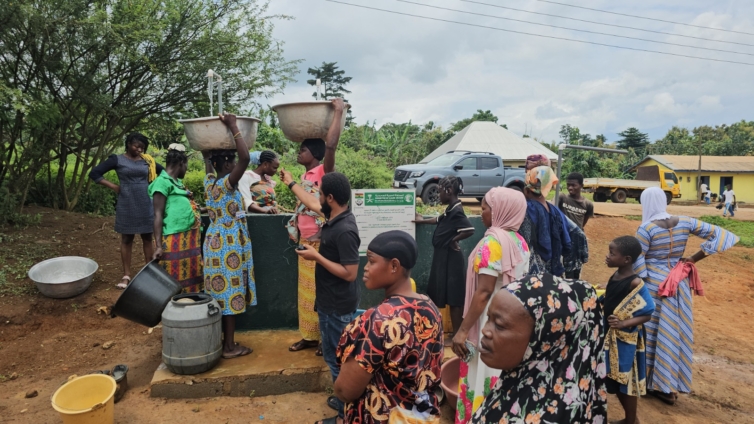
The Ghana Statistical Service’s (GSS) 2022 Ghana Demographic and Health Survey (GDHS) has revealed that, approximately one in every five individuals (19.1%) in Ghana faced inadequate access to drinking water in the month before the survey.
The Northern Region recorded the highest percentage with one in every three individuals (32.1%) lacking sufficient drinking water.
Following closely were the Oti (31.2%) and North East (26.2%) regions.
The Upper East (14.0%) and Ashanti (14.5%) regions reported the lowest percentages of individuals without enough drinking water, each with figures less than half of those recorded in the Northern and Oti regions.
The GSS made this known in a statement on this year’s World Water Day celebrated annually on March 22nd, under the theme ‘Water for Peace’.
The Service also highlighted that nationally, 6.5 percent of the population had to travel more than 30 minutes round-trip to access drinking water.
“More than a quarter (27.5%) of the population in the North East Region reported travelling more than 30 minutes to access water, the highest recorded, followed by the Northern (18.6%) and Upper West (18.6%) regions.
“Three in every five (59.9%) persons in Ghana did not have water on their premises. Nine in every ten persons (89.8%) in the Savannah Region did not have water on their premises, the highest recorded and 1.5 times higher than the national average. North East (86.5%) and Oti (83.5%) regions have the second and third highest percent of the population without water on their premises.”
“Greater Accra (22.0%) recorded the lowest percentage of the population without water on the premises. Volta Region (47.1%) is the only other region where less than half of the population does not have water on the premises. More than 90.0 percent of the population in the lowest wealth quintile (93.6%) were without drinking water on their premises, more the five times the percentage recorded for those in the highest wealth quintile (17.5%),” it stated.
“The percentage is lowest in the North East Region (43.4%) where less than half of the population has access to basic water services. Savannah (54.2%), Oti (57.8%), and Northern (64.4%) regions have the next highest percentage of the population with access to basic water services.
Greater Accra (97.7%) and Ashanti (94.8%) were the regions with the highest percentage who have access to basic services, recording figures that are more than twice that of the North East Region.”
“Persons in the poorest wealth quintile have the lowest percentage with at least basic water services (52.1%), almost half the percentage for persons in the highest wealth quintile (97.9%). Eight in every 10 (82.3%) of persons using unimproved water sources did not treat their water. Unimproved water sources refer to unprotected dug wells or unprotected springs,” the statement read.
The 2022 Ghana Demographic and Health Survey report, resources, and microdata are available to download at no cost from www.statsghana.gov.gh.
Latest Stories
-
Dangote defends $16bn Kenya refinery as residents raise compensation, environmental concerns
52 seconds -
Work begins on 160-bed Western North Regional Referral Hospital – Kwakye Ofosu
2 minutes -
GPRTU says non-member commercial vehicles pose challenge to road safety enforcement
2 minutes -
Fuel transport licensing gaps could enable abuse and diversion – Transparency International Ghana
4 minutes -
Former Youth and Sports Minister questions Carlos Queiroz appointment process, alleges possible corruption
5 minutes -
NHIA targets 80% population coverage under 2026–2028 strategic plan
8 minutes -
MTTD must intensify enforcement against unregulated drivers – NRSA
8 minutes -
NRSA proposes separate registration and number plates for Okada riders
10 minutes -
National PTA backs striking teacher unions, urges Mahama to intervene
15 minutes -
Israel-bound flight diverted after fight between pilots
20 minutes -
EchoWave earns praise for sound quality at 10th Women in Worship
30 minutes -
Crackdown on South Africa’s unsafe streets ordered by president to keep women safe
41 minutes -
Banks are responding to improved monetary policy conditions – John Awuah
1 hour -
Judges’ conference forces further adjournment of Salomey Baffoe case to Oct. 5
1 hour -
Chorkor community joins AC4NCA clean-up to tackle marine and coastal pollution
1 hour