

Audio By Carbonatix
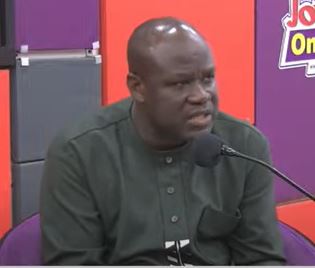
The Chief Executive Officer of the Ghana National Chamber of Commerce and Industry (GNCCI), Mark Badu-Aboagye says the structure of Ghana's taxes and the implementation of the same is a threat to the survival of businesses.
According to him, the businesses are overburdened with taxes, which makes it very difficult for them to expand.
Speaking on Joy Business’ Pre-Budget Forum, he said “Some of the taxes that we have now, they are not necessary, nuisance taxes. Those taxes were brought in purposely to solve a specific problem, for example, the COVID tax.”
He explained that this tax has accomplished what it was set up for and must be scrapped.
Although Mr Badu-Aboagye agrees that these monies were borrowed and must be repaid, he said the government must first give an account of what the money was used for.
He stressed despite the claim by the government that the money was used to support stakeholders, those monies were not free monies because the government placed more taxes on their businesses which in a way crippled their industry.
“I haven’t heard anywhere the amount that they have been able to collect from that business that they gave the money to. Otherwise, it becomes a waste of money and you come back to the individuals and businesses to tax them," he said.
He stressed that the structure should be able to generate revenue and should be able to simulate the activities of the private sector adding that "If the businesses are collapsing you end up not getting the revenue that you want."
Mr Badu-Aboagye added that the government has not been able to create a balance between revenue generation and enhancing the activity of businesses which should be the most important thing the 2024 budget must address.
On the same show, the Dean of the School of Business, Professor John Gatsi sharing a similar view, said the government must not act as though taxing businesses was the only way to generate revenue.
He said that government must make the business environment friendly which will enable businesses to expand.
“We should not make the need to raise revenue a mutually inclusive idea such that it is the only tool left for government and government must do anything possible even if the policy the government is rolling out in terms of raking in more revenue is inimical to the business environment.
Professor Gatsi stressed that if the government pushed too hard on taxing businesses, some of these taxes would be counterproductive.
He continued that, this implies that people’s commitment to the payment of taxes might be reduced and the tax effort will not yield much.
Latest Stories
-
President Mahama ends Resetting Ghana tour of Ahafo Region
48 minutes -
African negotiators seek delivery of climate commitments at COP31
50 minutes -
BoG develops AI rules for financial sector
52 minutes -
‘Big Push’: Government assures contractors of prompt payments
56 minutes -
Court fines miner for breaking into gold buying shop
1 hour -
Tarkwa court jails labourer for three years over GH¢123,000 theft
2 hours -
GAEC must retain nuclear scientists for Ghana’s nuclear ambitions – Minister
3 hours -
Man reportedly mistaken for game and shot by hunter dead in forest
3 hours -
19-year-old mason jailed 15 years for defiling seven-year-old pupil
3 hours -
Ghana’s banking sector assets rise 20.47% to GH¢500.2bn – BoG Governor
3 hours -
22 injured as Sprinter bus overturns at Sege after tyre burst
3 hours -
UN housing expert urges Ghana to strengthen Rent Control Department amid housing affordability concerns
3 hours -
Delta-BCI partnership reaches 166,000 people with breast cancer education
3 hours -
Power restoration fault suspected in Kumasi Central Market fire
8 hours -
The 7-foot giant of Ngleshie Amanfro: Seven-foot Ghanaian Ephraim Saawa dreams of joining the national basketball team
9 hours