

Audio By Carbonatix
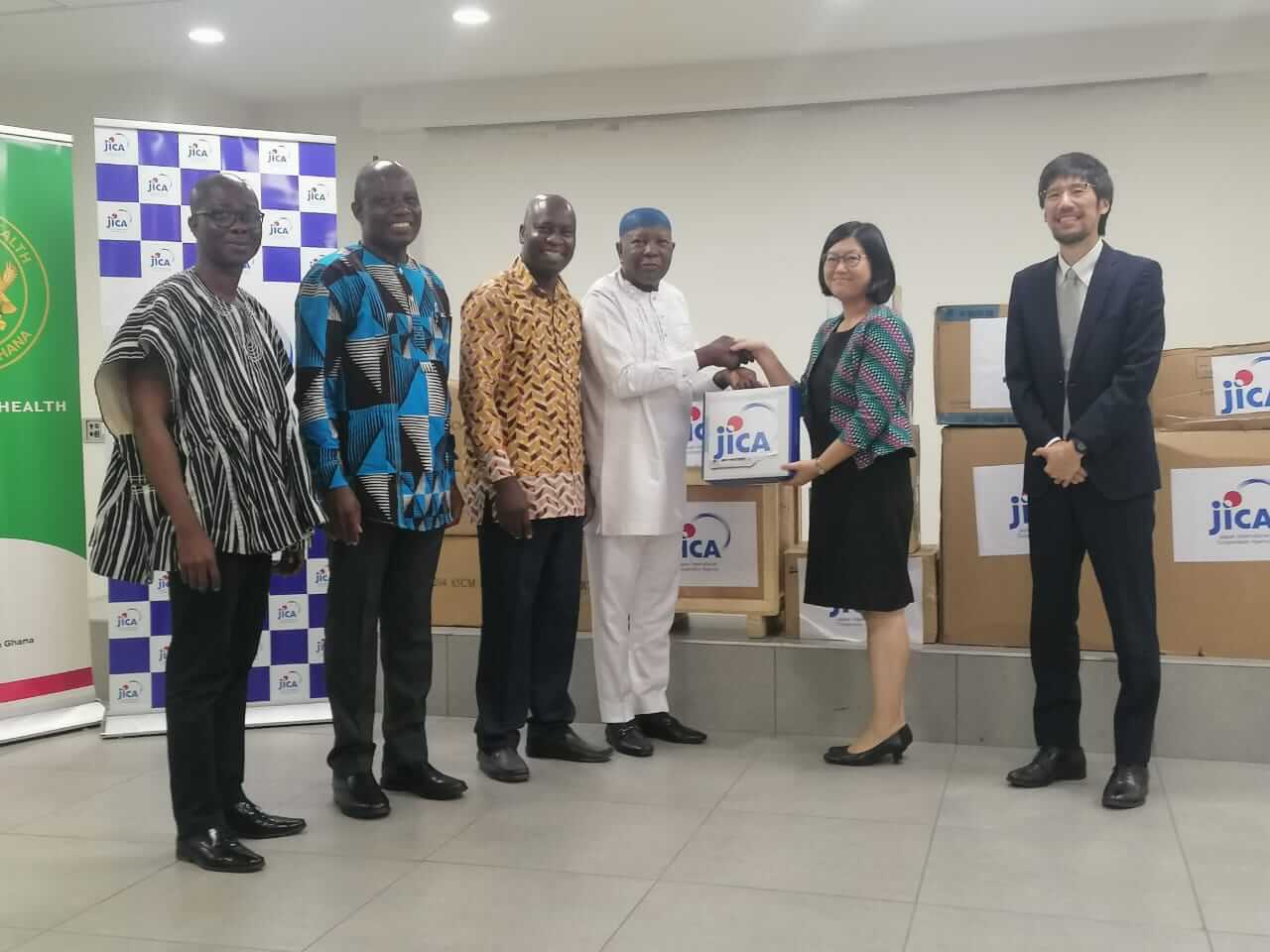
As part of measures to strengthen its cooperation with the government of Ghana, the Japan International Cooperation Agency (JICA), under its emergency Covid-19 Technical Cooperation Support has donated essential medical equipment, Personal Protective Equipment (PPEs), and advanced Training Simulators to the five Teaching Hospitals and the National Ambulance Service (NAS).
The equipment include Ventilators, Vital Signs Monitors, Bedsides Monitors, Volumetric Pumps and Syringe Pumps. It also include PPEs such as coveralls, gloves, gowns, head covers, among others, as well as training equipment such as intubation, cannulation, trauma, obstetrics and gynecological and anatomy models.
Additionally, biometric engineers from the Ministry of Health and its agencies will benefit from JICA’s knowledge and cooperation training program to enhance their capacity to effectively manage, maintain and sustain the usage of medical equipment in healthcare delivery.
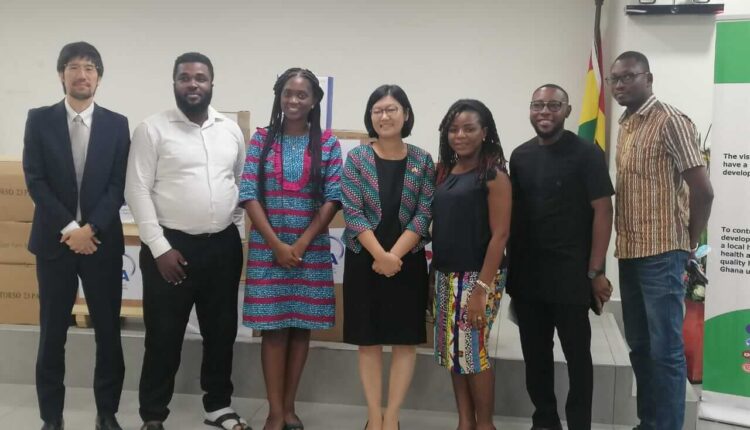
At a short ceremony on Friday to present the items to the Ministry, a Senior Representative of JICA Ghana Office, Ozawa Maki, acknowledged the strong collaboration between JICA and the MoH and its related agencies such as the Ghana Health Service, National Ambulance Service and the various Teaching hospitals across the country.
“JICA believes the support will help strengthen the country’s health system, especially the tertiary care facilities which serve as major referral facilities across Ghana. It will further elevate the country’s response effort to address current and future epidemics. It is also envisaged that the provision of the training equipment will ultimately lead to improving the skills-set of Paramedics to better respond to and conduct effective medical evacuation and pre-hospital care,” she stated.
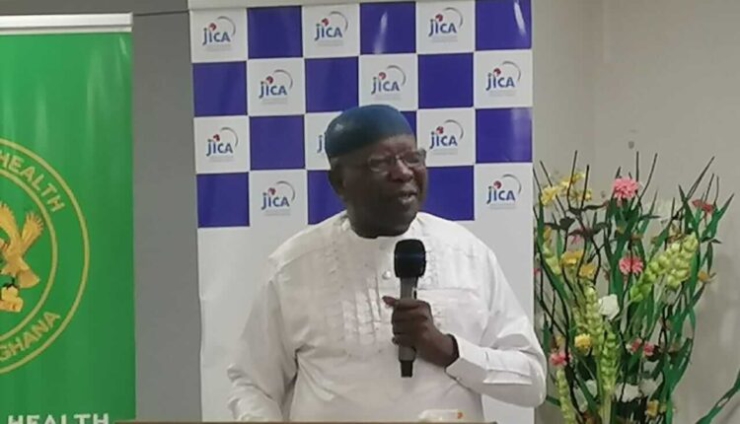
On his part, the Deputy Minister of Health, Mahama Asei Seini in the company of a team of Directors from the Ministry and Heads of Agencies received the items. He expressed gratitude to JICA and highlighted the Ministry’s commitment to ensuring continuous cooperation and support that will lead to developing the health system in Ghana.
“These are important items that are required, not only for Public Health Emergency Preparedness and Response system, but will also help us to build capacity for emergency services beyond Covid-19 as well.
“Though Covid-19 seems to be normalizing and related activities stepped down, the pandemic is not over yet. We still have to be on guard and prepare for any changes that may occur. The health sector will continue with its Public Health Emergency Preparedness and Response activities, there is the need to still continue with the observation of the protocols…” the deputy minister stated.
Background
After Ghana recorded its first two (2) Covid-19 cases in March 2020, which was preceded by a rapid, surge in cases, Ghana like many other countries, encountered service delivery disruptions because of vulnerabilities in the health system.
The country’s five main Teaching hospitals designated as the main Treatment Centers for COVID-19, were overwhelmed as a result of capacity challenges especially the inadequacy of critical medical equipment and essential consumables that were urgently needed to enhance the country’s response to the pandemic.
The COVID-19 pandemic also revealed the need for a prompt and quality emergency evacuation system which is anchored by the National Ambulance Service; however, the Paramedics and Emergency Care Training School (PECTS), was under-equipped and could not contribute effectively to the building of capacity of Paramedics with advanced skills-set for emergency medical evacuation.
Intervention/Support
Following the request by the Ministry of Health (MoH) for Development Partners to complement the effort of the Government of Ghana, JICA, in collaboration with the MoH implemented an emergency Technical Cooperation project dubbed the “Project for strengthening of Emergency Service Systems in response to COVID-19 in Ghana.”

The project sought to strengthen Public Health Emergency Preparedness and Response by providing essential medical equipment, PPEs and advanced training simulators at the cost of two million and five hundred thousand Ghana Cedis.
The support items are to improve the equipment and logistics situation at the Korle bu, Komfo Anokye, Tamale, Cape Coast and Ho teaching hospitals.
Additionally, the Paramedics and Emergency Care Training School (PECTS), which is managed by the National Ambulance Service, received Advanced Training Simulators.

The support is expected to strengthen the operations of the National Ambulance Service to effectively complement the effort of all primary, secondary and tertiary level health facilities with prompt pre-hospital care and quality emergency evacuation.
Latest Stories
-
Mahama urges global institutions to invest in Africa’s cultural infrastructure
39 seconds -
Kuami Eugene joins UNICEF Ghana to promote universal birth registration
4 minutes -
Renard warns Côte d’Ivoire against complacency Ahead of Ghana clash
6 minutes -
‘Can the patient feel the difference?’ – GMTF boss challenges health leaders
6 minutes -
Office of the Registrar of Companies marks Risk Awareness Week with push for risk-smart, resilient institution
17 minutes -
Full text: Mahama’s speech at high-level side event on return and restitution of cultural properties and heritage
20 minutes -
ICU urges Ghanaian smock weavers to scale up production for local and export markets
21 minutes -
Human remains are not collectibles, specimens – Mahama demands restitution of Africa’s heritage
22 minutes -
EOCO, Baffour Awuah clash: Article 117 does not give MPs blanket protection from arrest – Samson Ayenini
24 minutes -
Mahama unveils 3 pillars to advance global reparatory justice agenda
42 minutes -
JoyNews Democracy Is Not for Sale regional dialogue – My take
47 minutes -
US ready to work with Ghana on reparatory justice despite opposing UN resolution – Ablakwa
58 minutes -
UK, Netherlands, Denmark ready to work with Ghana on reparatory justice – Ablakwa
1 hour -
Ghana TVET Service partners TOR to strengthen industry skills training
1 hour -
KNUST hosts Nyansapo Photonics School, commissions GPOL to boost research and innovation
1 hour