

Audio By Carbonatix
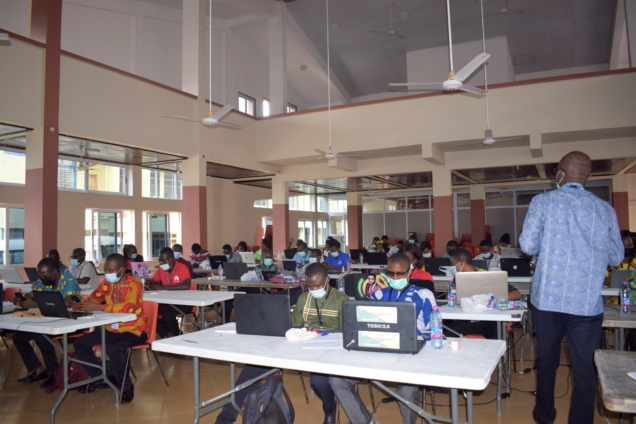
Fifty teachers from the Ashanti Region have been equipped with digital tools to meet the educational demands of the 21st century.
The teachers from 43 districts, were trained in Emergency Remote Training which aims at improving learning outcomes.
The Teachers were trained using the 11 training modules from the UNESCO ICT Essential for Teachers.
About 9.2 million students from Kindergarten to Senior High School and 450,000 teachers were affected by the closure of schools as a result of Covid-19.
In view of this, UNESCO-Korean Funds-in-Trust is however providing Emergency Remote Teaching training to both pre-and in-service teachers.
This is in line with Sustainable Development Goal 4, the projects seek to ensure inclusive and equal quality education through ICT.
The Emergency Remote Teaching will help teachers implement strategies to teach online using low-tech technologies in remote areas.
According to the General Secretary of the Ghana National Association of Teachers, Thomas Musah, 200 teachers in Ghana will benefit from the emergency remote teaching techniques project.
“Covid has taught us that education cannot wait,” he said. “The face-to-face way of teaching is gradually giving way to digital and online teaching. Distance should not be a barrier for teaching and learning”.
“UNESCO through the Korean government has been implementing this project in other African countries prior to the advent of Covid basically to leverage ICT to be able to teach effectively,” said Eric Balangtaa, National Associate Project Officer UNESCO-Ghana," he added.
Ashanti Regional Coordinator of Basic and Second-cycle schools Juliet Agyemang Duah also lauded UNESCO-Korean Funds-in-Trust and other agencies for the training.
“If teachers had knowledge of digital training most of the teachers would have taught their students via the internet during the Covid-19 pandemic but we had no idea about digital teaching.
“GES had to spend a lot campaigning around to get students back to school from post COVID.
“We’re grateful to UNESCO and all the agencies that made this training possible,” she emphasized.
Participants were presented with certificates by the Ministry of Education and UNESCO field Office in Accra.
The Center for National Distance Learning and Open Schooling (CENDLOS), National Council for Curriculum and Assessment (NaCCA), Ghana Tertiary Education Commission (GTEC), National Teaching Council (NTC) and Ghana Education Service (GES) are implementing partners.
Latest Stories
-
Ghana’s BRICS move requires clear strategy to manage risks – Godfred Bokpin
24 minutes -
Pay teachers realistic income – Duncan Amoah to gov’t
40 minutes -
Bechem to become chicken capital of Ghana – Mahama projects
42 minutes -
Gov’t targets recruitment of 16,500 health professionals in 2026
1 hour -
Two-week strike will not derail academic calendar – GNAT President
1 hour -
Headmaster detained after BBC investigation into alleged sexual abuse of students
1 hour -
GNAT pushes for clear implementation procedures of teachers’ conditions of service
2 hours -
Recurrent strikes threaten quality of education and academic calendars – Prof Bokpin
2 hours -
‘Cockroach’ group leaders among hundreds detained in Delhi protest
2 hours -
Don’t let speed of information become your judgement – CJ tells new lawyers
3 hours -
World Cup visa scandal: People have leveraged public office to facilitate fraud – Senyo Hosi
3 hours -
Glut! Farmers count losses as prices crash, customers happy
3 hours -
GSA postpones auction of unserviceable vehicles
3 hours -
Man charged with attempted murder after stabbing
3 hours -
World Cup visa scandal: Senyo Hosi says issue goes beyond calls for Sports Minister’s resignation
3 hours