

Audio By Carbonatix
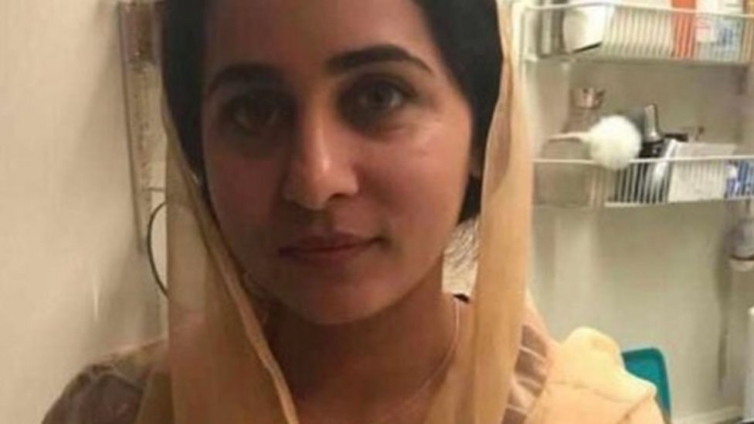
The body of Karima Baloch, a Pakistani human rights activist, has been found in Toronto, Canada, where she had been living for five years in exile.
Ms Baloch, 37, a campaigner from the restive region of Balochistan in western Pakistan, was a vocal critic of the Pakistani military and state.
Toronto police issued an appeal after she went missing on Sunday and later confirmed that her body had been found.
Police said there were "not believed to be any suspicious circumstances".
Pakistani rights activist Karima Baloch found dead in Toronto https://t.co/4IsaWZzYmp
— BBC News (World) (@BBCWorld) December 22, 2020
In 2016, Ms Baloch was named in the BBC's annual list of 100 inspirational and influential women for her work as a campaigner. She left Pakistan in 2015, after terrorism charges were levelled against her.
She continued to campaign in exile for the rights of people in Balochistan, both on social media and in person. And the threats followed her, according to Lateef Johar Baloch, a close friend and fellow activist who also lives in Toronto.
He told the BBC that Ms Baloch had recently received anonymous threats warning someone would send her a "Christmas gift" and "teach her a lesson".
Ms Baloch's sister told the BBC Urdu service on Tuesday that her death was "not only a tragedy for the family, but also for the Baloch national movement".
"She didn't go abroad because she wanted to, but because... open activism in Pakistan had become impossible," Mahganj Baloch said.
Balochistan province has been host to a long-running separatist insurgency. Ms Baloch was a well-known activist in the region; she was the first female head of the Baloch Students' Organisation (BSO) - a banned activist group.
Her first public exposure as an activist was in 2005, in Balochistan's Turbat area, where she attended a protest over missing persons carrying the picture of one of her missing relatives.
Activists in Balochistan say thousands of campaigners have gone missing in recent years. The Pakistani military denies accusations that it's brutally suppressing the region's aspirations for autonomy.
Several members of Baloch's extended family had been linked to the Baloch resistance movement over the years, and two of her uncles - a brother of her mother and a brother of her father - had gone missing. Their dead bodies were later found.
She rose to the head of the BSO in 2006, but many of the group's activists were either "disappeared" or went into hiding in the following years, and in 2013 the government banned the group.
Baloch went into exile in 2015 after terrorism charges were filed against her. After relocating to Toronto she married a fellow activist, Hamal Baloch. She remained active in exile both on social media and in human rights activities in Canada and Europe.
Reacting to the news of Baloch's death, the Balochistan National Movement (BNM) announced a 40-day mourning period.
Latest Stories
-
Oranges, sardines and eggs could help protect people exposed to air pollution, Ghana study finds
37 minutes -
Private security firms acting as political militias risk licence revocation, prosecution – National Security Coordinator
2 hours -
Antoine Semenyo makes history as first Ghanaian named in PFA Team of the Year
2 hours -
Mahama calls for responsive healthcare regulation to improve patient safety
3 hours -
IERPP accuses GoldBod of breaching transparency law, says quarterly trading reports removed from website
3 hours -
Future of Energy Conference: Africa cannot industrialise in the dark – ECOWAS Bank President
3 hours -
Help comes to Alajo as DirectAid brings relief items to flood victims
3 hours -
“Somebody created the loss” – Haruna Mohammed backs Minority’s call for GoldBod probe
3 hours -
Hope for agroecological farmers: Scientific Research supports urine-based weed management as safer alternative to glyphosate
3 hours -
Israeli Film Festival returns to Accra with free screenings to boost cultural exchange
3 hours -
SONABEL considers opening Bagré Dam spillway on Friday amid rising water levels
3 hours -
Ghana Maritime Authority, Humanity First commission 4 boreholes in Wa to end water scarcity and keep children in class
3 hours -
In Photos: Day Two of ‘SYPALA 2026’ focuses on governance, economic freedom and youth leadership
3 hours -
Wontumi withdraws from NPP chairmanship race, urges support for Bawumia
4 hours -
UCC-IEPA, CEGRAD launches free digital skills programme to empower 1,000 women in education
4 hours