

Audio By Carbonatix
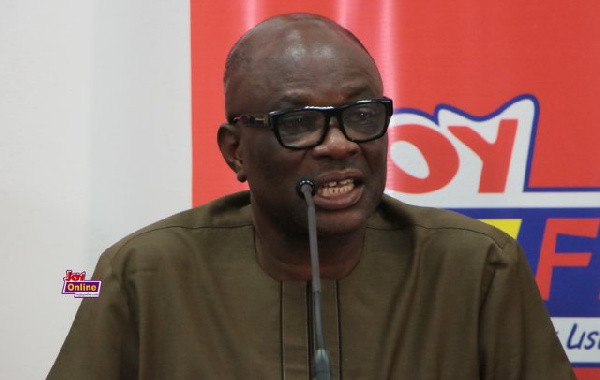
The President of the Ghana Union of Traders Association (GUTA), Dr. Joseph Obeng, is concerned about possible trade tensions among respective signatories to the single continental trade market if existing laws on trade and investment from these respective economies are not harmonized.
“We have no clue about the customs procedures and infrastructure to facilitate tariff-free trade – this is troubling, especially when customs procedures are the heart of this single market arrangement,” he told Charles Ayitey on the Market Place.
All 54 countries who have signed up to the single market, possess individual trade and investment laws.
Ethiopia, for example, prohibited foreign investment in its financial sector, a potential breach of AfCFTA rules. Ghana too prohibits retail trade of foreigners in its local market, another breach of AfCFTA rules.
“As a result, the secretariat could see a flurry of legal challenges from countries on behalf of their corporations,” Dr. Jospeh Obeng added.
Meanwhile, the Ghana International Trade Commission (GITC) has called for patience even as the AfCFTA Secretariat completes negotiations on common tariffs, trade and investment laws.
“Rome was not built in a day. It was best for this single market initiative to have been implemented now than have it delayed over resolvable issues as this. Patience is what we need from trading economies and signatories to this agreement,” he stated on the Market Place.
The International Monetary Fund in its Staff Discussion Notes published on May 13 2020 projects that although the implementation of some operational aspects of the African Continental Free Trade Area (AfCFTA) has been temporarily suspended, the agreement would be very important element to support post-pandemic recovery and to foster economic growth in the medium term in sub-Saharan Africa through the creation of larger and more integrated markets and the promotion of intracontinental trade.
Importantly, the implementation of the AfCFTA will also reduce uncertainty on trading relations within the continent, which—together with an expanded and more integrated market—would foster both domestic and foreign direct investment and help boost economic activity as countries emerge from the pandemic.
For the Secretary-General of the AfCFTA, 2021 sets a new milestone in the economic history of Africa’s trade eco-space.
“Today, we not only celebrate the start of a new year but today, we give Africa a new beginning, with the start of trading as a free trade area under the AfCFTA,” Wamkele Mene stated.
Latest Stories
-
Trump says he is considering firing US ambassador to Greece
4 hours -
Man City bananas ‘brought fun back’, says Varadi
4 hours -
Meta releases Muse Wonder AI models to challenge Anthropic and OpenAI
5 hours -
Daily Insight for CEOs: The CEO as Chief Decision Maker
5 hours -
Burnham had formal meeting with Man City chair while mayor
5 hours -
Is Ghana producing too many lawyers? What is the best lawyer-to-citizen ratio?
5 hours -
NDC sinking Ghana’s democracy with Emelia Agbenyo’s appointment – Miracles Aboagye
5 hours -
Seedorf back in football as Corinthians head coach
5 hours -
Hincapié and Zubimendi injured in post-match training session
5 hours -
Fridges in French supermarkets hit by cyberattack
6 hours -
Qantas flight grounded after bedbug outbreak
6 hours -
Reality Zone with Vicky Wireko: International Day of the Girl, shaping today’s girl for tomorrow’s future – ZONTA Clubs lead the way
6 hours -
Global health must be led by countries, not designed for them – Mintah Akandoh
7 hours -
Mahama honoured at 2026 World Health Summit in Berlin for global health leadership
7 hours -
Breast cancer is not a death sentence – Besease Kontire Obaapanin, Magmina Foundation lead awareness campaign
7 hours