

Audio By Carbonatix
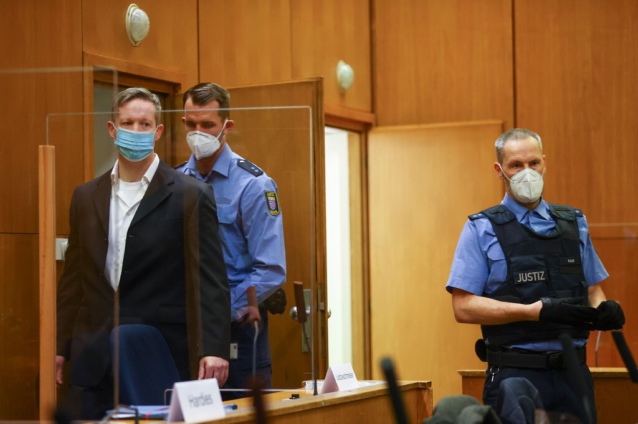
A court in Frankfurt convicted a German Neo-Nazi of murdering a local politician and sentenced him to life in prison on Thursday for what the prosecutor called the country’s first political assassination by far-right extremists since the end of World War II.
The court found Stephan Ernst, 47, guilty of the 2019 murder of Walter Lübcke, a member of Chancellor Angela Merkel’s center-right party who had defended her welcoming refugee policy.
He was sentenced to life with no possibility of parole — the sentence the prosecutor had sought because of the severity of the crime, which he argued was motivated by “racism and xenophobia.”
The assassination marked a turning point in postwar Germany’s reckoning with the extent of the threat posed by domestic neo-Nazis, coming after years of attacks by far-right extremists on migrants or their descendants.
Over the past year, Germany has been grappling with revelations that far-right networks had extensively penetrated its security services, including its elite special forces as well as the ranks of its police.
The prosecutor, Dieter Killmer, insisted that the court must send a message to an increasingly emboldened far-right camp in the country.
“From our point of view, as soon as a politician is involved, as is the case here, we must all be on our guard to ensure that others do not ignore the state’s monopoly on the use of force and take it upon themselves to kill representatives of the German people,” Mr. Killmer told reporters last week after his closing arguments.
Another man, identified only as Markus H. in keeping with German privacy laws, was found not guilty of being an accessory to the murder but was given a suspended sentence of one and a half years for a weapons violation.
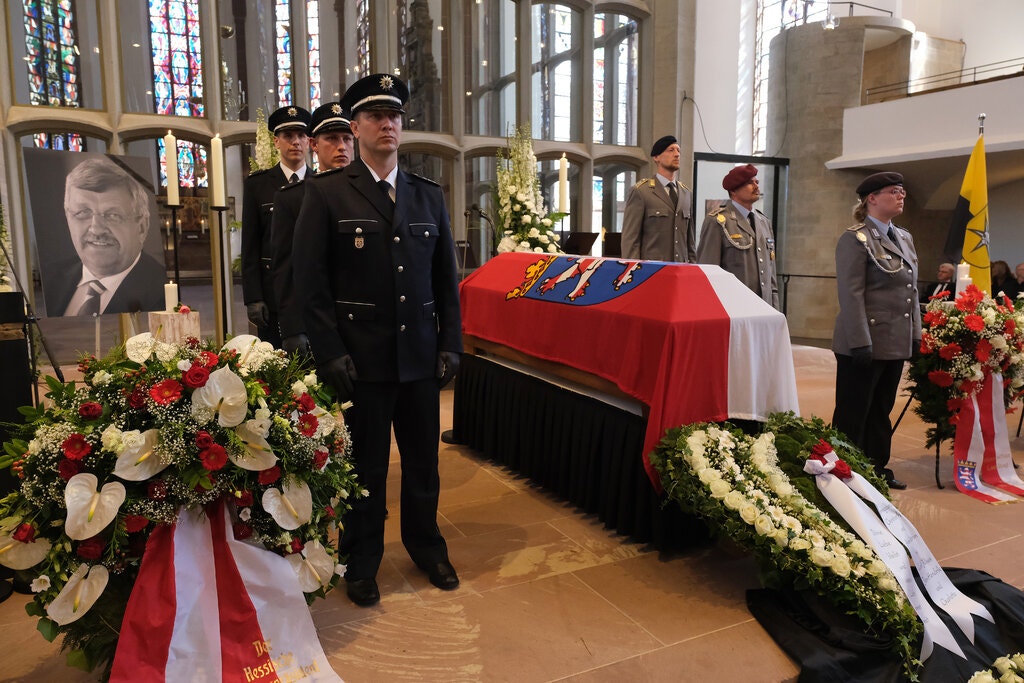
Mr. Lübcke was killed on the terrace of his home near the central German city of Kassel on June 2, 2019.
His adult son found his father slumped in a chair with a gunshot wound to the head and called an ambulance. He was taken to the hospital, where he was pronounced dead.
Mr. Ernst was arrested two weeks later, and confessed to the crime shortly afterward, only to rescind that confession weeks later. He restated his confession during the trial, which began in June.
Mr. Ernst was also charged with attempted murder in the August 2016 stabbing of a refugee from Iraq after police officers searched Mr. Ernst’s home and found a knife there with traces of the Iraqi man’s DNA. He was acquitted of that charge on Thursday.
Mr. Ernst was known to the police as a neo-Nazi sympathizer and had a criminal history dating to 1993, when he was convicted of attempting to bomb a refugee shelter.
In the years after, he slipped off the radar of security services, leading to criticism that regional authorities had failed to take the threat posed by right-wing domestic extremists seriously enough.
As refugee shelters began to fill again in the fall of 2015 with hundreds of thousands of people seeking asylum in Germany from conflicts in Syria, Iraq, and Afghanistan, Mr. Lübcke traveled throughout his region explaining the situation to his constituents.
During one town hall, he was repeatedly provoked by members of a local far-right group, including Markus H. pushing back against the criticism, Mr. Lübcke said that offering refugees adequate housing was a matter of German and Christian values, and anyone who did not support them was “free to leave this country.”
Markus H. shot and posted a video of Mr. Lübcke making the statement to social media channels frequented by supporters of the far-right, where it drew angry reactions. For months afterward, Mr. Lübcke received a torrent of hate mail, including death threats.
Following Mr. Lübcke’s murder, Germany witnessed a string of far-right attacks, beginning with the attempted bombing of a synagogue on Yom Kippur, the holiest day on the Jewish calendar, in October 2019. Two people were killed.
Last February a far-right gunman killed nine people from Turkish and Kurdish families that have lived in Germany for generations in the city of Hanau, near Frankfurt.
Latest Stories
-
Atta Akyea denies seeking presidential pardon for Wontumi in galamsey case
31 seconds -
Photos: Mahama commissions 85-bed Police Hospital ward, donates two ambulances
9 minutes -
GTEC directs Ghana’s public universities to reopen by October 16 and begin lectures on October 19
10 minutes -
Star Oil donates GH¢1million towards construction of new CID facility
14 minutes -
Court hands Adjetey Sowah, two others lifetime bans after Amputee Football legal dispute
24 minutes -
NDC appoints Julius Kwame Anthony as a Deputy Communications Director
24 minutes -
Ghana repatriates 120 Nigerians rescued from suspected cybercrime centres
28 minutes -
NPP rejects Emelia Agbenyo’s appointment as Deputy EC Chair, demands withdrawal
33 minutes -
EOCO grants Suame MP John Darko enquiry bail in GH¢27m SIC investigation
37 minutes -
NPP cannot question EC appointment after appointing own people to Commission – Kwakye Ofosu
42 minutes -
BoG deepens public trust with regional stakeholder forum in Techiman
52 minutes -
‘We have turned the tide’ – Ato Forson says Ghana is ready to take off
57 minutes -
Police arrest man captured in viral video assaulting wife in Agona Nkwanta
58 minutes -
KATH Mother and Baby Unit construction stalled for 14 months over unpaid contractor arrears
1 hour -
Government wanted to ‘tilt the balance’ with new EC appointments – Kwakye Ofosu
1 hour