

Audio By Carbonatix
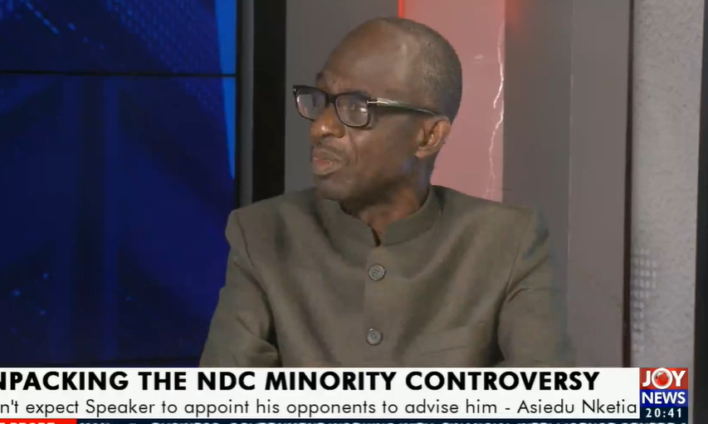
General Secretary for the National Democratic Congress (NDC) has taken on the government for its rationale behind the ongoing power outages in part of the country popularly known as ‘dumsor.’
Johnson Asiedu Nketia the justification provided by the New Patriotic Party (NPP) is untenable and flies in the face of logic.
“Dumsor has come and this one is because of the negligence of this government,” he said on Sunday.
Energy Minister, Dr Matthew Opoku Prempeh says that most of the transmission lines currently transporting electricity to the various substations were old and works are underway to improve them leading to the outages.
The Ghana Grid Company Limited (GRIDCo) also disclosed that construction works on the Pokuase and Kasoa substations among other infrastructure upgrades are expected to rectify the intermittent power outages.
However, the NDC Chief Scribe wants Ghanaians to take these justifications with a pinch of salt adding that the “NPP is lying to Ghanaians.”
“If they are building new transmission lines, it has nothing to do with the existing transmission lines... so how does your building of a substations somewhere contribute to dumsor? It is after you have finished the new line or substation and you want to change over. And that will take you more than a week to do.
“So what is happening now is the breakdown of the existing systems when the new ones haven’t happened yet."
Speaking on The Probe, he opined that the erstwhile NDC government, as far back as 2014, foresaw this canker and instituted frameworks to ameliorate the crisis.
As part of its measures some tariffs were adjusted upwards as part of the Millennium Development Compact to offset the cost incurred while on a path to improved access to power supply, he told JoyNews.
Mr Nketia said the NPP rode in the back of this tariff increment to tag the NDC as insensitive to the plight of the citizenry for taking that route.
In April 2018, the Public Utilities Regulatory (PURC) reduced electricity tariffs for residential, non-residential, mines and special load tariff customers.
This followed President Akufo-Addo’s proposed review of the tariff setting methodology and cost structure of the country’s energy production.
Mr Asiedu Nketia believes that move was the beginning of the woes currently being suffered under the current dispensation which he says led to a loss of several critical facilities at the time due to inadequate financial muscle.
“Because they were taking the monies from the strength of the balance sheet but their incomes were reduced on the back of the tariff reductions. And so nobody will give you the money so it didn’t come. The management came to declare that they have to stop all the capital projects.”
He fears the situation will get worse.
Latest Stories
-
PZ Cussons Ghana promotes hand washing among schoolchildren through Camel campaign
12 minutes -
30 NDC aspirants file nominations in Upper West as regional election approaches
26 minutes -
UPSA launches laptop assembly plant, requiring new students to assemble their own devices
32 minutes -
UCC sociologist calls for action on gender inequality to end child marriage
33 minutes -
LSN questions Ghana’s proposed five-year presidential term and DCE election reforms
34 minutes -
AFCON 2027Q: Bjorkegren to lead Black Stars for Somalia doubleheader with Tanko and Attram as assistants
36 minutes -
AMA completes road repairs on Kwame Nkrumah Avenue
42 minutes -
Law Students’ Network warns executive dominance could undermine constitutional review
45 minutes -
Mahama to meet relevant stakeholders over concerns about the new Customs Act
52 minutes -
CHASS demands a 20% increase in SHS funding and payment of outstanding debts
54 minutes -
Investigation launched after male body found in County Cork
56 minutes -
We have been scammed by NDC, government is only doing PR – Abanga Fuseini
57 minutes -
Tamale Teaching Hospital records 44 new breast cancer cases in six months
59 minutes -
GES declares October 30 CPD day for private school teachers; learners to observe holiday
59 minutes -
South Korea to support Ghana’s forts and castles restoration with $4.5m over five years
60 minutes