

Audio By Carbonatix
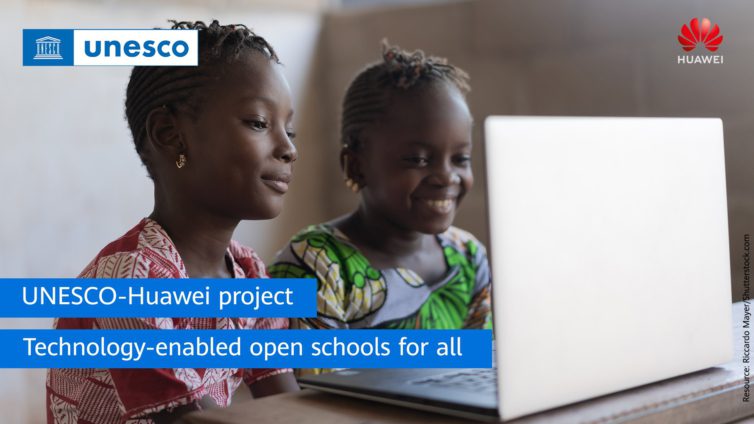
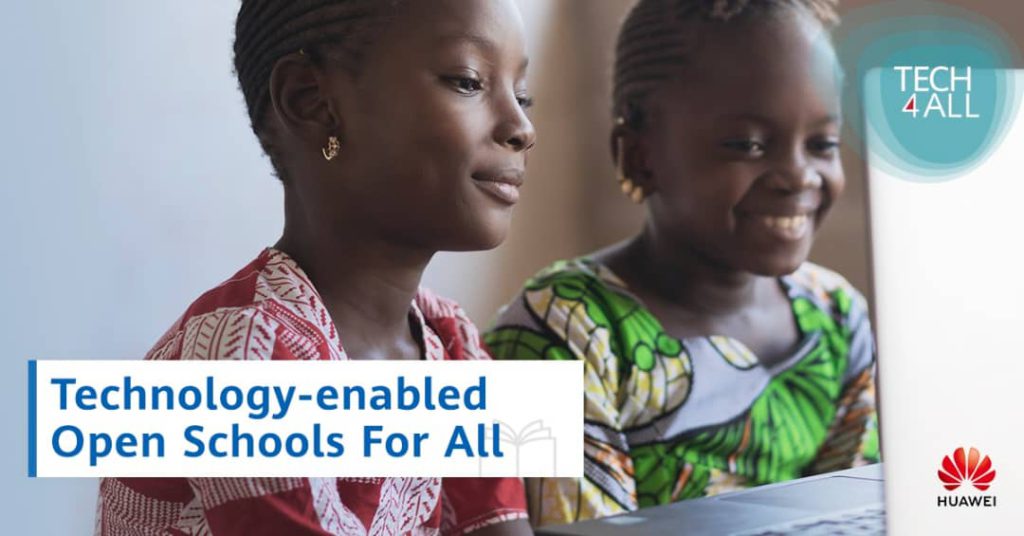
At an online meeting last Thursday, UNESCO and Huawei announced the launch of the implementations phase of the Technology-Enabled Open Schools for all (TeOSS) project in Ghana, Ethiopia, and Egypt.
Aligned with UN SDG4, TeOSS will serve as a basis for powering the digital transformation of the education sector and support the three UNESCO member states in building resilient education systems that can withstand global disruptions such as COVID-19.
Evaluating project outcomes will help guide strategies and models for scaling out TeOSS at a national level, and for expanding the project to other African nations to drive ICT integration into teaching and learning.
In addition to connecting schools, the TeOSS projects in Ghana, Ethiopia, and Egypt will provide training for teachers and students in the use of digital tools, establish online platforms to link school and home learning, and develop digital curricula that can be accessed remotely without supervision.
It is aimed to help students become confident digital citizens capable of navigating the virtual world independently and equip teachers with the skills required to use existing and new digital tools to maximize learning outcomes.
“The project is designed to test schooling models that can respond immediately to new challenges imposed by the pandemic and also leverage technology to help enable the development of future models of schooling,” said Stefania Giannini, Assistant Director-General for Education, UNESCO.
“It is defined by a digital school model that makes programs accessible for all students, whether in times of crisis or not – it is a case of going beyond the current situation and opening a new horizon of teaching and learning.”
Planned in close collaboration with the governments of Ghana, Ethiopia, and Egypt in line with their existing national strategies, the TeOSS projects have been developed to meet specific local needs.
In Egypt, an ICT skills framework has been developed for teachers and students in K12 schools.
Digital courseware development experts and primary and junior high school teachers will receive training, and a National Distance Learning Centre will be established for use by educators nationwide to ensure continuity in professional development.
“Egypt’s new education system 2.0 emphasises the integration of technology into the educational process with multiple digital learning resources and learning platforms to ensure education for all and achieve educational quality and access,” said Dr Reda Hegazy, Deputy Minister for Teachers' Affairs for the Ministry of Education and Technical Education in Egypt.
“The teacher’s role has shifted from providing information to being a guide and facilitator of the educational process through digital learning resources.”
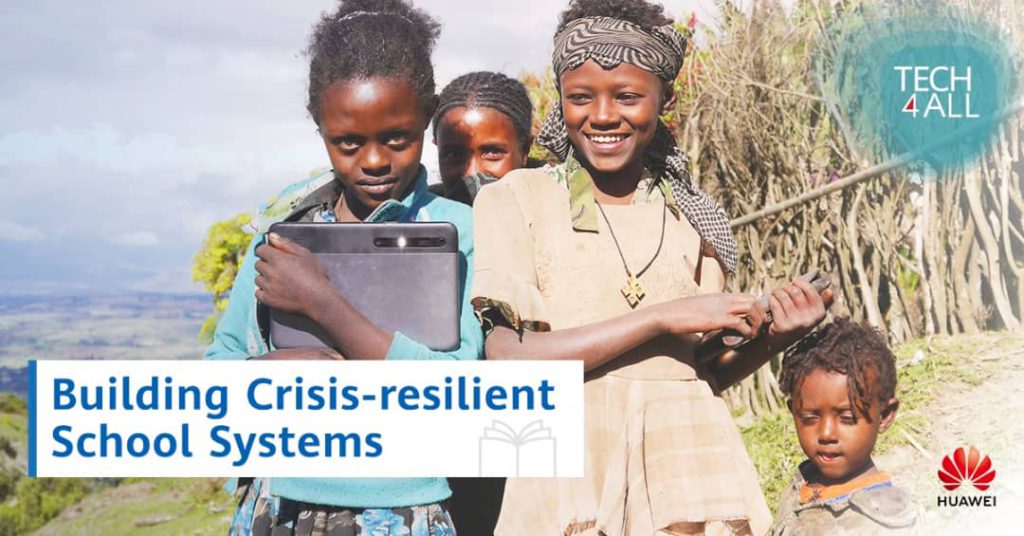
The TeOSS project in Ethiopia will focus on ICT infrastructure build-out to connect pilot schools, train teachers and students, and build a Learning Management System integrated with a Teacher Training Platform.
“Ethiopia understands very well the need for ICT and digitalization in our future schooling system to deliver quality and inclusive education equitably for all, without any disruptions, as stipulated in our new education sector roadmap,” said Dr Fanta Mandefiro from the State of Ministry of Education of Ethiopia.
“This project is perfectly aligned with our aspirations and the activities of our programs and initiatives for utilizing digital content in our education system.”
In Ghana, the focus is on creating digital content for all subjects, as well as providing training for teachers and students at Primary and JHS schools. The project will also build an e-repository that teachers can use to upload content and which learners can access online and offline with little or no supervision.
“I am glad to note that this UNESCO-HUAWEI is building on the already established partnerships and collaborative efforts with our national institutions, particularly CENDLOS, which is the institution mandated by government to facilitate the integration of ICT into the education system across the board,” said Dr Yaw Osei Adutwum, Minister of Education for Ghana.
TeOSS has aligned the Tech4Edu domain of Huawei’s digital inclusion initiative TECH4ALL, which aims to drive education equity and quality with technology.
“The digital platforms that Technology-enabled Open Schools for All will create mean that learning never needs to stop – whatever the future holds,” said Kevin Zhang, CMO of ICT Infrastructure for Huawei.
“Huawei is fully committed to working with UNESCO, governments, and all stakeholders to deliver successful, sustainable, and scalable projects.”
The TeOSS project and the partnerships that will implement it are crucial for digitalising education and driving equitable and inclusive access to lifelong learning opportunities for all.
Latest Stories
-
Real-Time VAT on cross-border digital services – not a new tax and does not violate double taxation principle
27 minutes -
Digitalisation, AI key to Ghana’s tourism transformation – GHATOF
39 minutes -
Stronger GTA-private sector partnership needed to grow tourism – GHATOF
49 minutes -
Amazon eyes Ghana for broadband expansion after talks with Mahama
2 hours -
National Investment Quiz 2026: Six schools qualify for quarter-finals
2 hours -
‘Do not let Russia pay for its madness with lives of your people’ – Zelensky to Ghana, 46 other countries
2 hours -
6,079 promotion cases fully processed and paid – CAGD says amid nationwide teachers’ strike
2 hours -
Teacher unions to meet government Monday over nationwide strike
3 hours -
Photo story: Republic Bank-JoyNews Habitat Fair clinic wraps up after three days of housing solutions, expert engagement
3 hours -
National Peace Council urges investment in youth to sustain Ghana’s peace
3 hours -
Afenyo-Markin urges youth to speak up against injustice
3 hours -
CAF annuls Edo Queens victory, orders WAFU B final to resume from extra time
4 hours -
Interior Minister urges traditional authorities to enforce anti-bushfire bye-laws
4 hours -
3rd Republic Bank-JoyNews Habitat Fair Clinic ends on a high note after three days of strong patronage
4 hours -
Ten climbers missing after avalanche hits Himalayan base camp
4 hours