

Audio By Carbonatix
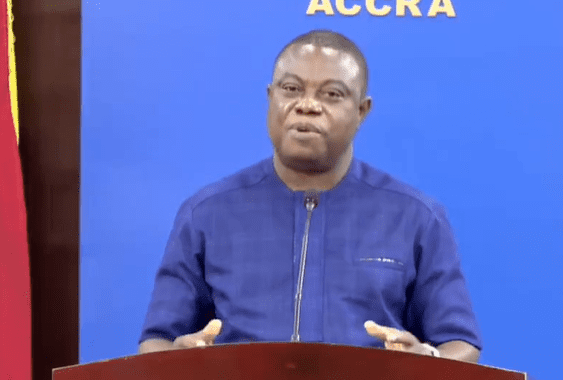
Chief Executive Officer (CEO) of Forestry Commission, John Allotey has disclosed that the 35,000 employees in the 'Youth in Afforestation Project' have received three months' unpaid salaries.
Addressing the press on the achievements of the Commission on Thursday, Mr Allotey, noted however, that there remains two months' salaries outstanding.
"I am happy to report that through the Ministry of Lands and Natural Resources, particularly the help of the Minister, Samuel Abu Jinapor and the Minister of Finance, we have recently paid them three months' salary which means the only amount outstanding is two months as we speak," he said.
In May this year, some beneficiaries of the Youth in Afforestation Project convened at the Ministry of Finance to demand payment of their outstanding allowances.
Spokesperson of the group, Bossman Adutwum told the media that beneficiaries of the programme had not been paid since December, 2020.
Earlier, the Youth Employment Agency (YEA) had informed the beneficiaries to demand their monies from the Forestry Commission. YEA explained that the responsibility to pay their salaries is not theirs.
The 'Youth in Afforestation Project' is under the National Afforestation Programme.
There are several components created by the Forestry Commission's landscape restoration interventions.
They include Youth in Afforestation, Modified Taungya System, Projects (FIP, SLWMP, GCFERP), Private Sector Plantation Development and Seedling Production - private sector.
A total of 75,340 individuals have been employed to undertake these restoration interventions.
According to Mr Allotey, some 15,000 individuals are working under the Modified Taungya System (MTS).
"It is the kind of project where we give degraded lands to cooperatives or people who come together. They plant the trees, mostly in the first three years before the canopy is formed. They plant food crops. They benefit fully from the food crops," he explained.
The Chief Executive Officer further revealed that monies generated from the sale of the food crops are handed over to the workers.
"Then we also give them about 40 per cent of the revenue when the trees are harvested as well," he added.
He said this system "improves the economy in the local areas."
Latest Stories
-
KATH Mother and Baby Unit construction stalled for 14 months over unpaid contractor arrears
2 minutes -
Government wanted to ‘tilt the balance’ with new EC appointments – Kwakye Ofosu
8 minutes -
Angry Tema Community 25 residents threaten to sleep at GWL over water shortage
21 minutes -
BoG takes financial literacy drive to Techiman, vows to protect depositors
21 minutes -
‘Stop the distractions’ – Akosua Manu demands answers over GH¢49.7m South Africa evacuation cost
22 minutes -
Formula 1 to return to Africa with Rwanda Grand Prix in early 2030s
28 minutes -
Mahama says Ghana is safer today as he commissions 85-bed ward at Police Hospital
33 minutes -
LA 2028: Black Queens face Zambia in final Olympic qualifier
42 minutes -
WAFU Zone B: Black Starlets seal semifinal place with 3-1 win over Benin
49 minutes -
Black Queens thrash Mauritius 7-0 to advance 10-0 on aggregate in Olympic Qualifiers
58 minutes -
Kaizen as a strategic pathway for micro business scale-up in Ghana
1 hour -
Minister orders suspension of Obuasi SHS headmaster over alleged sexual misconduct following JoyNews investigation
1 hour -
Over 38,000 commercial, 150,000 residential customers unbilled – Ghana Water MD
2 hours -
Several injured as Sprinter bus collides with ‘trotro’ at Odorkor
2 hours -
Ghana records progress on reparatory justice agenda – Ablakwa
2 hours