

Audio By Carbonatix
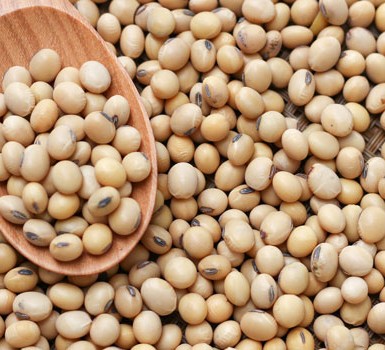
The Ministry of Trade and Industry has extended a ban on exportation of soya bean and other grains such as maize, and rice for the next six-months.
This comes after a JoyNews Hotline Documentary titled “THE BROKEN CHAIN” which shed light on the soya bean value chain, the challenges therein and impact on the poultry industry.
The one-hour documentary produced by Prince Appiah revealed more than 80 percent of soya bean processing factories have shut down because of non-available raw materials.
Some poultry farmers have also sold their birds to be able to stay afloat in the business.
The Ghana National Poultry Farmers Association, for instance, has had to release new prices of egg, with 30 percent increase after the Ramadan fasting.
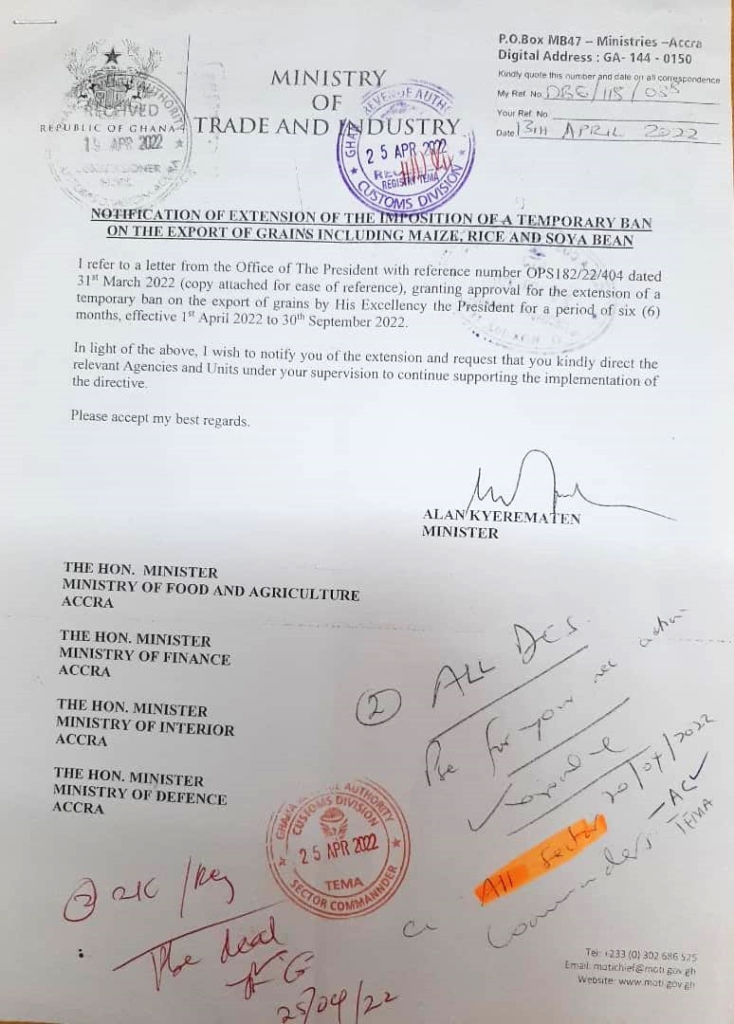
The letter dated April 13, 2022 by the Ministry of Trade and Industry copied to the Ministry of Food and Agriculture, Ministry of Finance, Ministry of Interior and the Ministry of Defence, puts a temporary ban on the exportation of the crop together with maize and rice.
It directs the relevant agencies and units under their supervision to support the implementation of the directive.
These crops are currently in short supply in the country impacting the various value chain drivers and industry.
Chairman of the Soya Value Chain Association of Ghana, Thomas Wabi Bello, says though they acknowledge the suspension, they believe more needs to be done.
“We acknowledge the suspension of the exportation of the soya for six-months, but it is not good enough because the Indians and other nationals will not stop buying. If they know it is six months and they can buy and hoard and wait for six-months and export, the problem will persist,” he said.
The Association has therefore suggested a two-year ban.
“We suggest there is a long-term suspension for at least two years. That will deter anyone going to buy from hoarding and exporting.
“We thank the President for his efforts but we need more; at least a two-year ban”.
Mr. Bello says in the future, these foreigners should be banned from going straight to the farms.
“If they want to buy, they should go to the Ghana Exchange Commodities and buy from them. We need to have a proper syndication for buying these beans for stocking and export, it is very important,” he stated.
Latest Stories
-
Dolly Parton laid to rest alongside husband in Nashville
1 minute -
Accra Mall celebrates Legends Reimagined with Weekend Vibes this September
1 minute -
Barcola joins Liverpool from PSG in £123m move
5 minutes -
Tibule Advertising marks ‘Gong Gong Awards’ debut with a win for indomie
8 minutes -
Nurturing market-ready solutions that create jobs: KIC AgriTech Challenge Pro teams first pitch commenced
11 minutes -
Teacher unions to call off planned strike after engagement with Education Minister
17 minutes -
EPA more than triples accumulated fund to GH¢375m in a single year under Prof. Browne Klutse – SIGA
24 minutes -
Imaging professionals trained on Ghana’s first paediatric cancer imaging protocol
30 minutes -
‘Bawumia will become President whether NDC likes it or not’ – Amin Adam
31 minutes -
Financial irregularities in some state institutions drop significantly to GHC 7.69 billion in 2025 – Nyarko Ampem
32 minutes -
Shalom Shotokan Karate-do celebrates students at Karate grading ceremony
33 minutes -
Gov’t challenges ABL’s claim that beer tax changes threaten 2,000 jobs
56 minutes -
Ghana’s small businesses don’t have a marketing problem. They have a capacity problem.
1 hour -
GNFS intensifies fire safety campaigns across Eastern Region
1 hour -
One dead and more than a dozen missing after ‘terrifying’ flash flood hits Grand Canyon
1 hour