

Audio By Carbonatix
The Chief of Staff has urged the Public Utilities Regulatory Commission (PURC) to actively engage all stakeholders before announcing new utility tariffs.
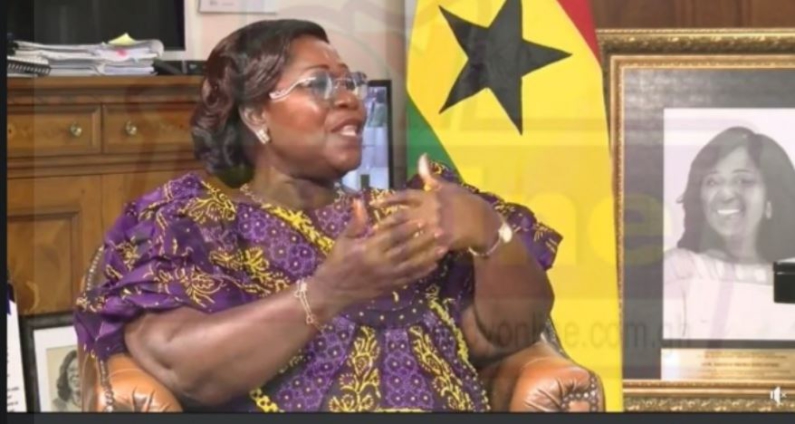
Madam Frema Osei-Opare said the Commission must consider the public’s interest in its dealings.
She, thus, called on all stakeholders to speak out to ensure their voices are heard in the conversation.
“It is my fervent hope that all stakeholders will engage actively in this review process and make their voices heard so that the final outcome will benefit the generality of all stakeholders,” she said.
Frema Osei-Opare made this statement at the inauguration of an office complex for PURC in Koforidua.
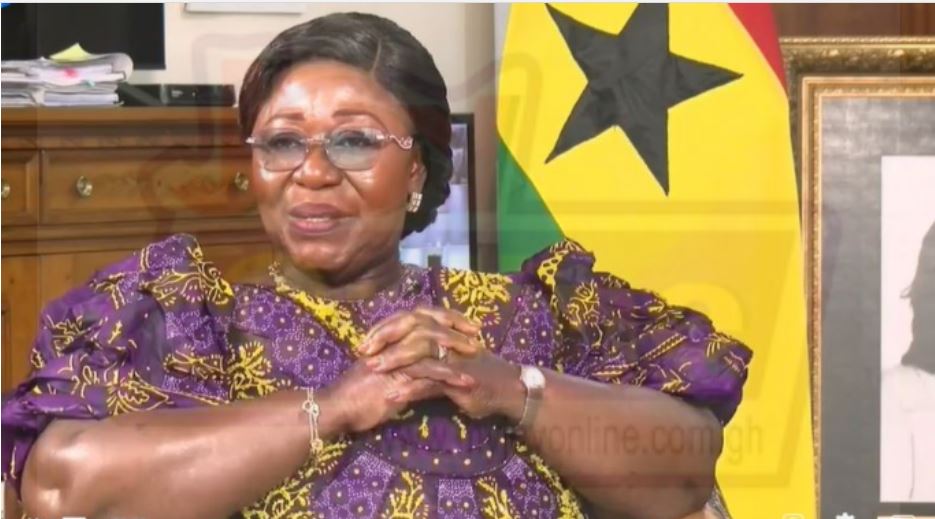
Meanwhile, the Chief of Staff also commended PURC for its pivotal role in the ongoing engagement of stakeholders on the multiyear tariff review.
However, she stressed that there is a need to strengthen the already established mechanisms to regulate utility companies to become financially viable.
The Commission had earlier assured the public that it will consider the interest of all stakeholders in determining the new utility tariffs.
In a media interview, the Head of Public Relations and External Affairs of PURC said the Commission will also consider the interest of the investor community and the interest of the utility companies before announcing the new tariffs.
“PURC will weigh the concerns of the consuming public and other stakeholders. We’ll consider the interest of the consuming public and the investor community and protect the interest of the utility company by making sure that it is financially viable.
“We will also look at our regulatory benchmark, including the allowable losses, and all these are put together, so it isn’t just an academic exercise,” he said.
The Electricity Company of Ghana had proposed that its tariffs will be increased by 148% for 2022 and with 7.6% average adjustments between the periods of 2023 to 2026.
The proposed sharp increment, according to ECG, is due to the gap between the actual cost recovery tariff and PURC-approved tariffs as well as the cost of completed projects.
The GWCL also argued that while the average tariff per cubic metre in 2019 was 1.27 USD, the same was reduced to USD 1.13 as a result of cedi depreciation.
The GWCL said this has affected its ability to carry out repairs and replacements of aged and obsolete equipment and pipelines.
Latest Stories
-
The world’s best countries for expats in 2026
2 minutes -
Social clubs must become engines of national development – Ace Anan Ankomah
4 minutes -
Harvard appoints former BoG Governor Ernest Addison as senior research fellow
5 minutes -
Sammy Gyamfi warns youth exclusion could threaten mining’s social licence
6 minutes -
Mining communities must not be left without social amenities – Sammy Gyamfi
11 minutes -
National Mining Dialogue 2026: We must remain independent in reporting on mining — GJA President
18 minutes -
Social licence must be reimagined as a development compact with the youth – Sammy Gyamfi
20 minutes -
Give indigenous landowners control to curb irresponsible mining – Dr Nana Kwao Adarkwa
28 minutes -
Interior Minister urges religious leaders to protect Ghana’s tradition of tolerance
29 minutes -
In Pictures: Dignitaries, stakeholders gather for National Mining Dialogue 2026
36 minutes -
BoG inaugurates Financial Advisory Council to drive non-interest banking in Ghana
39 minutes -
Mineral right is a privilege, not an absolute right – Minerals Commission
39 minutes -
Ablakwa seeks Russian support for Africa-led fight against Sahel extremism
51 minutes -
Host mining communities are partners in development, not obstacles – GJA President
53 minutes -
Ghana to sign 5 new petroleum agreements soon – Energy Minister
53 minutes