

Audio By Carbonatix
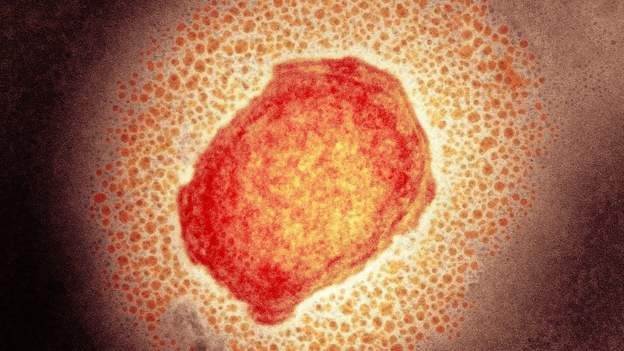
A group of global experts convened by WHO has agreed on new names for monkeypox virus variants, as part of ongoing efforts to align the names of the monkeypox disease, virus and variants—or clades—with current best practices.
The experts agreed to name the clades using Roman numerals.
The monkeypox virus was named upon first discovery in 1958, before current best practices in naming diseases and viruses were adopted. Similarly for the name of the disease it causes.
Major variants were identified by the geographic regions where they were known to circulate.
Current best practise is that newly-identified viruses, related disease, and virus variants should be given names with the aim to avoid causing offense to any cultural, social, national, regional, professional, or ethnic groups, and minimize any negative impact on trade, travel, tourism or animal welfare.
Disease: Assigning new names to existing diseases is the responsibility of WHO under the International Classification of Diseases and the WHO Family of International Health Related Classifications (WHO-FIC).
WHO is holding an open consultation for a new disease name for monkeypox. Anyone wishing to propose new names can do so here (see ICD-11, Add proposals).
Virus: The naming of virus species is the responsibility of the International Committee on the Taxonomy of Viruses (ICTV), which has a process underway for the name of the monkeypox virus.
Variants/clades: The naming of variants for existing pathogens is normally the result of debate amongst scientists. In order to expedite agreement in the context of the current outbreak, WHO convened an ad hoc meeting on 8 August to enable virologists and public health experts to reach consensus on new terminology.
Experts in pox virology, evolutionary biology and representatives of research institutes from across the globe reviewed the phylogeny and nomenclature of known and new monkeypox virus variants or clades.
They discussed the characteristics and evolution of monkeypox virus variants, their apparent phylogenetic and clinical differences, and potential consequences for public health and future virological and evolutionary research.
The group reached consensus on new nomenclature for the virus clades that is in line with best practices. They agreed on how the virus clades should be recorded and classified on genome sequence repository sites.
Consensus was reached to now refer to the former Congo Basin (Central African) clade as Clade one (I) and the former West African clade as Clade two (II). Additionally, it was agreed that the Clade II consists of two subclades.
The proper naming structure will be represented by a Roman numeral for the clade and a lower-case alphanumeric character for the subclades.
Thus, the new naming convention comprises Clade I, Clade IIa and Clade IIb, with the latter referring primarily to the group of variants largely circulating in the 2022 global outbreak.
The naming of lineages will be as proposed by scientists as the outbreak evolves. Experts will be reconvened as needed.
The new names for the clades should go into effect immediately while work continues on the disease and virus names.
Latest Stories
-
Premature to call for Sports Minister’s removal while CID probe is ongoing – Ernest Norgbey
19 minutes -
NPP mourns Samuel Arthur Odoi-Sykes
36 minutes -
Stay out of World Cup visa probe to avoid interfering with CID investigations – Ernest Norgbey to politicians
47 minutes -
Bono East Minister inspects ‘Big Push’ roads; contractor on Tankor-Fiema-Busunya road ahead of schedule
50 minutes -
Scrutiny is not disloyalty – Chief of Staff defends serious journalism at 30th GJA Awards launch
51 minutes -
Abuse case: Nana Akua’s husband Harold unable to appear in court after hospital admission – Police
1 hour -
Mahmud Kabore picks NDC Ashanti Regional Communication Officer nomination forms
1 hour -
KNUST Career Services pioneer Selina Doe Angmor named among 2026 40 Under 40 honourees
1 hour -
Nana Akua domestic abuse case: Police to arraign husband after hospital discharge
1 hour -
NHIS coverage rises to 70% after government uncaps levy – Health Minister
1 hour -
World Cup visa scandal: I’ll go after anyone who dents Mahama’s gov’t – Ernest Norgbey
2 hours -
GCNM calls for a permanent office complex, more funding for specialist nursing training
2 hours -
Salomey Awiti Baffoe reunites with family after GH¢100k bail
2 hours -
We’ll modernise Accra without losing its heritage – Roads Minister assures Ga Mantse
2 hours -
Rent Control urges Parliament to expedite amendment of outdated rent laws
2 hours