

Audio By Carbonatix
As part of measures to mitigate the impact of climate change on food production, Actionaid Ghana is championing a sustainable agriculture practice with less impact on the environment.
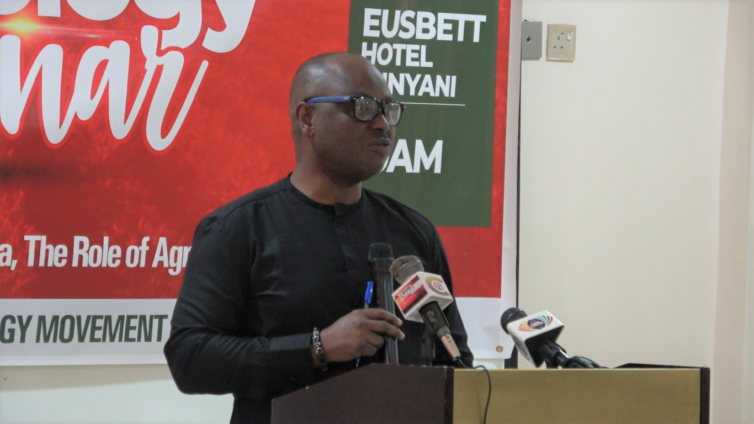
According to the Country Director of Actionaid, John Nkaw, practicing agroecology remains the most sustainable means of farming since it makes use of nature’s goods and services without damaging the resources.
In the practice of agroecology, farmers use organic materials like biomass, compost, agroforestry, conservation of water and soil, and other sustainable interventions of promoting resilient agriculture.
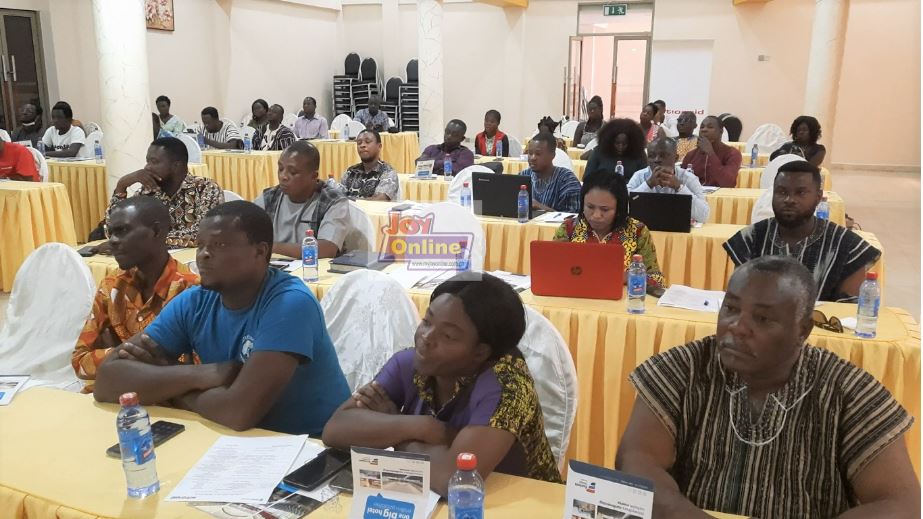
Because of that, Actionaid partnered with the University of Energy and Natural Resources, UENR, at a seminar in Sunyani in the Bono Region to discuss and strategize on means to ensure secure sustainable agriculture and food security through agroecology.
The seminar, which is part of efforts in addressing the impact of climate change, was themed: “Sustainable agriculture in Ghana, the role of agroecology”. It was attended by members of academia, representatives of state institutions, civil society groups, and smallholder farmers.
Mr. John Nkaw said the partnership is also aimed “at leveraging the strengths and capabilities of each other to champion sustainable development and improve the lives of the Ghanaian, especially people living in poverty”.
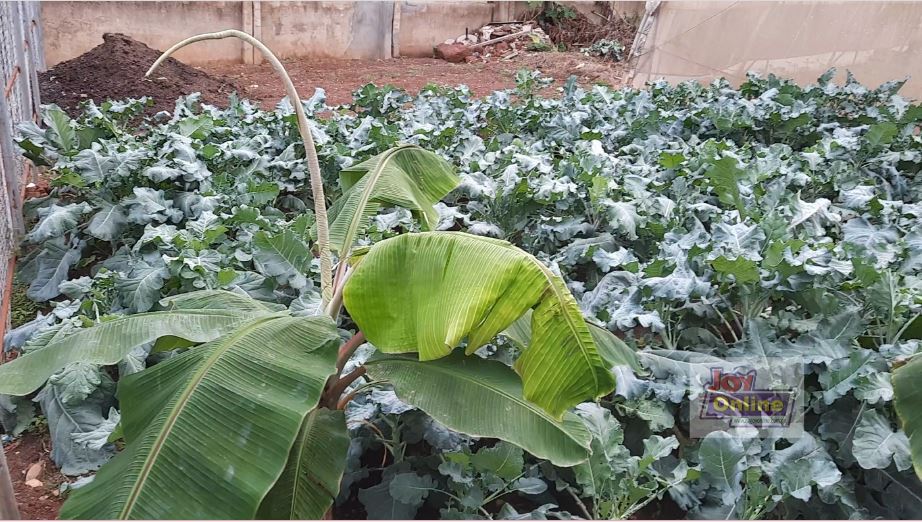
For successful farming, he noted that the agricultural practices should work with the local ecosystem where soils and plants are improved through available biomass and biodiversity rather than battling with nature with chemical inputs.
He said, “Agroecology practices are in line with Actionaid's mission priority of promoting system change for climate justice”, and they believe it is one of the most sustainable solutions in building the resilience of farmers and would contribute to addressing the impact of climate change.
He also said the high cost and unavailability of chemical fertilizers resulting in a high cost of production reinforces the need for the use of natural resources and agroecology, hence the need for stakeholders in agricultural development to work together to achieve sustainable agriculture.

The Vice-Chancellor of UENR, Prof Elvis Asare-Bediako, while commending Actionaid for the partnership, said the seminar would broaden the understanding of stakeholders on the agroecology phenomenon, which he insisted is not entirely new because “our forefathers practiced it”.
“They used ash to deal with insects, practiced mixed cropping instead of mono-cropping, they would not burn the weeds, etc, which minimizes the impact on the ecology while adding nutrients such that you don’t need to depend on external chemical inputs. So it is about going back to our roots in a more modernized approach”, he explained.
Dr. Kwadwo Gyasi Santo, School of Agriculture and Technology, UENR, said aside from reducing climate change, agroecology practices would also reduce the cost of production, enhance productivity, renovate the food system, increase soil fertility, boost the income of farmers, and ensure healthy food to consumers, among others.

He, therefore, called for collective sensitization of the farmers on the causes of climate change and its effects on agriculture, the lives of the farmers, and society at large.
He also called for farmers to be educated on the choice of crop varieties which can resist some of the extreme weather conditions to enable them to maximize productivity and their welfare.

A farmer, Vivian Awuni, who is into vegetable farming in the Tain district, said the use of organic manure in her farm has boosted her production and income levels, and her customers confirm the healthy nature of her yields. She urged other farmers to also practice the use of organic manure instead of chemical inputs.
Latest Stories
-
“We are one house – let’s settle this at home” – Atomaase Royal family calls for unity, rallies behind Twafohene
59 minutes -
The Missing Middle and the Overlooked Small: Why Ghana Must Serve Both the ‘S’ and ‘M’ in MSME’s
1 hour -
Mahama returns from Angola after AU extraordinary summit
2 hours -
Ghana qualifies for quarterfinals of Africa Volleyball Nations Cup after beating Zambia
2 hours -
WAFU B WCLQ: Ampem Darkoa Ladies come from behind to beat Edo Queens
2 hours -
Photos: National Youth Authority Festival
2 hours -
Bawumia commissions St Jude’s Catholic Church he funded to completion at Weija
3 hours -
Government defends new beer exercise rates; sliding scale has not been abolished
3 hours -
Bolgatanga Assembly denies blanket ban on events beyond 8pm
3 hours -
Photos: Ghana Immigration Service removes 1,055 street beggars from Accra, Kumasi streets
3 hours -
‘He always comes to our aid’ – Fr. Campbell recounts Bawumia’s support for Church, poor
3 hours -
Remittances drop marginally year-on-year to US$3.65bn in half-year 2026
3 hours -
T-bills: Government exceeds target by 139%, interest rates tumble
3 hours -
Why Chelsea need more than a new goalkeeper to be title challengers
4 hours -
Outlook of Ghana’s external sector remains positive for second-half of 2026 – BoG
4 hours