

Audio By Carbonatix
Black Tunisian women say they are experiencing more instances of racism after the country's president criticised sub-Saharan migrants.
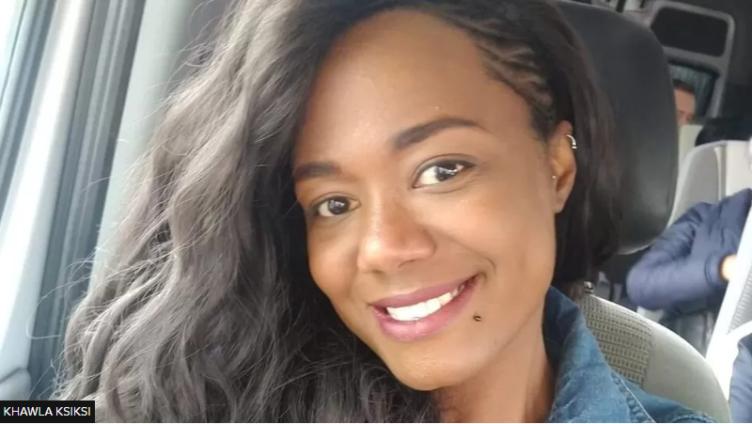
"In Tunisia people are always questioning the fact that I'm Tunisian," says activist Khawla Ksiksi, a black Tunisian citizen.
In February, President Kais Saied ordered "urgent measures" against sub-Saharan migrants, accusing them of a "criminal plot" to change the country's demographics and cultural identity.
He went on to say that immigration came from "a desire to make Tunisia just another African country and not a member of the Arab and Islamic world".
There has since been a rise in violence against black African migrants, according to Human Rights Watch, and the statement has only made the situation worse for black Tunisians, who make up between 10-15% of the Tunisian population, according to official figures.
This number includes some who are descendants of sub-Saharan African slaves - the slave trade was abolished in Tunisia nearly 180 years ago - while others trace their origins much further back.
Ms Ksiksi tells the BBC she is made to feel invisible: "Sometimes I speak in Arabic and they will answer in French because they don't want me to be a part of Tunisia."
Arabic is Tunisia's official language, but Ms Ksiksi says she is often rejected when she speaks it, because other people do not want to acknowledge a sense of kinship with her.
Although French is associated with privilege and education, it is also the language of "outsiders", and so when people use it to reply to her, they are making it clear they do not think she is Tunisian.
Ms Ksiksi, who is a co-founder of the Voices of Black Tunisian Women collective, wants to challenge the misconception that black Tunisians do not exist.
"I feel like I belong to Tunisia even though it's so violent towards me [and people who look like me]," the 31-year-old says.
"They treat us not as Tunisians and treat themselves as not Africans."
She argues that despite independence from France in 1956, Tunisians want to be seen as belonging to Europe, and the colonial viewpoint that black Tunisians are "dusty and unclean" lingers.
"That's why we have a huge identity crisis in Tunisia. We had independence on paper, but the colonial politics are still here."
A lack of black representation in places of social and political power, she believes, reinforces the idea that there are no black Tunisian citizens.
"My skin colour says I don't belong so as black Tunisians we have to constantly prove that we are enough," Ms Ksiksi says.
For black women it is even harder, she adds: "In school, I had to always have the best grades because all the teachers thought that I would cheat because in their minds black people are not very intelligent."
The activist says she has had the financial resources to get a good education, but this privilege has often left her isolated: "The fact that you're always the only black person in the room makes you feel excluded and on your own.
"I always feel like everything is white and I'm the black dot."
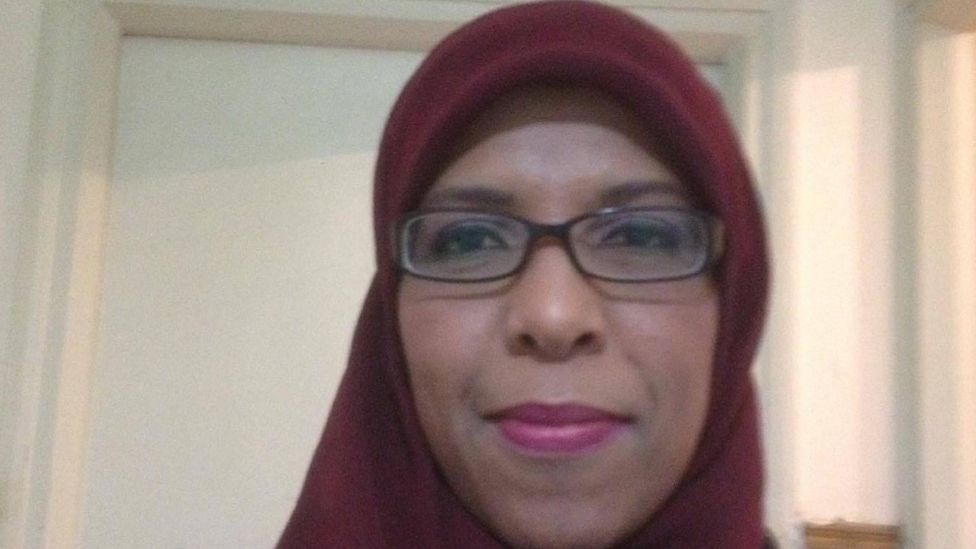
Like Ms Ksiksi, Houda Mzioudet says the problem is that Tunisian society has been built on a "homogenised nationhood" that does not allow the discussion of racism.
"What is much more violent in Tunisia is not racism itself, but the denial of racism, where you're denied your own horrific experience of racism," says the 46-year-old academic researcher and lecturer.
In response to the president's statements, some black Tunisian women, including Ms Mzioudet, took part in the "Carrying My Papers Just In Case" trend on Facebook.
They wore their passports and ID visibly on their clothes to show they were Tunisian but also in solidarity with migrants.
Ms Mzioudet was born in the capital, Tunis, but she grew up in the south of the country where she witnessed a "de facto form of slavery and apartheid" in the 1980s.
The slave trade, which involved the selling of black Africans, was abolished in Tunisia in 1846 but its legacy lives on.
"There has been a continuation of domestic slavery, although they are no longer calling black people slaves but instead servants - hence the Tunisian Arabic word to refer to a black person is 'wessif' meaning 'servant'," Ms Mzioudet says.
Despite her privileged background, she found at school that career expectations for black women tended to be things like dancing or singing - "or something like prostitution".
"Growing up in an environment where black women have always been objectified and sexualised it was very hard for me to emancipate myself from that picture," she says.
For Ms Mzioudet, the president's statements about sub-Saharan migrants were a backlash against the Arab Spring and what it represented for black Tunisians.
In 2011, long-serving President Zine al-Abidine Ben fled the country amid an unprecedented wave of street protests. The subsequent introduction of democracy after decades of dictatorship created an opportunity for black Tunisians to be visible in society.
Black Tunisians started demanding more equal treatment and Ms Mzioudet felt more comfortable describing herself as black.
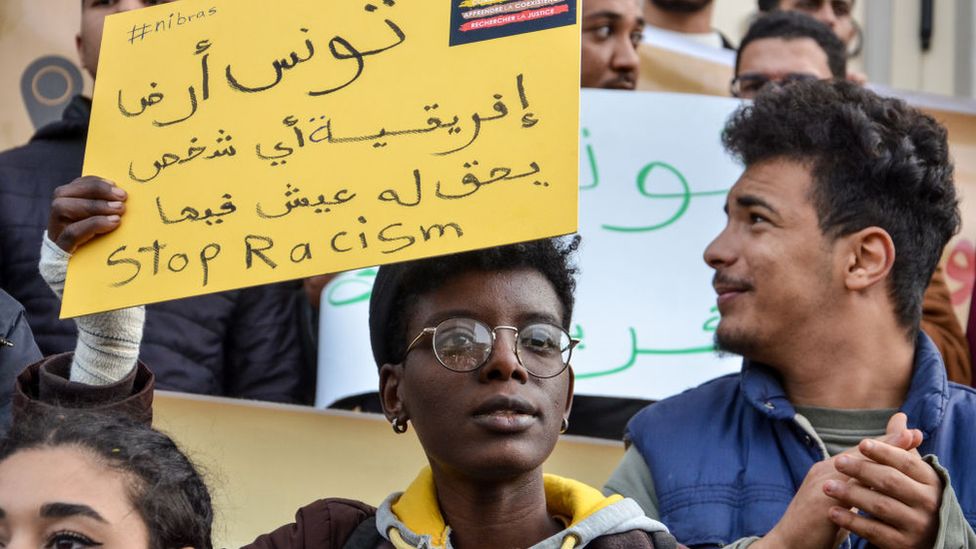
In 2018, Tunisia passed a landmark law to criminalise racial discrimination, in particular anti-black racism against black Tunisians and black African migrants. It became the first country in the Arab region to make discrimination specifically on racial grounds a criminal offence.
Both Ms Ksiksi and Ms Mzioudet say that despite these laws, the government has allowed the discrimination and inequality faced by black Tunisians to flourish.
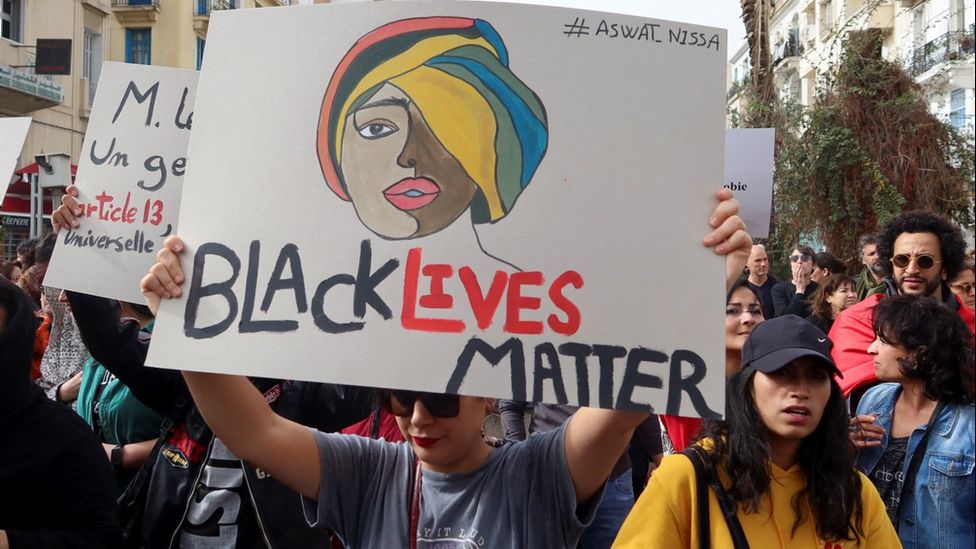
In February, hundreds of people took to the streets of Tunis in support of black African migrants and black Tunisians, a positive sign that there is hope that the younger generation wants to see change, says Ms Mzioudet.
"I was brought to tears to see one of the largest marches in downtown Tunis that was mostly made up of non-black Tunisians who were saying that black lives do matter," she says.
"And that it's not a black issue but a human rights issue."
Latest Stories
-
Luv Fm High School Debate: KNUST SHS and Osei Adutwum SHS set up thrilling final after dramatic semi-finals
1 minute -
KNUST AI Coordinator urges structured adoption of AI in teacher education
15 minutes -
Nepal rescuers blast hillside in search of hydropower workers as families wait anxiously
32 minutes -
Teachers who pass promotional exam to get January 2026 start date after gov’t resolves promotion dispute – Apaak
35 minutes -
NSMQ 2026: St. John’s School rally from slow start to book semi-final spot
35 minutes -
Promotion pay row: Gov’t gives teachers September to complete salary adjustments
46 minutes -
Financial irregularities plummet by 62.9% as state tightens fiscal controls
47 minutes -
DVLA to expand mobile services to underserved communities in Ghana’s Eastern Corridor of the Northern Region
1 hour -
GUTA urges GPHA to act swiftly to end Tema Port congestion to avert rising business costs
1 hour -
Port congestion could undermine 24-hour economy policy – GUTA
1 hour -
NSA opens three-day window to resolve national service biodata mismatches
1 hour -
Abu Jinapor highlights increased gold exports after Domestic Gold Purchase Programme
1 hour -
NPP UK branch calls for independent audit into gold purchasing operations and parliamentary probe
2 hours -
Zanetor Agyeman-Rawlings pledges decisive action on climate change, galamsey and environmental degradation
2 hours -
Bawumia was brainchild behind Domestic Gold Purchase Programme – Samuel Jinapor
2 hours