

Audio By Carbonatix
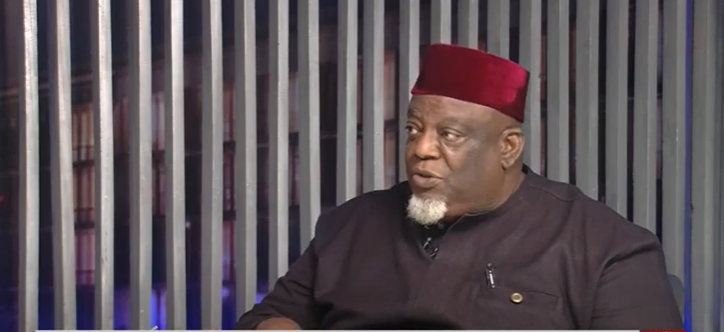
Director of Operations at Dalex Finance, Joe Jackson, has blamed money hoarders for doing damage to the economy.
According to him, the practice of hoarding large sums of money away from the formal financial institutions, particularly in foreign currency, has a devastating impact on the economy and livelihoods.
He explained that the removal of these monies from the public sphere into the private chambers of wealthy individuals deprives the economy of sufficient liquidity resulting in foreign exchange shortages and high inflation.
Speaking on PM Express, he said, “When somebody keeps cash at home they do us damage. Number one is this, you’ve established that if you keep the forex money at home, that money is taken out of the system.
“The exchange rate appreciates, the dollar appreciates, the cedi depreciates, and it hurts all of us especially the rate of inflation because the two biggest things we import, fuel, food and they hit us hard across board.”
He added that the practice also is responsible for the high interest rates as banks run dry of liquidity spike rates to make up for their illiquidity.
“But think about it, that money is not available to be transacted with so if somebody wanted cash to take a loan, the bank will say ‘I don’t have liquidity’. So when you take money out, you create a false illiquid situation with our institutions. What happens? The rates go up because there’s not enough money to lend.
“So of course to adjust it the rate will go up because remember that it is the money moving around that creates value, that allows all of us, so you get money it moves around and each time it does a circle economic activities are happening.
“And remember at one point we were down to less than three weeks of import cover. If that all the money hoarded as dollars had been in the banking system, had been in the central bank, maybe just maybe our situation would be not dire enough,” he said.
Joe Jackson was speaking in relation to sanitation minister, Cecilia Dappah’s cash hoarding case.
Two house helps, 18-year-old Patience Botwe and 30-year-old Sarah Agyei, along with three others are facing charges following their alleged involvement in the theft of $1 million, €300,000, and millions of Ghana cedis being the monies and personal effects of Cecilia Dapaah and her husband, between the months of July and October 2022.
She however, is disputing the amounts quoted on prosecution charge sheets to have been stolen in all, saying they are inconsistent with what she reported to the police.
Meanwhile, the minister has resigned and has since been arrested by the special prosecutor for corruption and corruption-related offences.
Latest Stories
-
Ghana needs a law to sustain constitutional reforms – CDD-Ghana
25 minutes -
COVID fumigation audit: Auditor-General has a lot of questions to answer – Akwatia MP
25 minutes -
Stranded Ghanaian medical graduates in Cuba appeal to Mahama for immediate return
33 minutes -
GNFS contains fire outbreak at Teshie Lekma Road near Lekma Hospital
7 hours -
Samia Nkrumah rejects the narrative that Ghanaians were happy after Nkrumah’s overthrow
8 hours -
A Mother’s pain: Tribute by Ivan Baidoo’s mother
8 hours -
‘Forgive us for staying away’ — Samia Nkrumah leads family back to Nkroful, pledges to preserve Nkrumah’s legacy
8 hours -
Ernest Nuamah scores twice as Lyon beat Rennes
8 hours -
‘My dear Ivan’ – A father’s tribute to a son tragically killed
8 hours -
GNPC Explorco advances Voltaian Basin drilling preparations with 13.5km access road
9 hours -
Cabinet approves facility manager for Borteyman Sports Complex – Kofi Adams
9 hours -
Sanitation is improving; critics may be ‘living in another world’ – Salaga South MP replies Bekwai MP
9 hours -
Government must do more to tackle sanitation crisis – Bekwai MP
9 hours -
World Cleanup Day: GFF begins sanitation education in local communities
10 hours -
EU Ambassador, IGP discuss stronger cooperation on policing and security
10 hours